Chinese Humanoid Robots: 5 Companies Driving China’s Robot Race



Search for Chinese robots today and the results look very different from only a few years ago.
China is already a major force in industrial robots, drones, electric vehicles, batteries and consumer electronics. It is now attempting to build a similarly powerful position in humanoid robotics.
The shift is not only producing more eye-catching demonstrations. Chinese humanoid robot companies are establishing factories, gathering physical-world training data, entering automotive and logistics sites, raising significant capital and preparing for much larger production volumes.
Government support is accelerating that movement. Reuters reported in 2025 that more than $20 billion had been allocated to China’s humanoid robot sector over the preceding year, alongside plans for a one-trillion-yuan fund supporting areas including artificial intelligence and robotics. State procurement of humanoid robots and related technology had also risen sharply.
In June 2026, China launched a national initiative targeting the commercial deployment of more than 10,000 humanoid robots across over 100 high-value application scenarios by the end of the year. The intended environments include manufacturing, warehousing, logistics, inspection, healthcare, retail and emergency response.
But scale should not be confused with maturity.
Chinese authorities have warned that more than 150 companies are now competing in the sector. Reuters reported that approximately 12,000 humanoids were sold in China during 2025, with many going into research, education and testing rather than sustained industrial operations.
China therefore represents both the biggest scaling opportunity in humanoid robotics and one of its biggest commercial tests.
Here are five Chinese humanoid robot companies that best illustrate how that mobilisation is taking shape.
China’s advantage is not based on one breakthrough robot.
It comes from the combination of a mature manufacturing ecosystem, domestic component suppliers, battery production, electric-motor expertise, electronics assembly, artificial-intelligence development and a large potential customer base.
Humanoid robots require actuators, reducers, batteries, cameras, force sensors, processors, controllers and precision-manufactured structural components. China already produces many of these technologies at significant scale.
That could help Chinese manufacturers reduce the cost of building humanoid robots more quickly than companies that depend on fragmented international supply chains. Bank of America Securities estimated that a humanoid robot’s bill of materials could fall substantially by 2030 when most components are sourced in China.
China is also investing in something less visible but potentially just as important: robot training infrastructure.
Humanoids need physical-world data covering tasks such as picking, packing, loading, sorting and handling unfamiliar objects. Reuters reported that authorities had supported data-collection centres where robots are operated repeatedly to generate task-specific training data, including a Shanghai site used by AgiBot.
This combination of hardware, data, capital and deployment environments is why China’s humanoid robot market deserves serious attention from UK businesses.
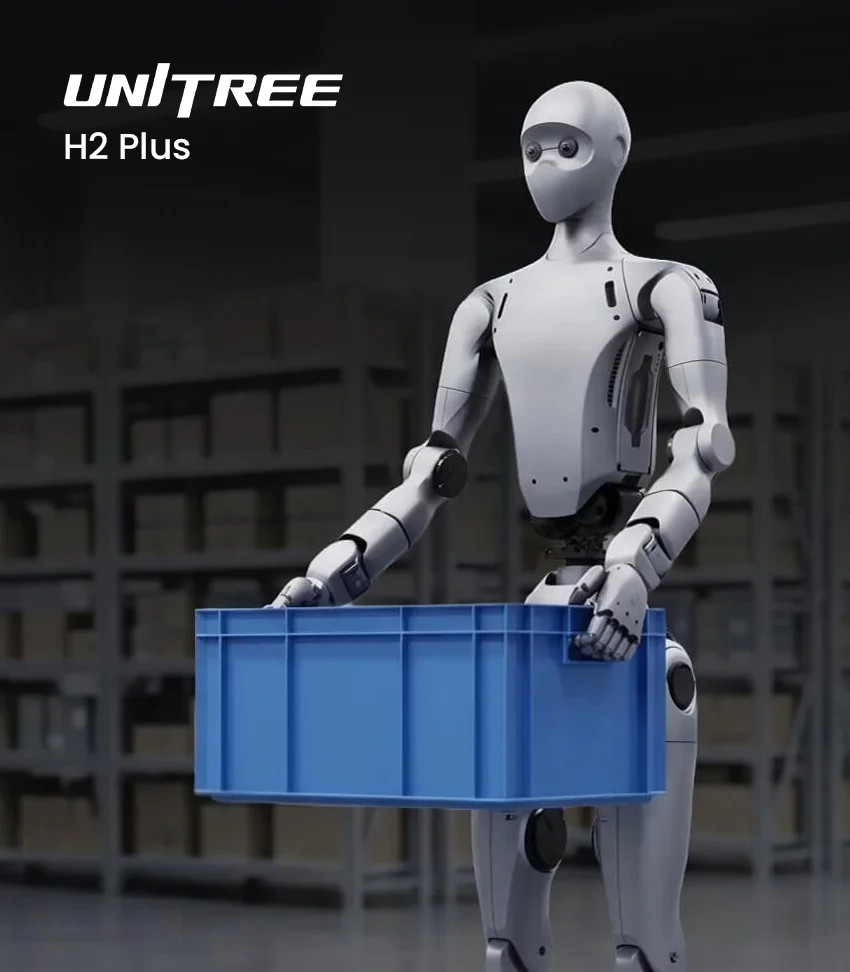
Unitree is currently the most internationally recognisable Chinese humanoid robot manufacturer.
The Hangzhou-based company first became known for accessible quadruped robots before expanding into humanoids. Its product range now stretches from comparatively low-cost educational platforms to full-size humanoid systems.
For UK buyers, Unitree’s main humanoid platforms include:
Unitree’s significance is not simply the movement capabilities displayed in its videos. It has helped create visible market pricing and made humanoid hardware accessible to a wider group of universities, laboratories, developers, innovation centres and commercial teams.
The company is now preparing for further expansion. In July 2026, Chinese regulators approved Unitree’s proposed Shanghai STAR Market listing, through which it plans to raise 4.2 billion yuan. The prospectus says the proceeds would support robot AI models, new robot bodies, product development and a smart manufacturing base.
Unitree currently provides one of the clearest routes for a UK organisation that wants to acquire and evaluate Chinese humanoid hardware.
However, the different models should not be treated as interchangeable.
R1 may be appropriate for education and early exploration. G1 is likely to be more relevant for embodied-AI development and controlled evaluation. H1 and H2 move closer to human scale but require more careful consideration of the task, operating environment, safety controls and support requirements.
UK organisations can review the wider Unitree robot range or consult TRG’s current Unitree UK price guide.
The central question should not be which Unitree robot looks most advanced. It should be which configuration is suitable for the intended task and whether the organisation has the development capability to make useful use of it.

UBTECH is one of the longest-established companies in China’s humanoid robot sector and one of the clearest industrially focused players.
Its Walker series has been evaluated across automotive and manufacturing environments involving companies such as NIO, BYD, Geely and Dongfeng. UBTECH describes applications including tote handling, materials movement, inspection, sorting and selected assembly-related tasks.
The latest Walker S2 platform is designed around industrial operation and includes autonomous battery-changing capability. UBTECH says mass production and delivery of Walker S2 began in November 2025.
The company is also moving beyond domestic automotive demonstrations. In July 2026, UBTECH announced that Hitachi had introduced Walker S2 into selected manufacturing environments for operational testing and application validation, including work relating to elevator manufacturing.
UBTECH is pursuing a different position from lower-cost research platforms.
Its focus is on integrating humanoids into production systems, including coordination between multiple robots and other forms of automation such as autonomous mobile robots and manufacturing-management platforms.
That is important because real industrial value is unlikely to come from a humanoid operating in isolation. It will depend on whether the robot can interact with existing workflows, software, people, materials and automation systems.
For UK manufacturers, UBTECH is therefore a company to watch closely. The remaining questions concern international availability, local technical support, safety and compliance documentation, software and data arrangements, spare parts and the repeatability of results outside carefully selected Chinese deployment sites.
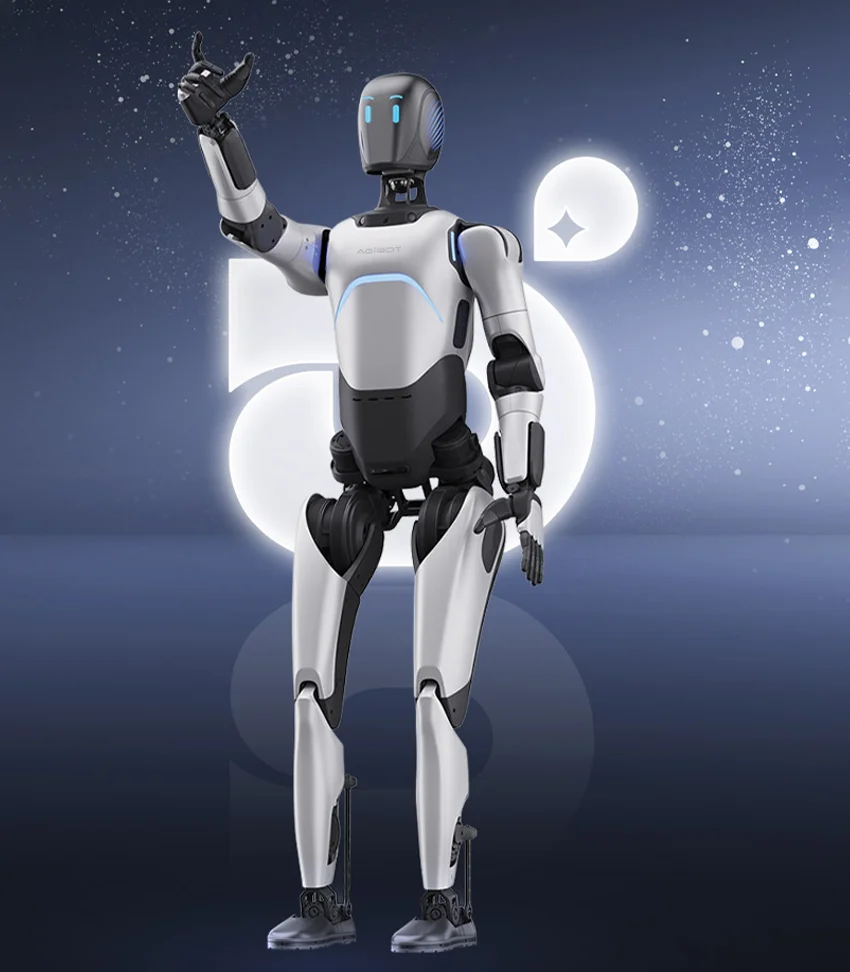
AgiBot - also known as Zhiyuan Robotics - is another rapidly scaling Chinese humanoid robot company.
It is developing several types of embodied robot rather than relying on one universal platform. Its portfolio includes full-size interactive humanoids, smaller research and entertainment platforms, industrial robots and dexterous manipulation systems.
At CES 2026, AgiBot positioned its G2 series as an industrial-grade platform intended for force-controlled manipulation and deployment in industrial environments.
The company says it shipped more than 5,100 humanoid robots during 2025 and reached its 10,000th robot produced in March 2026. These are company-reported figures, including market-share claims based on research attributed to Omdia, but they nevertheless indicate the scale of AgiBot’s manufacturing ambition.
AgiBot is also expanding internationally. It has announced local market initiatives and partnerships in locations including Italy, Thailand and Malaysia, suggesting that its strategy extends beyond supplying the domestic Chinese market.
AgiBot’s strongest potential advantage may be the combination of robot production and training data.
The company has been closely associated with large-scale data collection for embodied AI. Rather than training a robot only through simulation, these facilities collect repeated physical demonstrations of manipulation and movement tasks.
The significance for business buyers is that future competition may not be decided solely by mechanical specifications. The strongest platforms may be those supported by the largest libraries of reliable, transferable task data.
The buyer question is whether AgiBot can turn production volume and training activity into consistent operational performance, supported by credible local service and documentation.

XPeng is best known as an electric-vehicle manufacturer, but it is positioning humanoid robotics as part of a broader “physical AI” strategy.
Its IRON humanoid draws on capabilities developed across intelligent vehicles, autonomous systems, onboard computing, perception and advanced manufacturing.
XPeng has set a target of beginning mass production of IRON by the end of 2026. The company expects initial trial use in XPeng retail stores before offering robots to commercial customers in China and overseas from 2027.
In July 2026, The Wall Street Journal reported that XPeng was aiming to build more than 1,000 robots per month by the end of 2026 as it prepared for a wider global rollout.
Automotive companies have several attributes that could transfer well into humanoid robotics:
However, IRON should currently be viewed as an important commercial signal rather than a widely available industrial product.
Its initial use in retail environments also suggests that XPeng may begin with controlled, customer-facing roles before progressing towards more demanding industrial tasks.
For UK businesses, the most important development will be whether XPeng establishes a genuine international robot support and deployment model rather than simply exporting hardware.

RobotEra may have a lower international profile than Unitree or XPeng, but its developing logistics work makes it particularly relevant to our business audience.
China’s 2026 deployment initiative highlighted RobotEra robots operating across more than 10 logistics centres associated with China Post and SF Holding. The deployments involve high-frequency handling and packing-related workflows.
This matters because logistics is one of the most credible early markets for humanoids.
Warehouses contain human-designed workstations, shelves, containers, aisles and handling processes. Many tasks are structured and repetitive, but facilities are not always uniform enough to justify fixed automation at every point.
A humanoid could potentially add value where a business needs a mobile platform that can move between existing human workstations and handle several related tasks.
RobotEra represents the application-led side of China’s humanoid strategy.
Its importance does not depend on building the most athletic or visually impressive robot. It depends on demonstrating that a humanoid can complete useful logistics tasks repeatedly, at an acceptable speed and with manageable human intervention.
For UK warehouse and 3PL operators, that is the evidence that should matter most.
The critical metrics include:
These measurements will ultimately determine whether logistics humanoids become operating assets or remain extended trials.
The Chinese humanoid market extends well beyond these five companies.
Fourier has developed its GR series from a background in rehabilitation, biomechanics and motion-control robotics. This may make it particularly relevant to healthcare, assistance, research and human-centred applications. UK organisations can review TRG’s Fourier Intelligence overview.
EngineAI is scaling production of its T800 humanoid and says its Shenzhen manufacturing base is intended to support significantly larger delivery volumes.
Other names gaining attention include Galbot, Kepler Robotics, Astribot, Galaxea AI, Spirit AI and X Square Robot.
Not all of these companies will become long-term market leaders. China’s own economic planners have warned about duplicated products, unclear business models and the risk of excessive capacity across more than 150 humanoid businesses.
Consolidation is therefore likely.
Some companies may become high-volume hardware manufacturers. Others may specialise in foundation models, dexterous hands, actuators, data collection or application-specific systems. Many are likely to disappear, merge or be acquired.
Some Chinese humanoid robots are already accessible for UK research, education, demonstration and controlled evaluation.
That does not mean they are plug-and-play replacements for warehouse or factory workers.
A robot can be technically available without being operationally ready. Before progressing, a UK buyer should establish:
The intended task
The workflow should be specific. “Help in our warehouse” is not a sufficient use case. The organisation needs to define the objects, movement, task frequency, travel distance, workstation and expected output.
Evidence of repeatability
A demonstration shows that a task can happen once. A deployment requires evidence that it can be completed hundreds or thousands of times with predictable intervention and recovery requirements.
UK support
Buyers should clarify who provides commissioning, user training, maintenance, spare parts, software support and fault recovery.
Data and cybersecurity
The organisation should understand what information is recorded, where it is processed, whether cloud access is required and how remote access or software updates are managed.
Documentation and safety readiness
Manufacturer instructions, technical documentation, operating limitations and applicable safety information should be reviewed before the robot enters an operational site.
The full commercial cost
The robot price is only one component. Deployment may also require development work, integration, accessories, additional batteries, training, support, insurance and site changes.
A lower headline price can make evaluation more accessible. It does not automatically make a deployment cheaper.
China is strongly positioned to lead in humanoid robot manufacturing volume and component cost.
Its ability to combine policy support, domestic manufacturing, robot-training infrastructure and a large internal market may allow Chinese companies to move through hardware iterations faster than many overseas competitors.
But dominance is not guaranteed.
Reuters noted that most Chinese humanoid sales during 2025 were still directed towards research and testing rather than commercial industry. It also highlighted the risk that conventional industrial robots will remain faster, more reliable and more economical for many fixed tasks.
The real contest is therefore not simply who can produce the most humanoid robots.
It is who can demonstrate:
China may produce many of the world’s humanoid bodies. The intelligence, applications, support networks and commercial models surrounding those bodies will determine how valuable they become.
Chinese humanoid robotics should neither be dismissed as demonstration-led hype nor accepted uncritically as deployment-ready automation.
The important change is that China is connecting robot development with manufacturing capacity, capital, data collection and real operating environments.
Unitree is making humanoid hardware more accessible. UBTECH is pursuing industrial integration. AgiBot is building production and data scale. XPeng is transferring automotive AI and manufacturing capability into robotics. RobotEra is testing the logistics applications that could create measurable business value.
Together, they show why China will be central to the next stage of the humanoid market.
For UK buyers, the opportunity is access to a fast-moving range of platforms at increasingly visible price points. The risk is selecting hardware before the use case, support structure and deployment requirements are properly understood.
The right first step is therefore not to choose between a Chinese, American or European robot.
It is to define the task, assess the operating environment and compare the manufacturers that can provide the strongest evidence of fit.
The Robot Group helps UK businesses compare global humanoid robot manufacturers, assess suitable use cases and develop structured routes into evaluation, pilot, lease or purchase.
Assess your business’s readiness for humanoid robots.
For ongoing tracking of Chinese and international robot manufacturers, deployments and commercial developments, explore The Humanoid Market Brief.
Chinese humanoid robots are human-shaped robotic platforms developed by manufacturers based in China. They range from smaller education and research robots to full-size systems intended for manufacturing, logistics, commercial services, healthcare and other physical-world applications.
Prominent Chinese humanoid robot companies include Unitree Robotics, UBTECH Robotics, AgiBot, XPeng Robotics, RobotEra, Fourier, EngineAI, Galbot, Kepler Robotics and Astribot.
Some platforms are already available to UK organisations, particularly products from Unitree. Availability from other manufacturers varies by model, intended application, export route, support arrangements and partner coverage.
Prices vary widely. Entry-level humanoids can cost several thousand pounds, while larger research and industrial platforms may cost tens of thousands of pounds or more. Configuration, developer access, hands, sensors, batteries, delivery and support can substantially affect the final cost.
Some are undergoing factory trials and limited deployments, particularly in automotive manufacturing, materials handling and logistics. However, most platforms still need to demonstrate industrial reliability, low intervention, maintainability and clear economics before widespread rollout.