Beyond the Demo: Why PAL Robotics Is Engineering KANGAROO for the Workload


Humanoid robotics is becoming very good at producing headline numbers.
Payload. Speed. Degrees of freedom. Running. Jumping. Recovery.
For businesses, however, a harder question eventually matters:
What can the robot keep doing repeatedly, under useful load, without performance becoming the constraint?
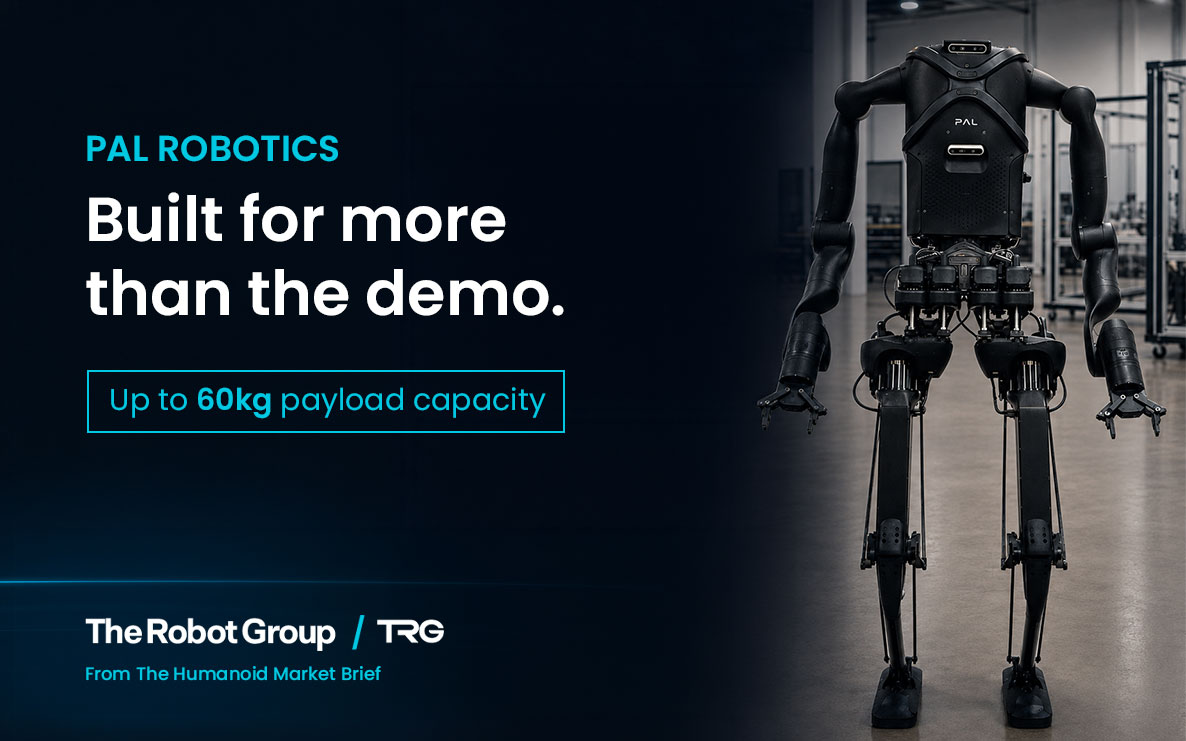
That is why PAL Robotics’ latest work around KANGAROO is worth paying attention to.
PAL has recently highlighted the robot’s differential-motor architecture, which it says reduces overheating while supporting higher loads. The company now states an overall payload capacity of up to 60 kg, with further testing taking place through the France 2030-backed TIRREX project alongside LAAS-CNRS.
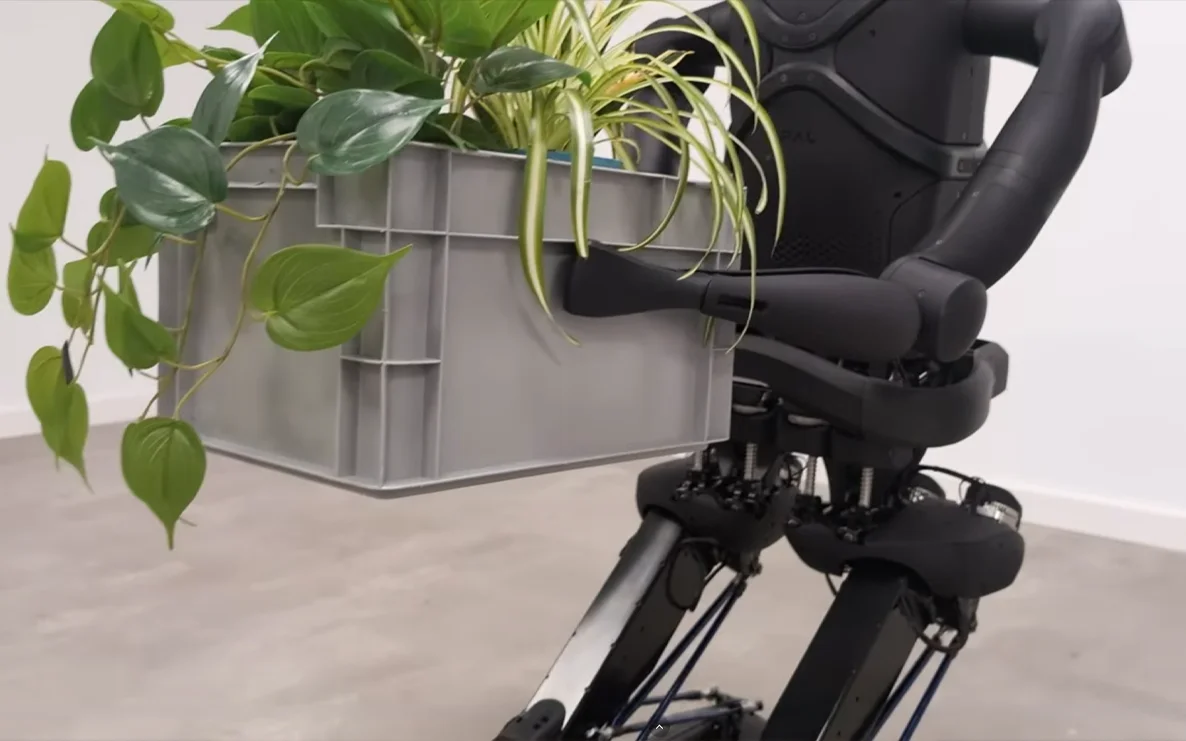
There is an important distinction behind that headline number. PAL’s current technical specification lists the robot’s bimanual manipulation payload at up to 30 kg with its 4-DoF arm configuration, with lower figures for its higher-DoF arm options.
The 60 kg figure is therefore not the same thing as saying KANGAROO can manipulate 60 kg with its arms.
And that distinction actually makes the engineering story more interesting.
A maximum payload figure makes a good headline.
Industrial users will eventually need considerably more information.
How much can the robot manipulate through its arms? Can it repeat the movement hundreds of times? How does actuator temperature change under sustained loading? Does performance need to be derated? How much energy does the task consume? What maintenance does repeated operation create?
These are less spectacular questions.
They are also much closer to the questions that determine whether a robot becomes economically useful.
PAL says KANGAROO uses differential motors and a parallel mechanical architecture that reduces overheating while increasing load capacity. Its latest up-to-60 kg overall payload-capacity claim, alongside published bimanual manipulation figures of up to 30 kg depending on arm configuration, provides a useful example of why future humanoid specifications will need to become more nuanced.
Overall payload, manipulation payload and sustained workload are not the same thing.
As humanoids move closer to commercial deployment, understanding the difference between them will become increasingly important.
PAL has not published a full industrial duty-cycle benchmark for KANGAROO, so it would be premature to claim that question has been answered.
But its emphasis on reducing overheating through actuator design points directly towards the kind of engineering challenge that will matter as humanoids move from impressive demonstrations towards repeated physical work.
KANGAROO has been strongly associated with bipedal locomotion research.
The current platform now reaches considerably further. PAL positions KANGAROO as an Advanced Physical AI Platform, with configurations spanning whole-body control, manipulation, reinforcement learning and robotics research.
Its specification includes a 2 kHz EtherCAT control loop, ROS 2, multiple arm configurations, RGB-D perception and up to three hours of stated autonomy. Depending on the selected arm configuration, PAL also lists substantial bimanual manipulation capability, alongside interchangeable end-effectors and force/torque sensing options.
Together, those capabilities broaden the role KANGAROO can play as a research platform.
The discussion therefore moves beyond:
Can a humanoid move impressively?
towards:
Can a humanoid combine movement, manipulation and physical performance in a form that can eventually support useful work?
For the wider humanoid market, that shift is commercially significant.
AI capability will remain central to the humanoid race.
But intelligence cannot compensate indefinitely for physical limitations underneath it.
As robots move from research environments towards factories, warehouses and other operational sites, buyers are likely to care increasingly about metrics such as:
The industry does not yet report these metrics consistently, but as humanoid deployments mature, buyers are likely to demand them.
And when that happens, some of the most important advances in humanoid robotics may look far less dramatic than another running or jumping video.
They may come from motors, thermal management, mechanical architecture and controls that allow the robot simply to keep working.
That is what makes PAL Robotics an interesting company to watch.
PAL has more than two decades of robotics development behind it, and KANGAROO sits within a wider portfolio spanning mobile manipulation, service robotics, humanoid research and open development infrastructure.
Its latest work also highlights something the wider market sometimes overlooks:
Physical AI still has to be physical.
The intelligence layer matters enormously. But for commercial deployment, that intelligence still needs a body engineered to handle the loads, repetition and operating conditions of real work.
KANGAROO’s differential actuation approach does not by itself answer every question around industrial duty cycle. PAL’s continuing testing should provide more evidence over time.
But the direction is important.
As humanoids move beyond the demonstration phase, the most important specifications may become less about a single maximum number and more about usable payload, thermal behaviour and repeatable performance under real workloads.
That is a harder benchmark than demonstrating what a robot can do once.
It is also much closer to how industry will ultimately judge these machines.
Learn more about PAL Robotics humanoids through The Robot Group
This is the kind of commercially meaningful development we track in The Humanoid Market Brief - examining what new capabilities could mean for task fit, deployment readiness and real-world adoption.