Should Humanoid Robots Carry Their Own Drones?


Humanoid robots are being designed to walk, lift, manipulate and increasingly operate autonomously around existing workplaces.
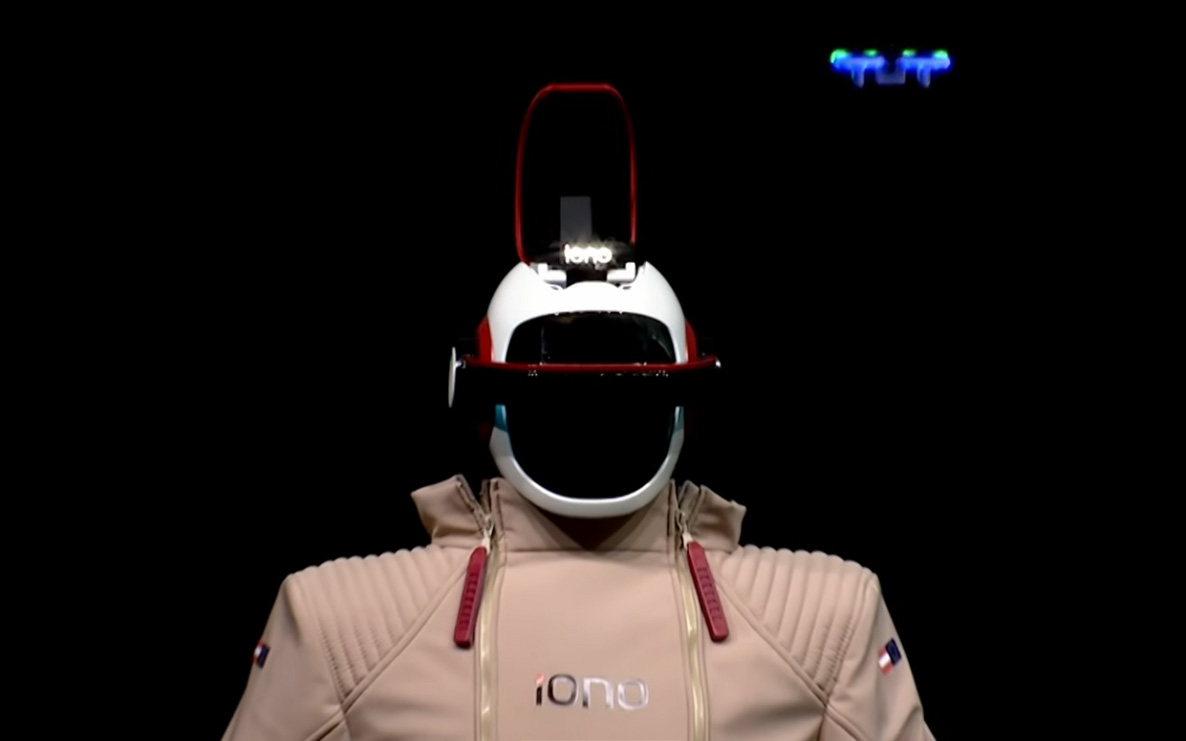
Austria’s IONO Robotics has added something less conventional.
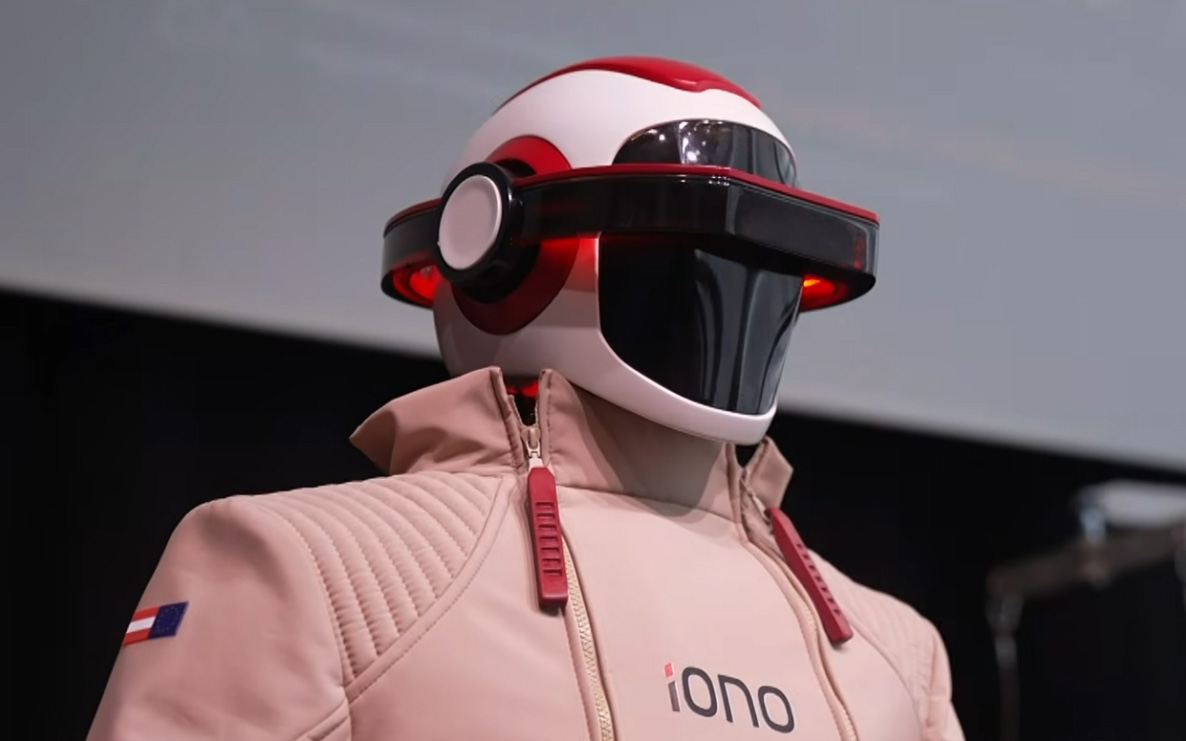
Its WORKMATE humanoid carries a drone inside its head.
The drone can launch directly from the robot, giving WORKMATE an aerial view when its ground-based sensors cannot provide the right perspective. IONO says the concept is intended to extend how the robot can survey and inspect its surroundings.
It sounds unusual.
But there is a serious industrial idea behind it:
why make one robot physically reach every location when it can deploy a second robot better suited to the task?
A humanoid and a drone solve very different mobility problems.
A humanoid can potentially move through spaces designed around people, approach equipment, carry objects and eventually interact with switches, doors, tools and controls.
A drone can quickly access places that are difficult, inefficient or potentially unsafe for a ground robot to reach.
Put the two together and the operational envelope becomes much larger.
Imagine WORKMATE moving through an industrial site before deploying its drone to inspect:
The humanoid does not need to climb simply to obtain a better view.
The aerial system goes instead.
That could be particularly useful for inspection, security monitoring, infrastructure assessment and remote site visibility, where the objective is often to collect information before deciding whether physical intervention is required.
This may be the more interesting idea behind WORKMATE.
Humanoid development often assumes that the robot itself should become capable of almost everything.
Better locomotion. Longer reach. More sensors. More dexterous hands. Greater autonomy.
IONO’s approach hints at another possibility:
the humanoid becomes a mobile base capable of deploying specialist robotic capabilities when needed.
For visual inspection, that could be a drone.
For another task, it might eventually be a different sensor package or tool.
IONO says WORKMATE uses a modular multi-head concept designed to allow additional sensing or robotic tools to be integrated in future.
That creates a different way of thinking about general-purpose robotics.
Perhaps the most capable robot will not be the machine that performs every task with one body.
It could be the machine that knows when to use another tool - or another robot.
Inspection is the most obvious starting point.
Industrial sites are full of assets where useful information sits outside normal ground-level viewing angles. Today, those inspections may require elevated platforms, fixed cameras, specialist access equipment or a separate drone operation.
A combined ground-and-air platform could potentially simplify some of those workflows.
The humanoid could navigate the wider site and position itself close to the area of interest. The drone could then extend the inspection beyond the robot’s physical reach before returning to its host platform.
Security and site monitoring present another interesting application.
A ground robot can patrol routes and investigate activity at human height. An aerial platform can rapidly widen that view when something unusual is detected.
The same principle could apply to infrastructure, logistics facilities, utilities and emergency assessment: move on the ground where ground mobility makes sense, then move into the air when it does not.
That flexibility may ultimately be more valuable than forcing one form of locomotion to solve every problem.
WORKMATE is still an emerging platform, but IONO’s wider positioning makes the concept worth watching.
The Linz-based company says it is developing humanoid robots specifically for real working environments and is already working with industrial partners on pilot projects in Austria, Germany and Italy.
It is also developing IONOSPHERE, its own robotics AI, control, server and software architecture, with an emphasis on security, control and European data sovereignty.
That matters because a combined humanoid-and-drone system creates more than a mobility challenge.
It creates a data problem.
Information may be collected across multiple moving machines, cameras and sensors. Businesses will need clear control over where that data travels, how it is processed and how the two systems operate together.
IONO is therefore not positioning WORKMATE simply as an unusual mechanical concept.
It is attempting to build the surrounding operating architecture as well.
The drone inside WORKMATE attracts attention because it is unusual.
The more important idea is what it represents.
Industrial robots do not necessarily need to perform every task with the same body.
A humanoid may be best suited to moving through human environments and interacting physically with them.
A drone is better at quickly reaching elevated or inaccessible viewpoints.
Combining those capabilities could create a more effective system for inspection, monitoring and site awareness than trying to engineer either robot to do everything alone.
IONO Robotics is still early in that journey, but WORKMATE raises a useful question for the wider humanoid market:
Will the future general-purpose robot be one machine that can do everything - or a machine capable of bringing the right robotic capability with it?
For inspection and surveillance in particular, the second approach has a compelling logic.
And it makes IONO Robotics one of the more interesting European humanoid companies to watch as industrial pilots progress.
For more analysis of the technologies, OEMs and commercial signals shaping the next phase of humanoid robotics, explore The Humanoid Market Brief.