Humanoid Raises $152m: What Europe’s New Robotics Unicorn Must Prove Next
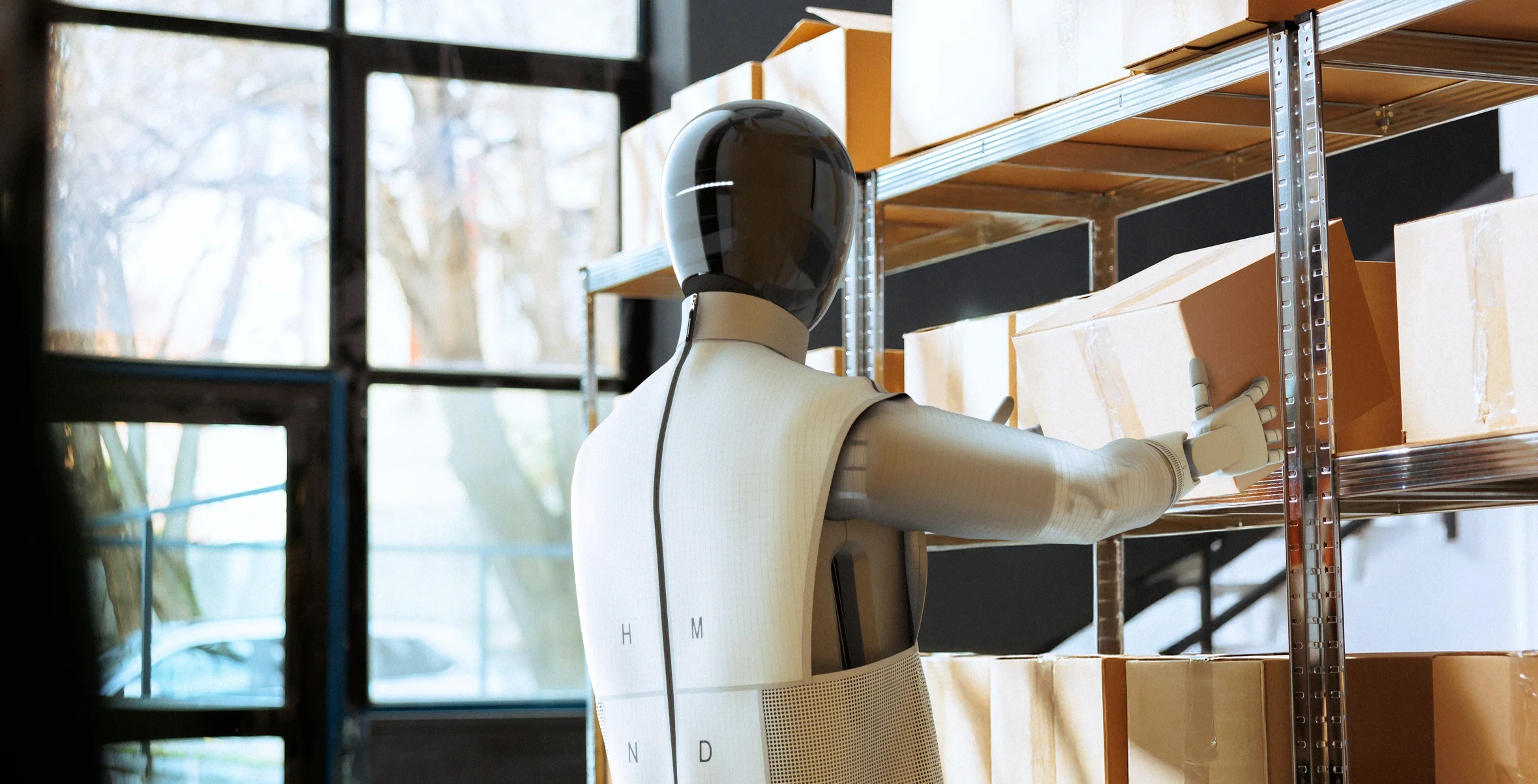


UK-based robotics company Humanoid has raised $152 million in Series A funding at a $1.35 billion post-money valuation.
The investment takes the company’s total funding to $270 million. Humanoid describes the round as the largest European Series A completed by a humanoid-first robotics company and says it has become Europe’s first pure-play humanoid robotics unicorn.
The valuation will attract attention. For industrial customers, however, it is not the most important part of the announcement.
The real significance lies in what the funding is intended to support: Beta robots entering customer sites, mass manufacturing of wheeled humanoids, continued development of Humanoid’s KinetIQ software platform and the creation of an industrial supply chain involving Bosch and Schaeffler.
Humanoid is no longer being judged only on how quickly it can develop a robot or raise capital.
It must now demonstrate that its technology, manufacturing partnerships and customer pipeline can become reliable machines operating repeatedly inside real businesses.
The Series A was led by Prime Movers Lab, with participation from Schaeffler, Bosch, Fubon Financial Holding Venture Capital and Aglaé Ventures.
Humanoid says the new capital will support four main priorities:
The company plans to begin placing Beta-version robots at customer facilities in the fourth quarter of 2026.
That timetable makes this more than a long-range research announcement. Q4 2026 is when Humanoid’s technology should begin generating meaningful evidence from customer environments.
The question will no longer be whether its robots can perform selected tasks in demonstrations.
It will be whether they can repeat those tasks safely, reliably and economically within live operations.
Large funding rounds are becoming increasingly common in humanoid robotics.
Capital is essential. Developing a humanoid requires specialised engineers, expensive hardware, AI training, testing facilities and a long transition from individual prototypes to repeatable production.
But capital alone does not create an industrial product.
What makes this round particularly relevant is the participation of businesses that can play active roles in Humanoid’s commercialisation.
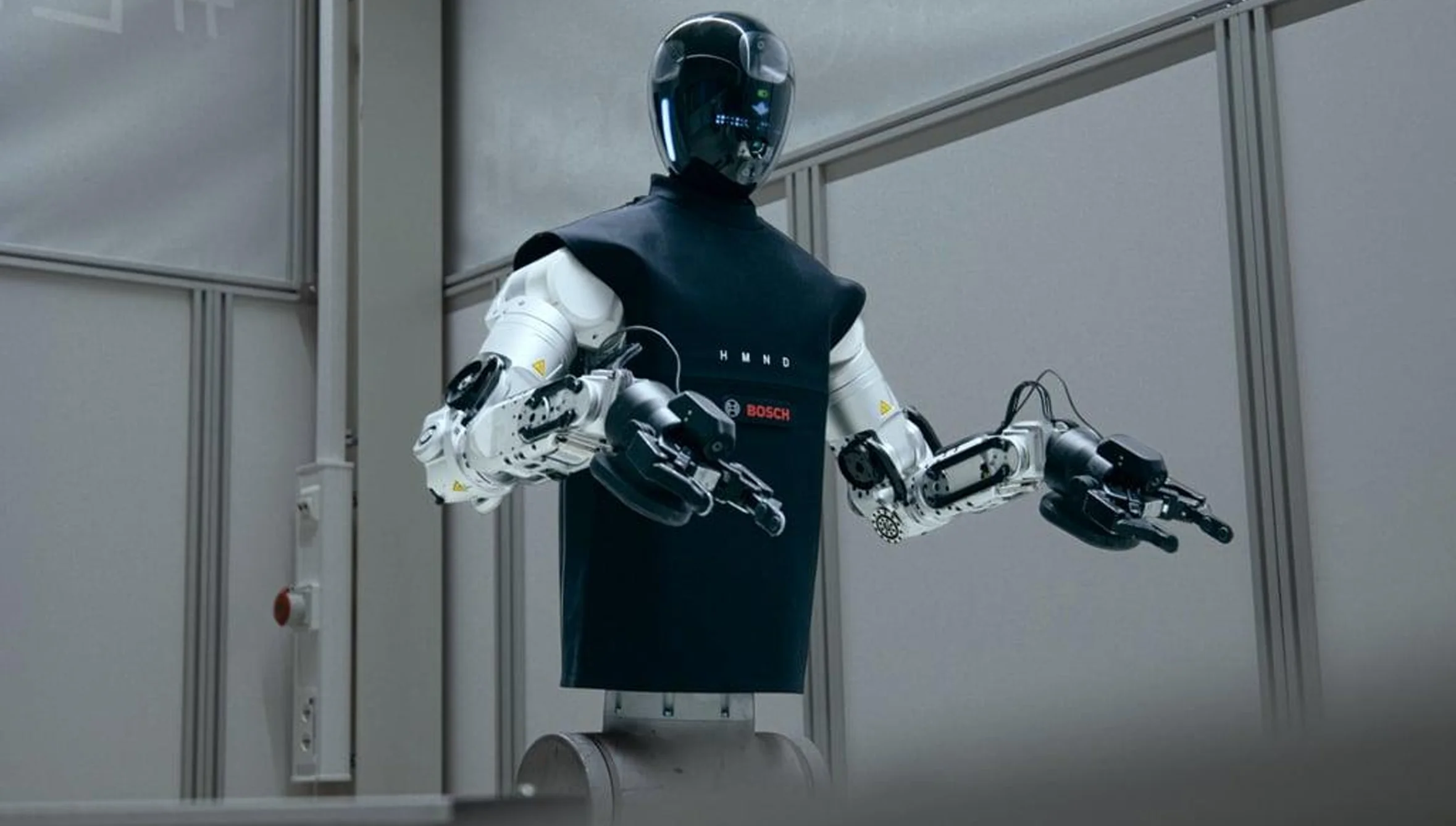
Through Robert Bosch Robotics, Bosch has entered a manufacturing partnership with Humanoid. Bosch is expected to act as a contract-manufacturing partner while contributing expertise in hardware design, production and supply-chain development.
That could help Humanoid address one of the hardest challenges in the sector: producing the same robot consistently, at increasing volume, with controlled quality and dependable access to components.
Schaeffler is also operating in several roles.
It is an investor, an actuator supplier and a prospective large-scale customer. Humanoid has previously announced plans involving the deployment of thousands of robots across Schaeffler’s manufacturing network.
TRG examined that relationship in detail in our analysis of what the Schaeffler–Humanoid deal means for UK manufacturing.
Together, Bosch and Schaeffler provide Humanoid with more than funding. They provide manufacturing knowledge, component capacity, industrial environments and potential deployment volume.
The strongest interpretation of the funding round is that Humanoid is assembling an integrated system for industrialising its robots.
That system now includes:
This matters because the eventual winners in humanoid robotics may not be the companies with the most visually impressive demonstrations.
They are more likely to be the companies that can combine robot capability with:
As TRG has explored in its assessment of which humanoid robots are most likely to scale, scale depends on much more than whether a robot can complete a task once.
The real test is whether it can repeat that task often enough, reliably enough and economically enough to become an operational asset.

Humanoid is developing both wheeled and bipedal platforms, but its initial mass-manufacturing plans focus on wheeled humanoids.
That may prove commercially pragmatic.
A robot does not necessarily need legs to create value in a factory or warehouse. In many structured environments, a wheeled base can provide faster, more stable and more energy-efficient mobility while avoiding some of the complexity associated with bipedal walking.
Humanoid’s HMND 01 Alpha Wheeled platform combines an omnidirectional mobile base with a human-scale upper body, two arms and interchangeable five-fingered hands or parallel grippers.
Humanoid currently publishes the following Alpha specifications:
These are manufacturer-published specifications for the Alpha platform rather than independently validated production performance.
The design is intended to retain the capabilities that may matter most in early industrial settings:
At the same time, the wheeled base removes the need to solve every difficulty associated with human-style locomotion from the outset.
For many industrial sites, this could provide a more credible first route to mobile manipulation than insisting that every humanoid must walk.
It also reinforces the point made in TRG’s comparison of humanoids, autonomous mobile robots and cobots: the right platform should be determined by the workflow, not by the category receiving the most attention.
Humanoid describes KinetIQ as a proprietary four-layer AI framework intended to support real-world robot deployment.
The system is designed to coordinate perception, reasoning, movement and fleet-level operation across Humanoid’s different robot formats.
That software layer may ultimately become as important as the physical robot.
The long-term value of a humanoid platform will depend partly on how quickly it can learn new tasks, how reliably improvements can be distributed across a fleet and how effectively the system handles variation.
In industrial settings, a useful AI stack must support more than an impressive demonstration.
It needs to help deliver:
Humanoid has ambitions to move towards increasingly general-purpose industrial capability.
The immediate commercial test will be narrower: can KinetIQ help its robots master defined tasks with a high enough success rate for real operations?
General capability may be the long-term objective. Reliable repetition is the near-term requirement.
Humanoid says Beta robots will begin entering customer facilities in Q4 2026.
Those deployments should provide the first meaningful opportunity to assess whether the company is moving from rapid prototype development towards a deployable industrial system.
The market should look beyond selected video clips and evaluate operating measures such as:
How frequently can the robot complete its assigned workflow without assistance?
How often does an operator need to guide, teleoperate, reset or recover it?
Can it perform for a meaningful portion of a shift once charging, maintenance and interruptions are considered?
What happens when an object is misplaced, a route is obstructed or the surrounding process changes?
How much scheduled operating time is lost to faults, maintenance, updates or support requirements?
How long does it take to progress from delivery to an accepted, functioning workflow?
How are workers, surrounding equipment and other operations protected during normal use, faults and foreseeable misuse?
Does the robot improve throughput, address an ergonomic problem, fill a labour gap or create another measurable benefit?
These are the indicators that will determine whether Humanoid’s machines are ready to progress from Beta deployments towards wider adoption.
They are also the measures that businesses should define before beginning a humanoid pilot.
A structured humanoid robot readiness assessment can help establish the task, operating environment, responsibilities and acceptance criteria before significant budget is committed.
Humanoid’s funding is part of a wider acceleration across European robotics.
Europe has historically combined leading robotics research, industrial automation expertise and advanced manufacturing capability, but it has produced fewer highly visible humanoid companies than the United States or China.
That is beginning to change.
In the UK, Humanoid is attempting to combine substantial private capital, proprietary AI, contract manufacturing and large industrial partners.
In Italy, Generative Bionics is taking a different route with GENE.01: a tactile humanoid platform built around full-body sensing, European actuation technology and a defined shipyard-welding programme with Fincantieri.
TRG’s analysis of GENE.01 and Italy’s emerging industrial humanoid proposition examines whether that research-led platform can progress into a supportable commercial product.
The two companies are at different stages and should not be treated as direct equivalents.
But together, they illustrate two complementary parts of Europe’s opportunity:
Europe is no longer short of humanoid ambition or industrial partners.
Its next challenge is converting those ingredients into repeatable, accepted deployments.
Humanoid has described its commercial pipeline as one of the strongest in the industry.
That is an important signal of customer interest, but market observers should distinguish carefully between different levels of commercial evidence.
Expressions of interest, reservations and pre-orders are not necessarily equivalent to:
A large pipeline can become a major competitive advantage. It can provide customer environments in which to validate tasks, gather data and improve the product.
But the critical next step is conversion.
Humanoid must demonstrate that customers can move from interest to deployment, acceptance and continuing operational use.
That distinction applies across the wider humanoid robot manufacturer landscape. Announced demand signals momentum; accepted installations provide much stronger evidence of maturity.
The funding gives Humanoid substantial resources, but it does not remove the practical difficulties associated with deploying a new class of industrial machine.
Prospective customers will still need clarity on:
These questions are less visible than a product reveal or funding announcement, but they will have a major influence on adoption.
A capable robot without an effective deployment and support model can still become a poor investment.
Humanoid must therefore develop not only an increasingly capable machine, but also the commercial infrastructure expected from an industrial equipment supplier.
Humanoid’s UK base makes the announcement particularly relevant to British industry.
Founded in 2024, the company says it now brings together more than 250 engineers, researchers and other specialists, with offices in London, Boston, Vancouver and San Diego.
For UK manufacturers, warehouse operators and logistics businesses, Humanoid could become an important future supplier closer to home than many leading US or Chinese platforms.
The funding announcement does not, however, mean its robots are immediately available for routine deployment across British sites.
The more useful response is to begin preparing.
Businesses can start by identifying:
These are particularly relevant considerations for businesses examining humanoid robots in warehouses and manufacturing.
The objective should not be to select Humanoid—or any other manufacturer—before the use case is properly understood.
It should be to become ready to compare suitable platforms when operational evidence, support arrangements and commercial terms become clearer.
The round makes Humanoid more commercially credible. It does not, by itself, make the company commercially proven.
There is an important difference.
Humanoid now has many of the ingredients required to become a major European robotics supplier:
That combination places it among the more serious emerging companies in the global humanoid market.
Several questions nevertheless remain:
The answers will matter more than the unicorn label.
Humanoid’s $152 million Series A is one of the most important European humanoid robotics funding announcements to date.
Its significance does not come primarily from the valuation.
It comes from the possibility that Humanoid is assembling the elements needed to cross the gap between a robotics startup and a serious industrial supplier.
Bosch brings contract-manufacturing capability. Schaeffler brings components, factory environments and potential deployment volume. KinetIQ provides the software layer. The new funding provides the capital required to develop the next platform and begin placing Beta robots with customers.
That is a credible foundation.
The next milestone is no longer another financing round, prototype or headline partnership.
It is repeatable performance inside customer facilities.
By the end of 2026, the market should begin to see whether Humanoid can convert capital and industrial relationships into accepted deployments with measurable task performance, manageable human intervention and a support model customers can rely on.
If it can, Humanoid may become much more than Europe’s newest robotics unicorn.
It could become one of the first European humanoid companies to establish a repeatable route from prototype to industrial scale.
For continuing analysis of OEM funding, deployments and commercial readiness, explore The Humanoid Market Brief.
The Robot Group helps UK businesses identify suitable use cases, compare leading humanoid manufacturers and structure a practical route from initial assessment to controlled pilot and commercial deployment.