What the Schaeffler-Humanoid Deal Means for UK Manufacturing



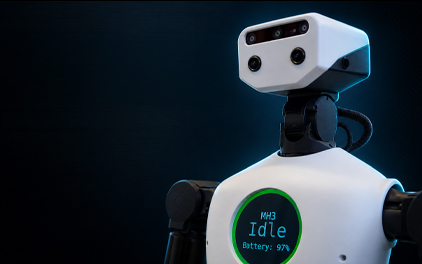
The humanoid robotics story has been full of promise, but short on hard industrial numbers. That is why the latest deal between UK-founded Humanoid and Schaeffler matters so much. Reuters reported that Humanoid plans to deploy 1,000 to 2,000 robots across Schaeffler plants by 2032, with the first deployments scheduled between December 2026 and June 2027 at two German locations. Reuters also reported that Humanoid will help Schaeffler integrate the robots into existing production lines.
For UK manufacturing, this is more than a headline about one startup landing a major partner. It is one of the clearest signals yet that humanoids are moving from pilot theatre to structured industrial rollout. If that rollout progresses, the market will stop asking only which robots look impressive and start asking which vendors can support real deployment, real supply chains and real operational integration.
There are three reasons this deal cuts through the noise.
First, the volume is meaningful. A plan for 1,000 to 2,000 units is not a lab exercise or a press-demo partnership. It points toward long-horizon production planning and a serious view of humanoids as industrial assets. Reuters described the programme as one of Humanoid’s largest manufacturing rollouts to date.
Second, the deployment is tied to actual factory use. Reuters said the first two German locations are set to focus on box handling in Herzogenaurach and near-full-scale testing in Schweinfurt. That matters because it shows the rollout is being grounded in repeatable, measurable industrial tasks rather than abstract “general-purpose” claims.
Third, this is not just a robot purchase. It is a deployment-and-supply-chain deal. Reuters reported that Schaeffler will become the preferred supplier of joint actuators for Humanoid’s wheeled robots through 2031, covering more than half of Humanoid’s demand for those components. Schaeffler’s own January release said the partnership includes both a supply agreement for actuators and a purchase agreement for humanoids for Schaeffler’s global production network.
That combination is important. It suggests the category is maturing from “buying a robot” to building an ecosystem around components, integration, and long-term industrialisation.
For UK manufacturers, the biggest takeaway is not that humanoids are suddenly everywhere. It is that the first real scale-ups will probably follow a familiar industrial pattern.
They will not be driven by the flashiest demos. They will be driven by companies that can combine:
That is exactly what this deal begins to look like. Schaeffler is not just a customer. It is also a motion-technology supplier positioning itself deep inside the humanoid value chain. Its own corporate site now explicitly presents humanoid robots as part of its technology strategy, and its January release described the Humanoid partnership as “another milestone” in becoming a preferred technology partner in the humanoid robotics segment.
For UK industry, that is the new pattern to watch. The first winners in humanoids are likely to be the companies that can behave like industrial suppliers, not just robotics brands.
There is also a strong national angle here. Reuters identified Humanoid as a British technology company, founded in 2024 by Artem Sokolov. Reuters separately reported that the business is targeting a U.S. IPO by 2029 or 2030, has been funded with roughly $100 million by Sokolov, and says it has about 34,000 pre-orders for delivery over the next three years.
That means this is not just another overseas humanoid headline for UK readers to watch from a distance. It is a sign that a UK-founded player is trying to move into the first serious wave of industrial scale-up.
If you are a UK manufacturer, this should sharpen the question you ask internally. Not “should we believe the hype?” but “how do we prepare for a world where humanoid platforms are no longer experimental, but part of normal production planning?”
The first lesson is that humanoids will scale task by task, not all at once.
Reuters said the first deployment location will focus on box handling, which is exactly the kind of constrained, measurable workflow that makes sense as an early industrial wedge. UK manufacturers should take that seriously. The first successful applications are likely to be narrow, repetitive and operationally important. That means businesses should be identifying the workflows that are dull, physically repetitive and hard to staff consistently, rather than waiting for a robot that can “do everything.”
The second lesson is that integration matters as much as hardware.
Reuters reported that Humanoid will assist Schaeffler with integrating the robots into existing production lines. That is a reminder that the real challenge is often not buying the asset. It is making the asset work within a live operating environment, with existing processes, people, and production expectations. For UK sites, the implication is simple: if humanoids are on the roadmap, pilot design and integration planning should begin long before purchase decisions.
The third lesson is that component ecosystems will shape the winners.
Schaeffler’s role as preferred actuator supplier matters because industrialisation depends on repeatable access to core components. Reuters said the actuator agreement is expected to cover a seven-digit number of units over its term, implying supplies of at least one million actuators. This is the kind of industrial planning signal that tells the market a company is thinking beyond demonstration units.
There is an upside story here, but also a warning.
The warning is that the market is moving quickly enough that UK businesses cannot afford to stay at the level of generic curiosity for too long. If large industrial groups are beginning to lock in supply relationships, integration partners and rollout pathways, then the competitive advantage will go to firms that build internal understanding early.
That does not mean rushing into procurement. It means doing the groundwork now:
The companies that win with humanoids will not be the ones that read the most headlines. They will be the ones that use this phase to become deployment-ready.
The Schaeffler-Humanoid deal also reinforces a broader point: the humanoid sector is beginning to behave less like a pure frontier-tech story and more like a serious industrial market.
That is consistent with other recent Schaeffler moves. Reuters reported last week that Schaeffler sees humanoid robotics orders reaching several hundred million euros by 2030, supported by work with around 45 robotics entities and by expectations that global humanoid production could top 1 million units between 2026 and 2030.
Whether or not those projections prove accurate, the direction of travel is clear. Major industrial suppliers are no longer watching humanoids from the sidelines. They are trying to shape the supply chain, the components, and the early rollout logic.
That is why this deal matters so much. It is not simply about one British startup placing robots in German factories. It is about the first signs of a repeatable humanoid industrial playbook emerging in public.
For UK manufacturing, the message is clear.
Humanoids are no longer just a story about capability. They are becoming a story about industrialisation. The businesses that benefit first will not be the ones waiting for the category to feel fully mature. They will be the ones learning how to identify the right tasks, structure the right pilots, and build the right commercial pathways while the market is still taking shape.
That is the real significance of the Schaeffler-Humanoid deal. It shows that the next phase of the category will be won not just by good robots, but by good rollout logic.
And that is the part UK manufacturers should be studying now.