Can Humanoid Robots Work Outside? Inside DEEP Robotics All-Weather DR02
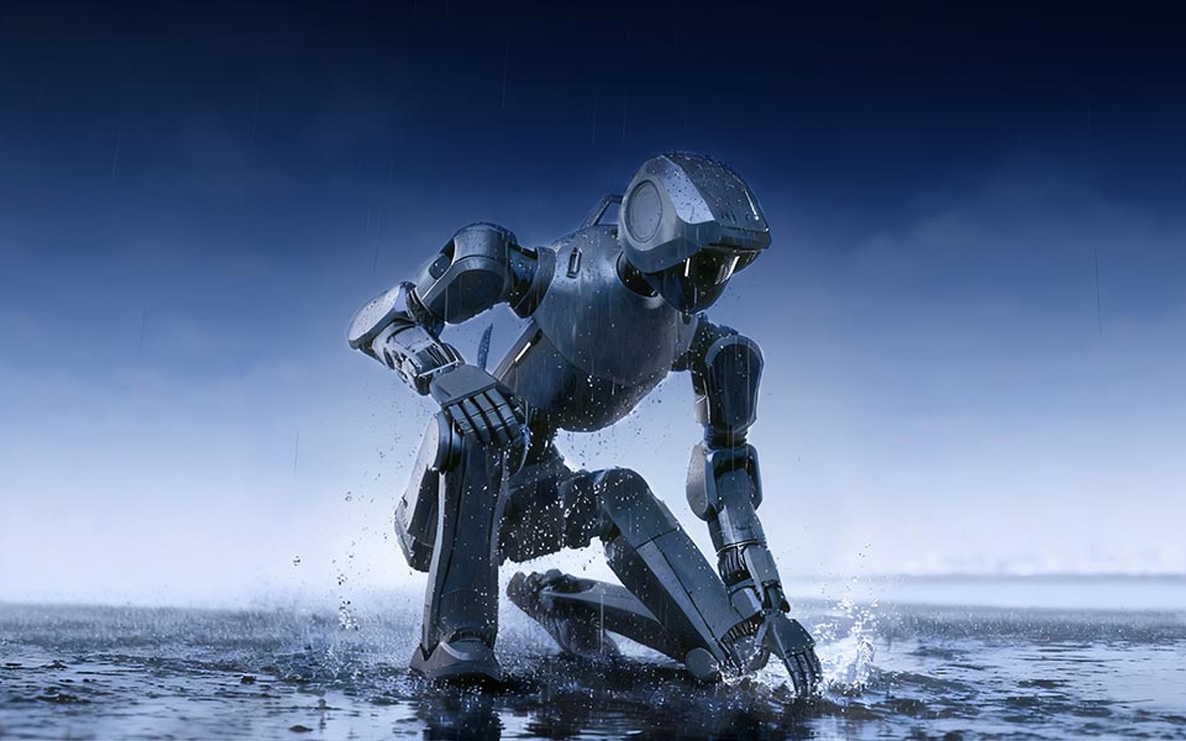


Most humanoid robots are demonstrated on clean floors, under controlled lighting and in environments designed to help them succeed.
Real industrial sites are different.
Dust, rain, temperature changes, uneven surfaces and transitions between buildings and external areas can quickly expose the limits of a robot designed primarily for the laboratory or a controlled factory zone.
DEEP Robotics is addressing that gap with DR02, a full-size industrial humanoid featuring manufacturer-listed IP66 protection, operation between –20°C and 55°C, modular replaceable limbs and human-scale mobility.
So, can humanoid robots leave the factory?
Yes—but the strongest business case is not weatherproofing alone.
The DEEP Robotics DR02 becomes particularly relevant where environmental resilience needs to be combined with human-compatible reach, two-arm interaction or access to tools and infrastructure designed around people.
Where the requirement is primarily inspection, sensing or mobility across difficult terrain, DEEP Robotics’ X30 Pro quadruped or LYNX M20 wheel-legged platform may provide the stronger route.
That wider portfolio is the real reason DR02 deserves attention.
DEEP Robotics is not approaching rugged humanoid robotics from a standing start. It already has experience applying legged robots across utilities, tunnels, emergency response, security and difficult industrial environments.
DR02 extends that experience into a human-shaped platform.
DEEP Robotics describes DR02 as a new-generation, all-weather industrial humanoid.
Its defining feature is full-body IP66 protection. According to the manufacturer, the robot is designed to operate around rain, humidity and dust while moving between environments such as dry factories, outdoor areas, cold-storage facilities and high-temperature workshops.
DEEP Robotics also lists:
These are manufacturer-published specifications, and performance will depend on configuration, operating conditions and the task being completed.
The environmental protection is significant because a humanoid contains numerous potential ingress points across its joints, sensors, connectors, battery systems and removable body sections.
Protecting the complete machine could expand the range of environments in which humanoid robots can be assessed.
It does not make DR02 suitable for every outdoor or hazardous setting. The delivered configuration - including hands, tools and any additional sensor payload - would still need to be matched to the intended environment.
But it directly addresses a practical constraint affecting many emerging humanoid platforms: their dependence on clean, dry and predictable surroundings.
DR02’s replaceable body modules may be just as important commercially as its environmental protection.
DEEP Robotics says the robot’s forearms, complete arms and legs can be exchanged as modules. The intention is to simplify servicing and reduce the time a robot remains unavailable following damage or component failure.
That is highly relevant to industrial users.
Humanoids are complex mobile machines. A platform operating across uneven ground, stairs and mixed indoor-outdoor routes may be exposed to impacts, falls and normal actuator wear.
A modular architecture could allow a damaged assembly to be replaced rather than requiring extensive component-level repair at the customer’s site.
The practical value will come from the complete support model: diagnosis, replacement time, recalibration, local spare-part availability and technical response.
DEEP Robotics already provides technical support, training, software upgrades and maintenance across its wider product range. TRG’s role is to help UK organisations define the appropriate equipment and support requirements before progressing into evaluation or deployment.
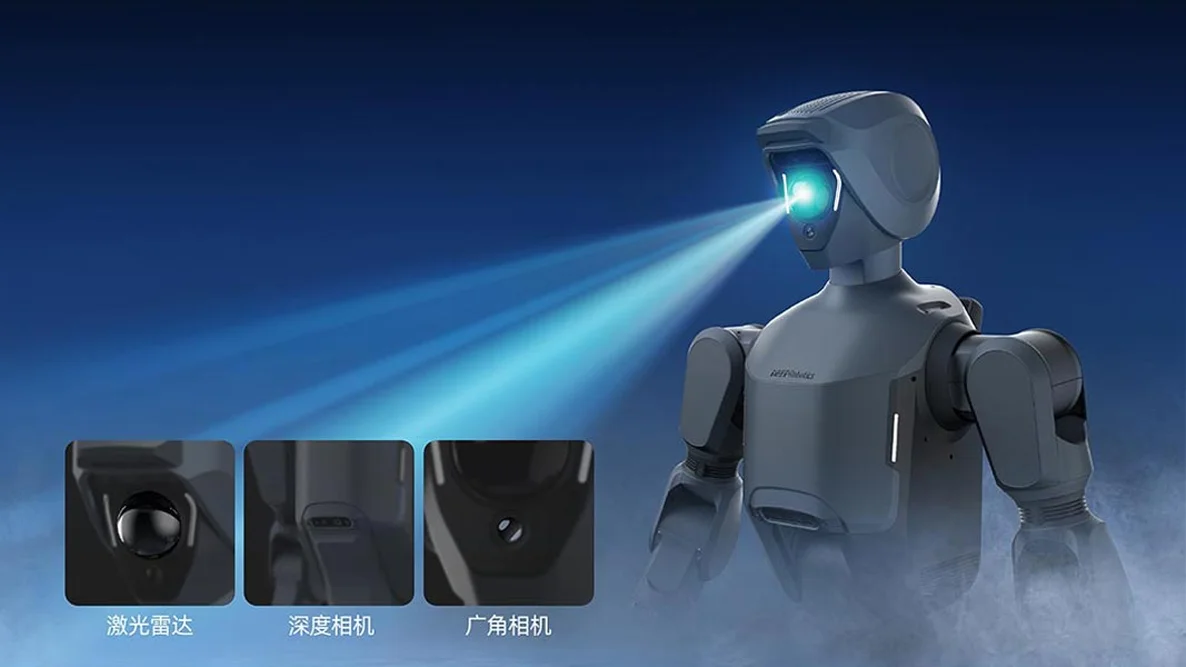
DR02 is more credible because it sits within an established portfolio of industrial legged robots.
DEEP Robotics has developed quadruped and wheel-legged systems intended to operate across stairs, tunnels, utility sites, wet environments and difficult terrain.
That experience does not make humanoid deployment automatic. A taller bipedal platform introduces different challenges around balance, manipulation and human interaction.
It does, however, give DEEP Robotics an existing foundation in several important areas:
The DEEP Robotics range therefore allows buyers to compare three different physical approaches within the same manufacturer ecosystem.
The DEEP Robotics X30 Pro is an industrial quadruped designed for inspection, mobile sensing and difficult-terrain access.
DEEP Robotics lists IP67 protection, operation between –20°C and 55°C, a maximum speed of at least 4 metres per second and endurance of between 2.5 and four hours.
The Pro configuration also provides interfaces for cameras, thermal-imaging equipment, gas sensors and other specialist payloads.
The wider X30 platform has already been adapted for underground power-transmission tunnel inspection in Singapore.
The robot, known within SP Group as SPock, was configured with visual and thermal equipment to patrol sections of a 40-kilometre tunnel network and identify issues including cracks and water seepage.
DEEP Robotics reported that the programme was expected to save approximately 480 hours of manual inspection annually. The project also required several months of work to adapt the robot’s sensors, algorithms and navigation logic to the tunnel layout and local requirements.
That illustrates where X30 Pro is strongest.
Where the task involves carrying sensors, navigating a repeatable route and collecting inspection data, a quadruped may provide a more established and efficient solution than a humanoid.
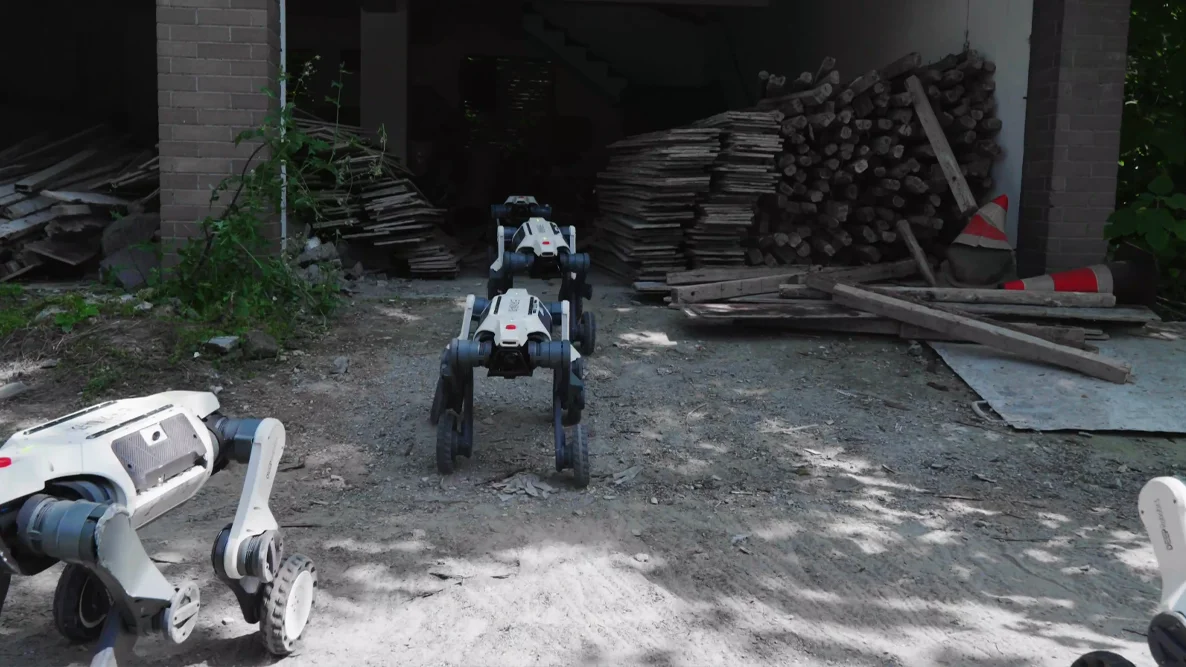
The DEEP Robotics LYNX M20 Series takes a different approach.
It combines wheels with articulated legs, allowing the robot to roll efficiently over suitable surfaces and change posture when it reaches stairs, rubble, narrow passages or more difficult terrain.
The standard M20 is listed at approximately 35kg with a 15kg effective payload. DEEP Robotics reports up to three hours or 15km of unloaded operation, approximately 2.5 hours or 12km while carrying 15kg, and obstacle capability up to 80cm under relevant conditions.
The robot also carries manufacturer-listed IP66 protection and operates between –20°C and 55°C.
Its compact size and wheel-legged mobility make M20 relevant for:
An M20-based system has also been configured for flood and typhoon response in Zhejiang, combining the robot with thermal sensing, communications and onboard computing for hazard inspection, reconnaissance and search support.
M20 is therefore not simply a smaller alternative to DR02.
It addresses a different operational requirement: reaching difficult locations efficiently while carrying sensing, communications or mission equipment.
The most useful question is not whether humanoids are better than quadrupeds.
It is which robot form best matches the required outcome.
The stronger starting point for autonomous inspection, sensor transport and repeatable industrial patrol routes across utilities, tunnels and facilities.
Relevant where wheeled efficiency must be combined with stairs, narrow access, large obstacles or rapidly changing terrain.
More compelling where rugged mobility needs to be combined with human-scale reach, two-arm interaction or access to doors, controls, tools and equipment designed around people.
A quadruped may reach an inspection point efficiently but be unable to open a cabinet or operate the equipment inside it.
A humanoid could potentially reach the same location and complete a physical action once it arrives.
Conversely, sending a humanoid through a tunnel solely to capture thermal images may introduce additional height and complexity without improving the inspection outcome.
The decision should be based on the task, terrain, payload and required degree of physical interaction—not on which robot category currently receives the most attention.
DR02’s strongest opportunities are likely to be workflows where environmental resilience and human-compatible interaction are both required.
Some sites include production buildings, storage areas, loading zones and external routes.
A protected humanoid could potentially move between these areas while carrying, delivering or eventually handling equipment.
Industrial facilities contain stairs, doors, cabinets, controls and tools designed around human movement.
The humanoid form becomes relevant where a robot must both navigate this infrastructure and interact with it.
DR02 could provide a mobile presence across industrial sites, collecting information and allowing remote teams to assess conditions without immediately sending a person into the area.
Its longer-term advantage over a quadruped would come from adding physical interaction to that mobility.
A rugged humanoid could eventually deliver equipment, operate controls or assist remote specialists across areas that are difficult, uncomfortable or potentially unsafe for people.
These applications create a clear route for structured evaluation.
Reaching the location is one part of the opportunity. The larger potential comes from combining rugged mobility with handling, interaction and tool use once the robot arrives.
DR02 brings environmental protection, human-scale mobility and modular maintenance into one industrial humanoid platform.
Its strongest early opportunities are likely to be controlled applications where organisations need to assess movement across indoor and outdoor areas, access to human-designed infrastructure and the potential for future manipulation.
The next stage is practical deployment: matching DR02 to a clearly defined task, selecting the appropriate configuration and building operating evidence through structured customer evaluations.
DEEP Robotics’ experience with X30 and LYNX M20 provides a useful foundation in terrain handling, perception, environmental protection and field operation.
DR02 extends that capability towards applications where mobility can be combined with human-scale reach and physical interaction.
For UK organisations, the opportunity is to begin with a bounded use case and assess where the humanoid form offers an advantage over established quadruped or wheel-legged alternatives.
UK organisations should begin with the operational requirement rather than selecting a robot format in isolation.
For established inspection routes and mobile sensing, X30 Pro may provide the strongest starting point.
Where the environment combines longer travel distances with narrow access, stairs or difficult terrain, the LYNX M20 Series may offer the better fit.
DR02 becomes particularly relevant where environmental resilience must be combined with human-scale access, reach and the potential for two-arm manipulation or interaction with existing tools and infrastructure.
Through its UK reseller relationship with DEEP Robotics, The Robot Group can help organisations:
This gives UK organisations a practical way to assess DEEP Robotics hardware without assuming that one robot form will suit every environment.
DR02 addresses a genuine limitation in the current humanoid market.
As humanoids move beyond controlled demonstrations, environmental resilience, maintainability and the ability to operate across changing site conditions will become increasingly important.
DEEP Robotics has a credible foundation through its experience with X30 and LYNX M20. Those platforms demonstrate the company’s focus on difficult terrain, industrial inspection and robots designed to operate beyond laboratory conditions.
DR02 extends that strategy into the humanoid category.
It does not need to replace X30 Pro or M20 across every application. Its opportunity is to address work where rugged mobility must be combined with capabilities that benefit from the human form: reach, two-arm interaction, access to human-designed infrastructure and future tool use.
That makes the wider portfolio particularly relevant for UK organisations.
The question is no longer simply whether humanoid robots can work outside.
It is which DEEP Robotics platform provides the clearest route to operational value.
Explore the full DEEP Robotics range, including the DR02 humanoid, LYNX M20 Series and X30 Pro industrial quadruped.