Deep Robotics
DEEP Robotics DR02
Deep Robotics

DEEP Robotics DR02

All-weather industrial humanoid for outdoor operations, factory mobility and security evaluation.
Key industrial use cases
Security patrols; factory operations; outdoor site mobility; cargo transport evaluation; hazardous-environment trials; embodied-AI research
Request Assessment
DEEP Robotics DR02

Robot overview

The DEEP Robotics DR02 is a full-size industrial humanoid developed for environments that extend beyond clean, temperature-controlled laboratories and factories.

Its defining feature is full-body IP66 protection. DEEP Robotics positions the platform for operation around rain, humidity and dust, with a manufacturer-listed operating-temperature range of –20°C to 55°C.

The company lists a normal walking speed of approximately 1.5 metres per second, a maximum speed of 4 metres per second and the ability to negotiate steps up to 25cm. These are manufacturer-published performance figures and will vary with configuration, surface conditions, payload and operating mode.

DR02 is also designed around modular maintenance. Its forearms, complete arms and legs can be removed and replaced as modules, with the aim of reducing downtime and simplifying field servicing.

For UK buyers, DR02 should be treated as an emerging industrial humanoid platform rather than a plug-and-play labour replacement. Its strongest initial value may lie in controlled evaluation of outdoor mobility, security patrols, factory movement and other tasks where human-scale access and greater environmental protection are relevant.

TRG helps organisations assess whether DR02 genuinely fits the intended task - or whether an industrial quadruped such as X30 Pro or LYNX M20 would provide a more mature and efficient route.
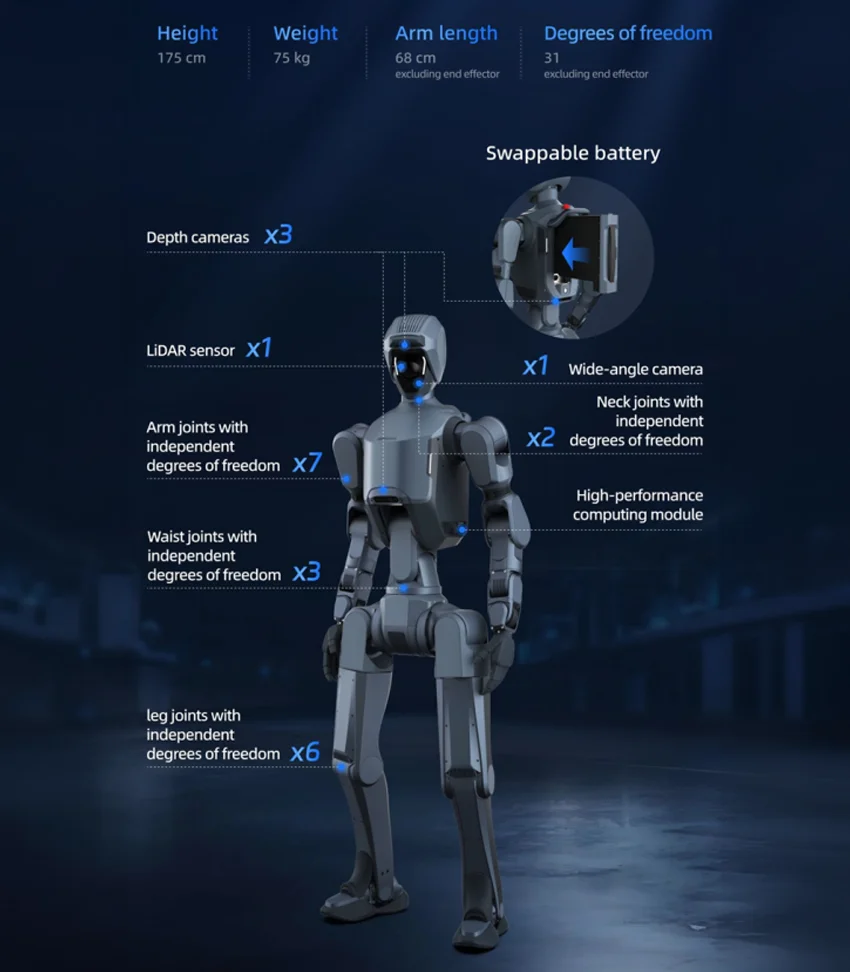
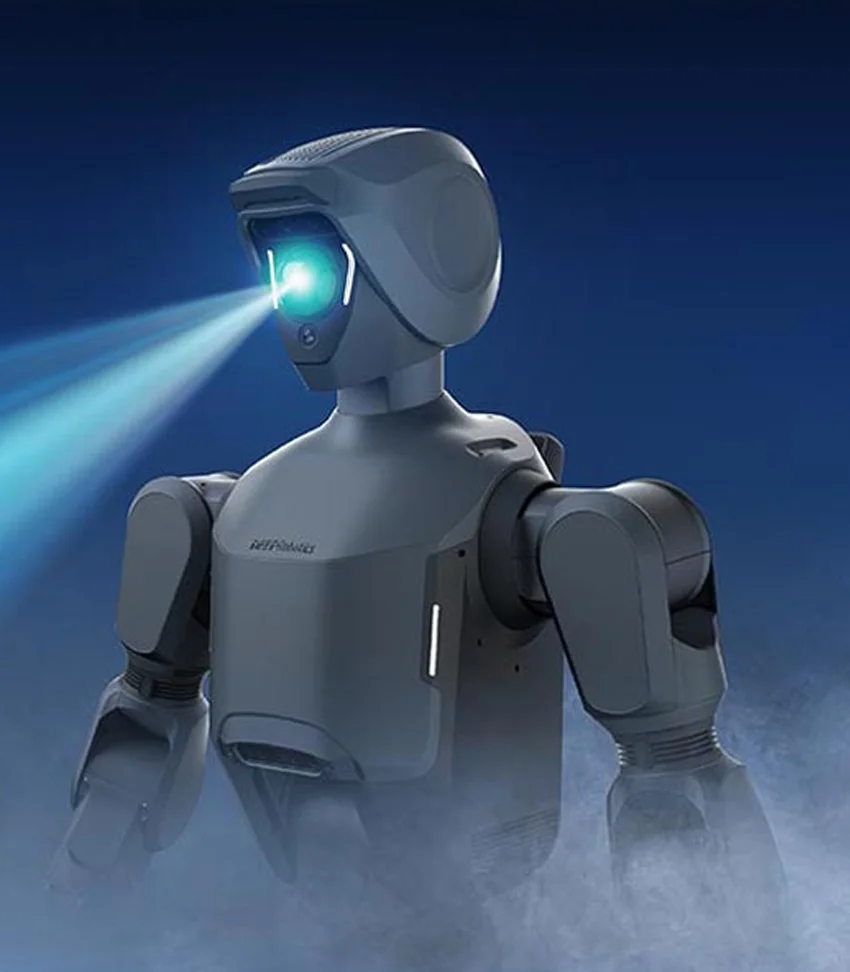
DEEP Robotics DR02
Key
Technical Breakthroughs

All-weather humanoid architecture

DR02 carries a manufacturer-listed IP66 protection rating, intended to protect the complete robot against dust and powerful water jets.

This may allow evaluation in operating environments that would be unsuitable for less-protected humanoid platforms. It does not remove the need for site-specific risk assessment, operating limits and manufacturer guidance.

Wide operating-temperature range

DEEP Robotics lists DR02 for operation between –20°C and 55°C.

Potential environments could include cold-storage facilities, external industrial sites, warmer production areas and facilities where temperatures vary substantially between operating zones.

Human-scale mobility

DR02 is intended to navigate spaces, stairs and infrastructure designed around people.

DEEP Robotics lists a standard walking speed of 1.5 metres per second, a top speed of 4 metres per second and step-climbing capability up to 25cm, subject to operating conditions.

Modular maintenance design

Forearms, complete arms and legs are designed as quick-replace modules.

For industrial users, the commercial value will depend on the time needed to diagnose, exchange and recommission these components, along with the availability of UK spares and technical support.

Embodied-AI development potential

DR02 sits within DEEP Robotics’ wider perception, decision-making and motion-control architecture.

The platform may be relevant to organisations researching autonomous navigation, human-scale movement, manipulation and the future coordination of humanoid tasks across mixed indoor and outdoor environments.

DEEP Robotics DR02
Deployment
+ Scalability

DR02 should be evaluated around a defined workflow rather than broad claims of general-purpose capability.

Before committing to a DR02 evaluation, UK buyers should review:

  • The exact task and operating area
  • Indoor, outdoor and transitional operating conditions
  • Required payload, hands, tools or sensor equipment
  • Autonomy versus remote-supervision requirements
  • Walking routes, stairs, slopes and floor conditions
  • Expected operating time and charging process
  • Human interaction and site-safety controls
  • Cybersecurity, data and network requirements
  • Manufacturer documentation and training
  • Maintenance, module replacement and spare-parts availability
  • The task-success and intervention thresholds required for acceptance
  • Whether a humanoid is genuinely preferable to M20 or X30 Pro

A structured humanoid robot readiness assessment should come before pilot or purchase. TRG can help define the use case, compare relevant platforms and coordinate the commercial route with DEEP Robotics and agreed technical-delivery resources.

Direct access to leading humanoid OEMs; at the industry’s best rates.
The Robot Group is an independent adviser. Brand names and products are referenced for comparison.

All trademarks are the property of their respective owners. Availability and UK compliance subject to OEM confirmation.
Two humanoid robots working on a construction site
Ready to deploy humanoid robots in your business?