Meet Booster K1 and T2: humanoid robots for education and research



A practical guide to software access, open-source tools and choosing a platform for your teaching or research programme.
For a university or college choosing a humanoid robot, the software deserves as much attention as the hardware. Students need to be able to read sensor data, change behaviour and understand why their code produces a particular result.
Booster Robotics K1 and T2 offer different hardware options within a shared development ecosystem. The Robot Group provides an Official Booster Robotics Commercial Route for UK education and research organisations, helping match the platform and configuration to the work a team wants to do.
Booster provides Python and C++ development interfaces, alongside ROS 2 integration resources. Its Python application SDK supports access to camera images, joint states and motion data, as well as commands for movement, actions and trajectories.
That gives a teaching team a useful starting point for practical work. A first exercise could read a camera feed and log sensor data. A later project could use those inputs to change the robot’s behaviour, with students measuring the effect of their code.
Booster Studio brings application development, simulation and debugging into a desktop environment available for Windows, macOS and Linux. Developers can inspect camera feeds, view robot data and test applications before moving to the physical platform. Its AI-assisted coding features can help produce code for review and testing.
For a course leader, the value is a development process that can be broken into teachable steps. Students can work on a defined part of a problem and inspect the results before combining it with more complex behaviour.
Booster publishes SDK resources, training code and deployment tools that are available to download for free. Access to source code lets developers examine how those projects work and adapt them under their published licences.
The main resources include:
These are useful starting points for student projects, research experiments and software prototyping. An academic team can review the documentation and repositories before choosing its hardware.
The free, open-source offer applies to the published projects. Training computers, additional services and project support should be considered separately when planning the budget.
Explore Booster’s developer resources | Download Booster Studio
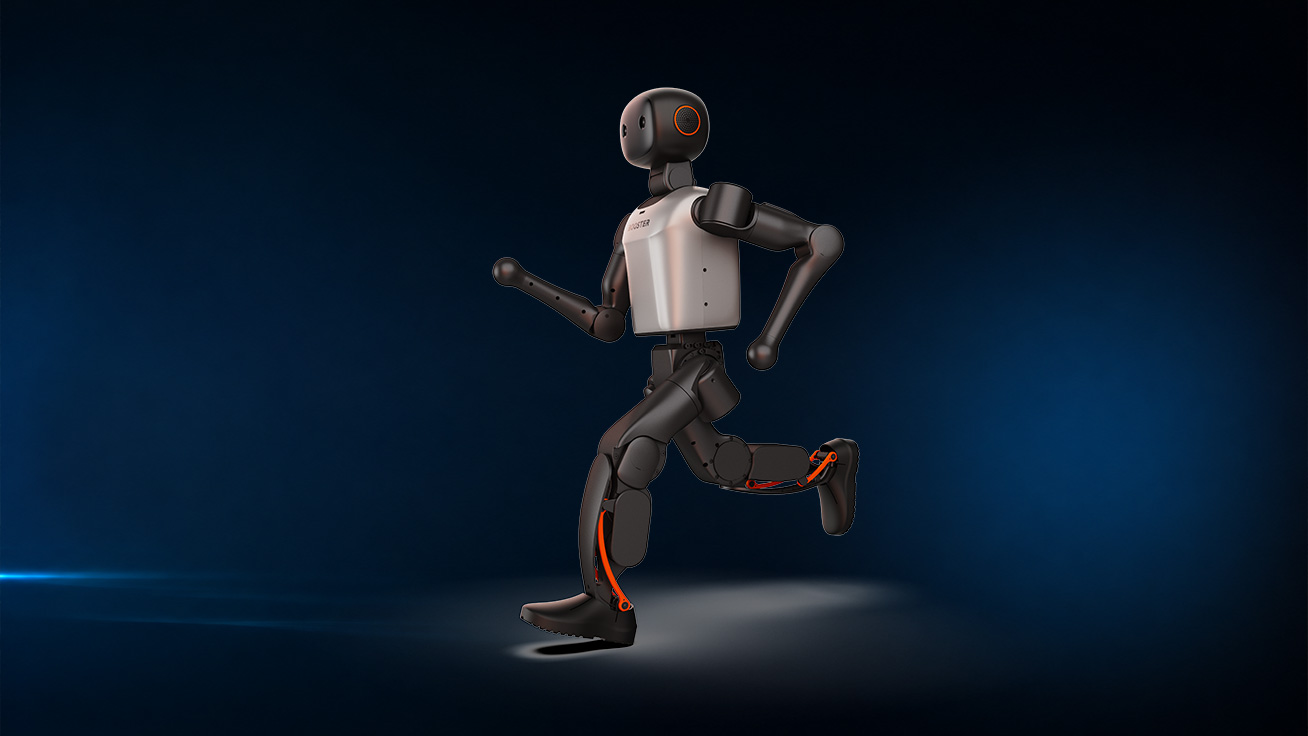
The Booster K1 is the natural starting point to assess for practical teaching, robot football and projects where portability matters. At approximately 95 cm tall and 19.5 kg, it is the more compact option. Its 22 degrees of freedom, onboard sensing and programmable behaviours also provide scope for advanced software and movement research.

The Booster T2 is worth considering when the project requires more articulated arms, an active waist or configurable grippers and dexterous hands. It stands approximately 140 cm tall, weighs around 42 kg and has 31 degrees of freedom. Its Professional edition includes NVIDIA Jetson Thor computing for demanding onboard AI work.
A university research group may find K1 sufficient for its work. A college teaching manipulation may have a reason to choose T2. The choice should follow the required capabilities and available resources.
A computer-vision module could start with detecting an object in a camera feed, then progress to tracking its position and measuring how reliably the system responds as lighting or distance changes.
For robotics and control teaching, students could record joint states, work with movement commands and compare intended behaviour with the robot’s measured response. More advanced projects could investigate motion tracking and the transfer of learned policies from simulation to hardware.
Academic and software labs could explore how perception, planning and physical actions fit together in an application. A useful first prototype might combine object detection with a defined movement or handling sequence, depending on the robot and configuration.
These are project directions to scope around the team’s experience. Application programming and low-level movement research involve different development work, so the first assignment should have a clear technical boundary and a measurable outcome.
Football gives students a familiar way to explore robotics. A project can examine ball detection, positioning and movement, then investigate how those functions interact when the task becomes less predictable.
At The Robot Group, we have filmed Booster K1 playing football on the street outside our Edinburgh office. The footage offers an engaging introduction to the platform and a starting point for students to explore robot movement and perception.
For a teaching programme, the next step could be specific: measure ball-detection accuracy, compare approaches to positioning, or record how often a defined kicking task succeeds. Those questions turn an engaging demonstration into a structured development project.
University open days and science outreach offer another use for engaging robot demonstrations. They give students an audience for their work and departments a visible way to explain what robotics development involves.
Beyond education, K1 and T2 are also relevant to projects for events, visitor attractions and theme parks. Programmable routines and interaction can form part of a performance or visitor experience. The operating area, supervision, audience interaction and required running time should shape the proposal.
Before selecting a robot, define the first useful outcome. That might be a repeatable laboratory exercise, a student competition entry or a research prototype with clear acceptance measures.
The purchasing discussion should cover the software access needed, available development skills and any external computing required for training. It should also establish the operating space, practical supervision, documentation, maintenance and manufacturer support.
A teaching department should be able to describe how students will use the robot during its first term. A research lab should be able to name the capability it intends to develop or evaluate.
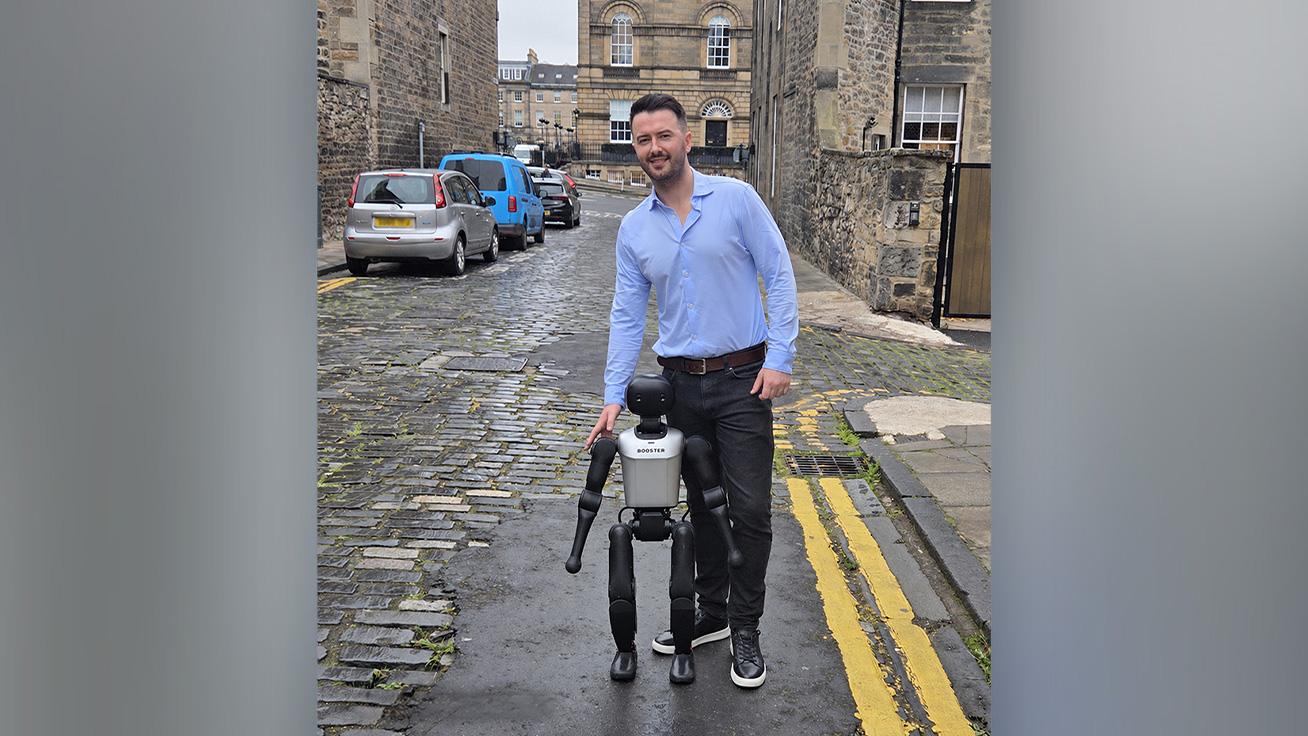
Through our Official Booster Robotics Commercial Route, The Robot Group helps UK universities, colleges, academic labs and software teams assess K1 and T2 against their requirements.
Tell us the first task you want to tackle, who will develop the software and where the robot will operate. We’ll help compare the relevant configurations and clarify availability, support arrangements and the next step towards evaluation or purchase.