Deep Robotics
DEEP Robotics LYNX M20 Series
Deep Robotics

DEEP Robotics LYNX M20 Series

Industrial wheel-legged robot for complex terrain, inspection and hazardous-environment operations.
Key industrial use cases
Power and utilities inspection; tunnels and pipelines; emergency response; industrial sites; field logistics; firefighting support; research and exploration
Request Assessment
DEEP Robotics LYNX M20 Series

Robot overview

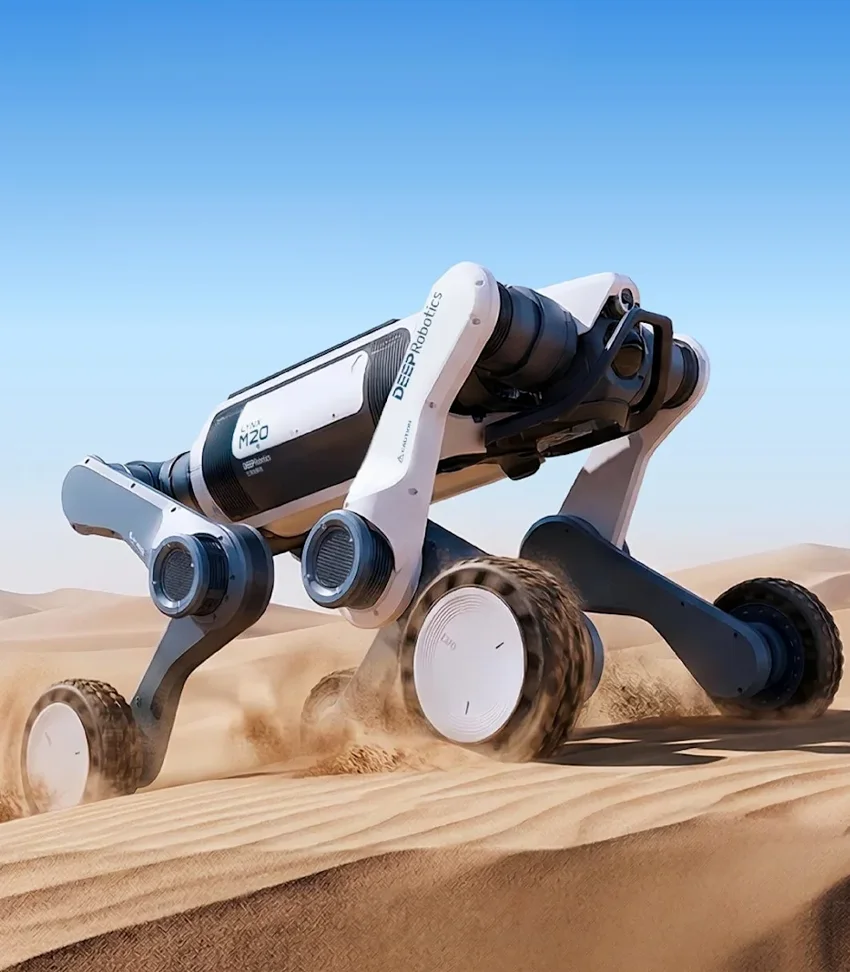
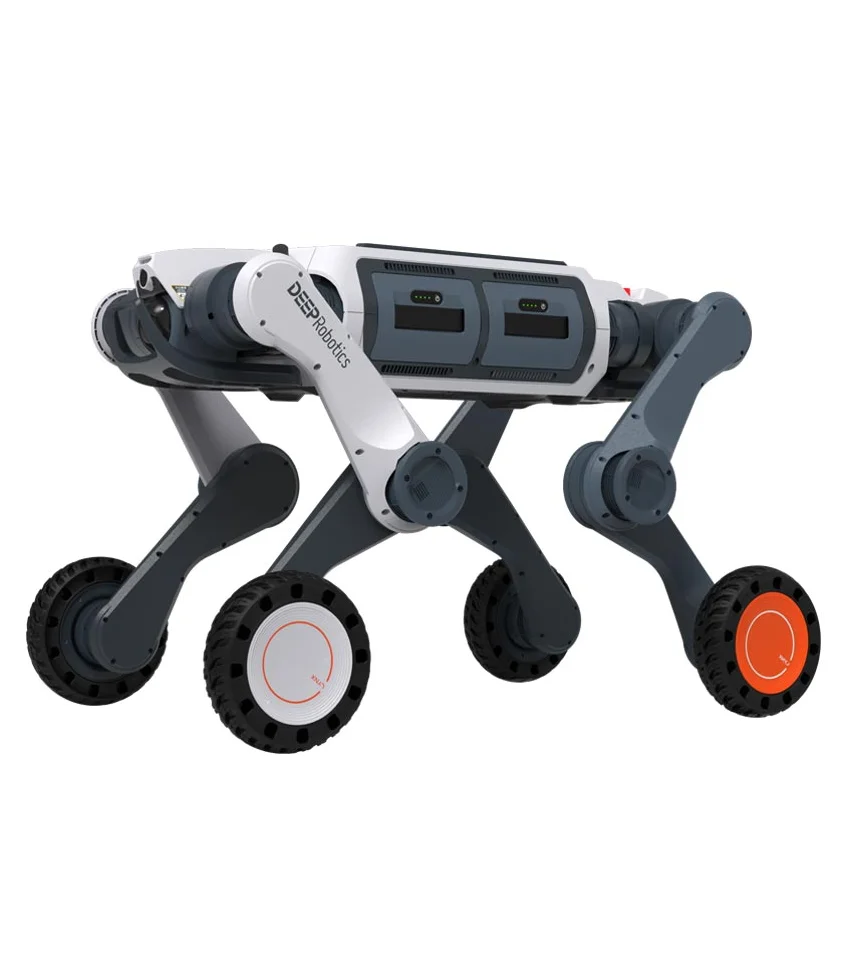
The DEEP Robotics LYNX M20 Series combines the speed and efficiency of wheels with the terrain adaptability of a legged robot.

It is designed for sites where conventional wheeled robots may struggle with stairs, debris, uneven ground, narrow passages or abrupt changes in terrain - but where a larger industrial quadruped could be difficult to transport or manoeuvre.

The current M20 range includes M20, M20 Pro and M20S. The standard M20 and M20 Pro are listed at 35kg with a 15kg effective payload and 50kg maximum load capacity. DEEP Robotics lists three hours or 15km of unloaded operation, and approximately 2.5 hours or 12km when carrying a 15kg payload.

The M20 Pro adds further onboard processing, SLAM mapping, autonomous navigation and additional interfaces. The M20S is the higher-capacity configuration, with a manufacturer-listed 35kg effective payload, 100kg maximum load, longer endurance and IP67 protection.

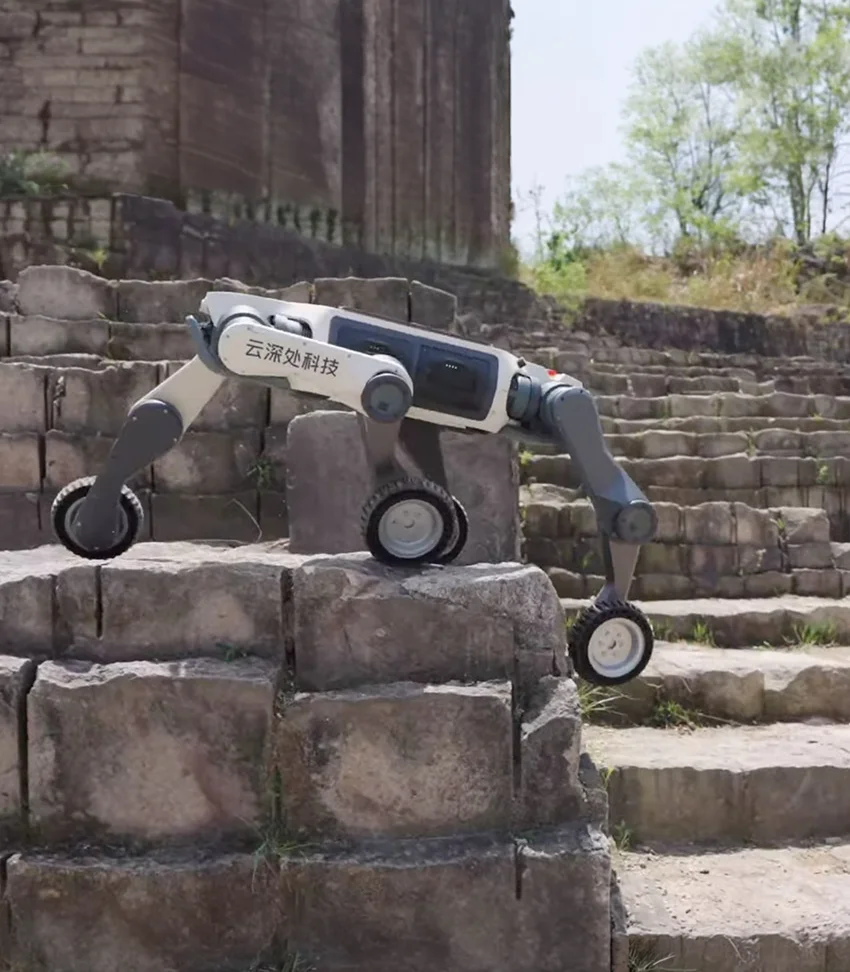
The wheel-legged architecture allows M20 to roll efficiently over suitable surfaces, adjust its body posture and use its legs when the terrain becomes more difficult. DEEP Robotics lists 25cm continuous stair capability and a maximum single-step obstacle height of 80cm for M20 and M20 Pro.

For UK organisations, M20 is most relevant where the main challenge is safe access, mobility, sensing or payload movement in complex terrain - not human-like manipulation.

The Robot Group (TRG can help determine which M20 configuration, sensor payload and operating model best match the site.
DEEP Robotics LYNX M20 Series
Key
Technical Breakthroughs

Wheel-legged mobility

M20 combines rolling speed with legged obstacle traversal.

DEEP Robotics lists a laboratory-tested maximum speed of 5 metres per second and an operating speed of up to 2 metres per second for M20 and M20 Pro, along with slope capability up to 45 degrees.

Access to constrained terrain

The robot can adjust between different leg postures to negotiate narrow spaces, stairs, rubble and uneven surfaces.

DEEP Robotics says the platform can travel through passages around 50cm wide and climb single obstacles up to 80cm, subject to terrain and operating conditions.

Industrial environmental protection

M20 and M20 Pro carry manufacturer-listed IP66 protection and an operating-temperature range of –20°C to 55°C.

The M20S extends this to IP67 and –30°C to 55°C, making it the most highly protected version in the current range.

Perception and autonomous navigation

The platform uses two 96-line LiDAR units, providing a stated 360° × 90° field of view, together with wide-angle cameras.

M20 Pro and M20S add SLAM mapping and autonomous-navigation functions. Exact autonomy and obstacle-avoidance capability should be confirmed against the selected hardware and current software release.

Payload and continuous-operation options

M20 and M20 Pro provide a 15kg effective payload for inspection cameras, sensing equipment and other mission hardware.

The range supports hot-swappable batteries, and autonomous charging is available as an option on relevant configurations. This could support longer inspection programmes where battery exchange or automatic docking can be incorporated into the operating plan.

DEEP Robotics LYNX M20 Series
Deployment
+ Scalability

M20 should be configured around the mission rather than purchased as an unconfigured mobility platform.

For mixed terrain, narrow access and rapidly changing conditions, M20 may provide a better fit than a conventional quadruped.

Where the requirement is a mature autonomous-inspection platform operating on repeatable industrial routes, the DEEP Robotics X30 Pro may be the stronger comparison.

TRG can help compare the two platforms around the actual route, payload, autonomy requirement and commercial model before quotation or purchase.

Direct access to leading humanoid OEMs; at the industry’s best rates.
The Robot Group is an independent adviser. Brand names and products are referenced for comparison.

All trademarks are the property of their respective owners. Availability and UK compliance subject to OEM confirmation.
Two humanoid robots working on a construction site
Ready to deploy humanoid robots in your business?