Unitree Robot Dogs for Industrial Inspection: A UK Business Guide
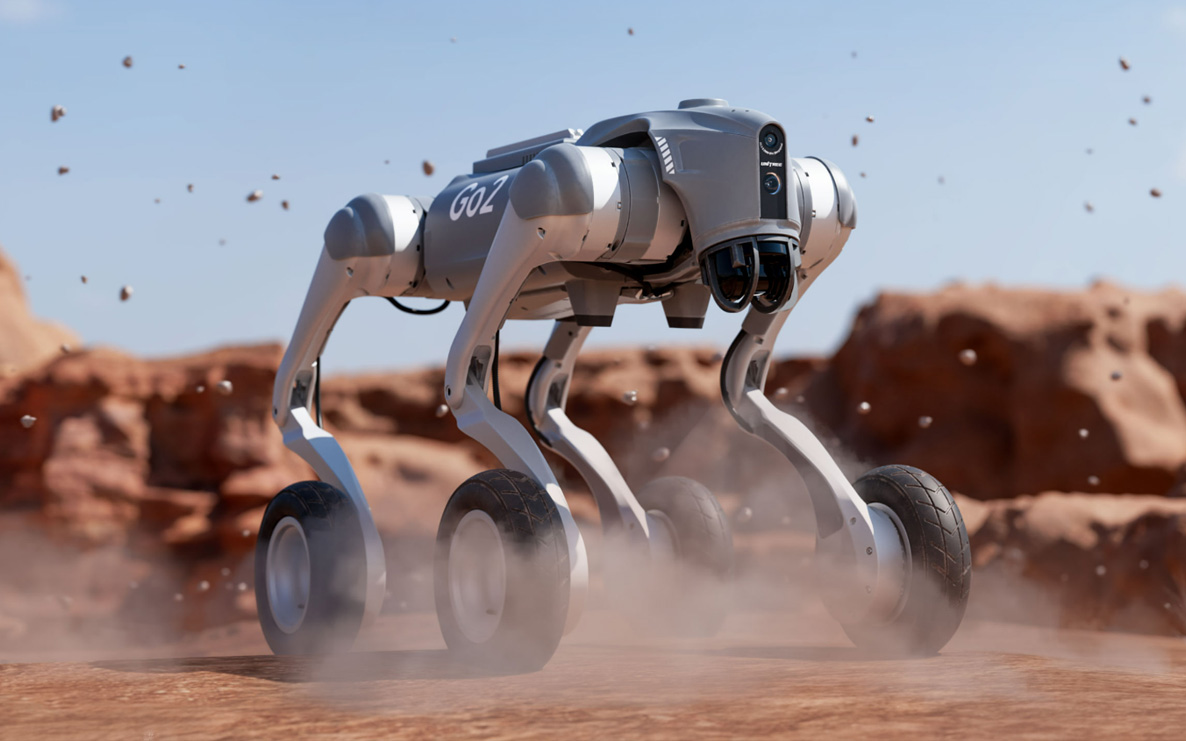


Industrial inspection is one of the clearest near-term use cases for quadruped robots.
Unlike humanoid robots, which are usually assessed around manipulation, tools and human-shaped workspaces, robot dogs are strongest where the business problem is mobility, access, inspection coverage or data capture.
That is why Unitree’s quadruped range is increasingly relevant for UK organisations exploring robotics across utilities, facilities, energy sites, manufacturing environments, infrastructure, research labs and controlled operational settings.
But not every Unitree robot dog is suited to the same type of inspection work. A lower-cost quadruped may be useful for education, demonstrations or early testing, while a larger industrial platform may be required for heavier payloads, longer endurance, outdoor use or more demanding site conditions.
This guide explains where Unitree robot dogs may fit, how B2, B2-W and Go2 differ, and what UK businesses should assess before buying or piloting a quadruped robot.
A Unitree robot dog is a quadruped robot: a four-legged robotic platform designed to move through environments that may be difficult for fixed automation, wheeled robots or manual inspection alone.
The value is not that the robot looks like a dog. The value is that a legged robot can move through spaces with stairs, ramps, corridors, uneven ground, platforms and mixed terrain.
For business buyers, Unitree robot dogs may be relevant where the organisation wants to explore:
The strongest first use cases are usually controlled, repeatable and measurable.
Many industrial sites still rely on people walking inspection routes, checking assets, recording readings and visually assessing conditions.
That can work well, but it also creates problems. Some areas are difficult, hazardous, remote, hot, cold, noisy or unpleasant to access. Manual inspection can also be inconsistent, especially when the route is repetitive or the data needs to be captured the same way each time.
A robot dog can support inspection by moving through a defined route, carrying sensors, collecting visual or environmental data and helping teams review site conditions with greater consistency.
In most UK business settings, the early use case should be framed as human-supervised inspection support, not full autonomy or labour replacement.
Unitree quadrupeds may be relevant for organisations exploring inspection or site mobility across:
The best first use case is usually not the most ambitious. It is a defined inspection route where the robot can be tested safely, measured clearly and expanded later if the value is proven.
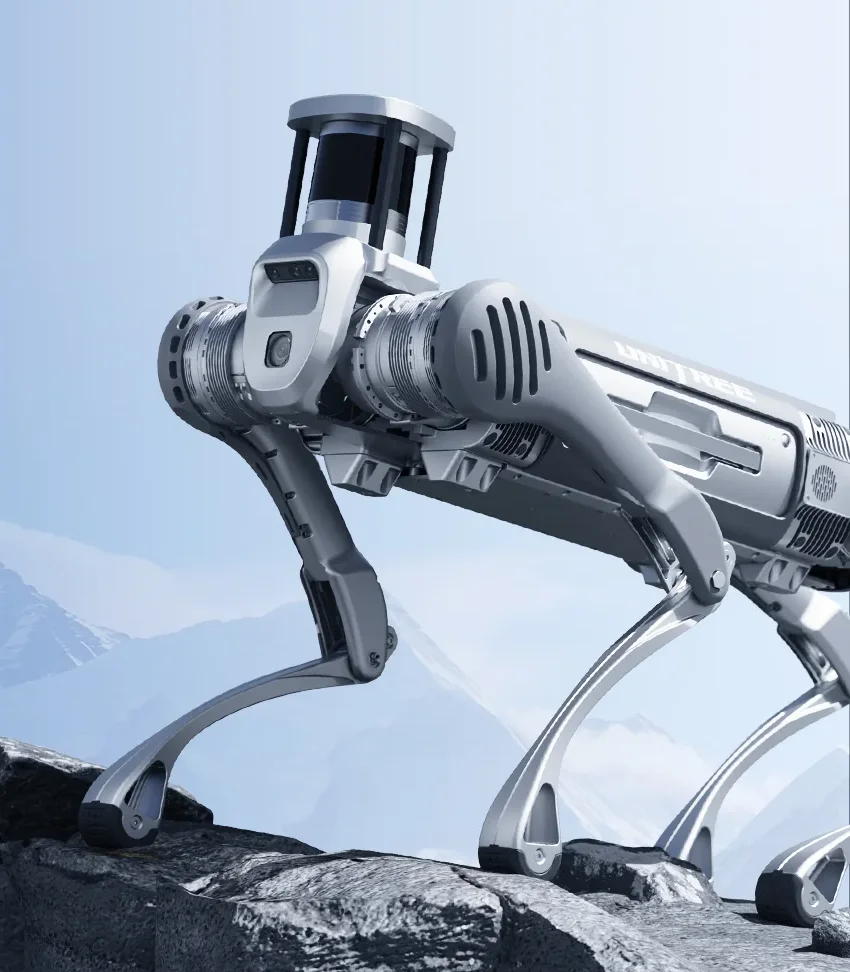
The Unitree B2 is the strongest fit in Unitree’s range for serious industrial inspection and site-mobility evaluation.
Unitree positions B2 as an industrial-grade quadruped robot. Unitree lists B2 with a running speed above 6m/s, standing load of at least 120kg, continuous walking load above 40kg, unloaded walking endurance above five hours, IP67 protection and suitability for applications such as power inspection, emergency rescue and industrial inspection.
For UK business buyers, B2 may be relevant where the requirement includes:
B2 should be assessed as an industrial mobility platform, not a simple plug-and-play inspection worker. The key question is whether the site, route, payload, data workflow, operator model and support expectations are suitable.
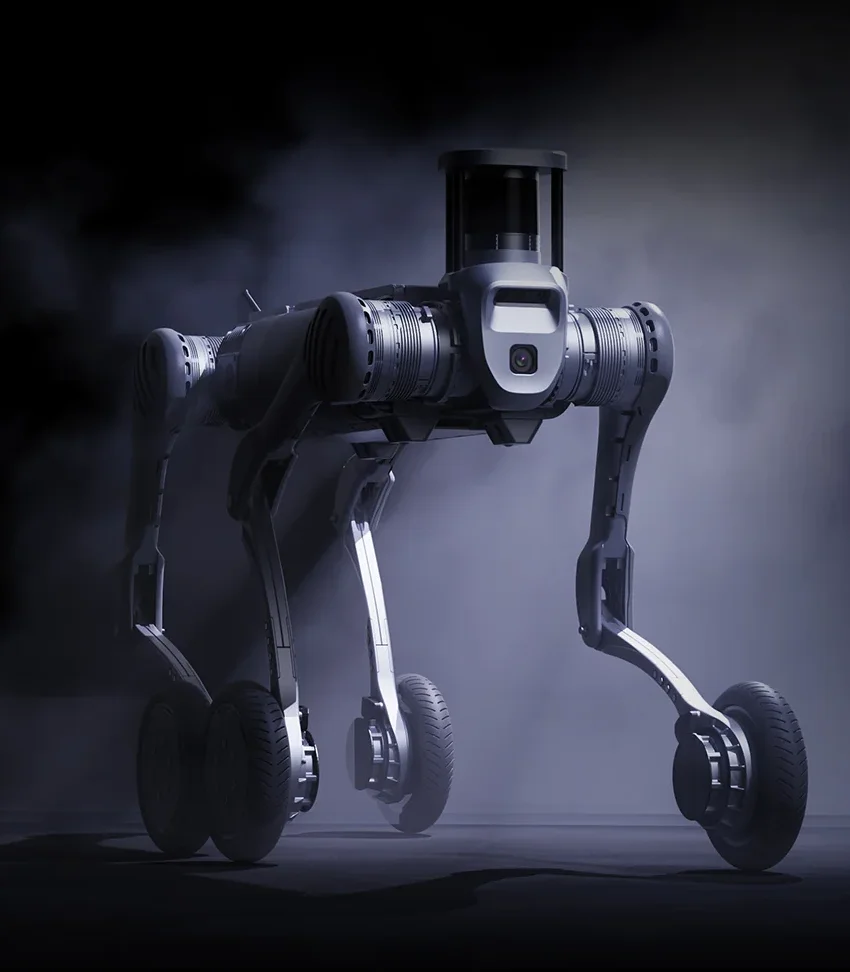
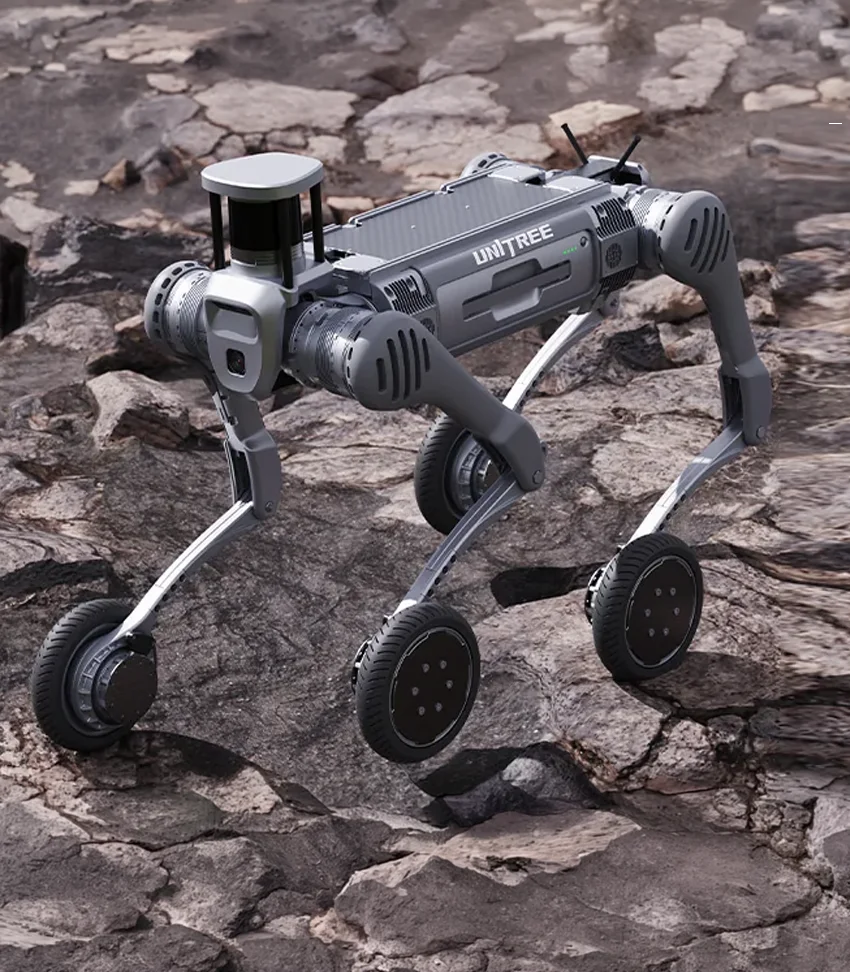
The Unitree B2-W is the wheeled-leg version of the B2 platform. It is especially relevant where the site needs faster movement across suitable surfaces while retaining some of the adaptability of a legged robot.
Unitree lists B2-W with a maximum speed of 15km/h, maximum endurance of 25km with a 40kg load, approximately 30km maximum endurance without load, 120kg maximum standing load and walking load above 40kg.
For UK businesses, B2-W may be relevant where route coverage, speed or travel efficiency matter.
Potential settings include:
B2-W may not be the right answer for every inspection use case. Wheels can improve efficiency on suitable ground, but surface conditions, slopes, turning space, obstacles, route complexity and safety controls should be reviewed before choosing B2-W over B2.
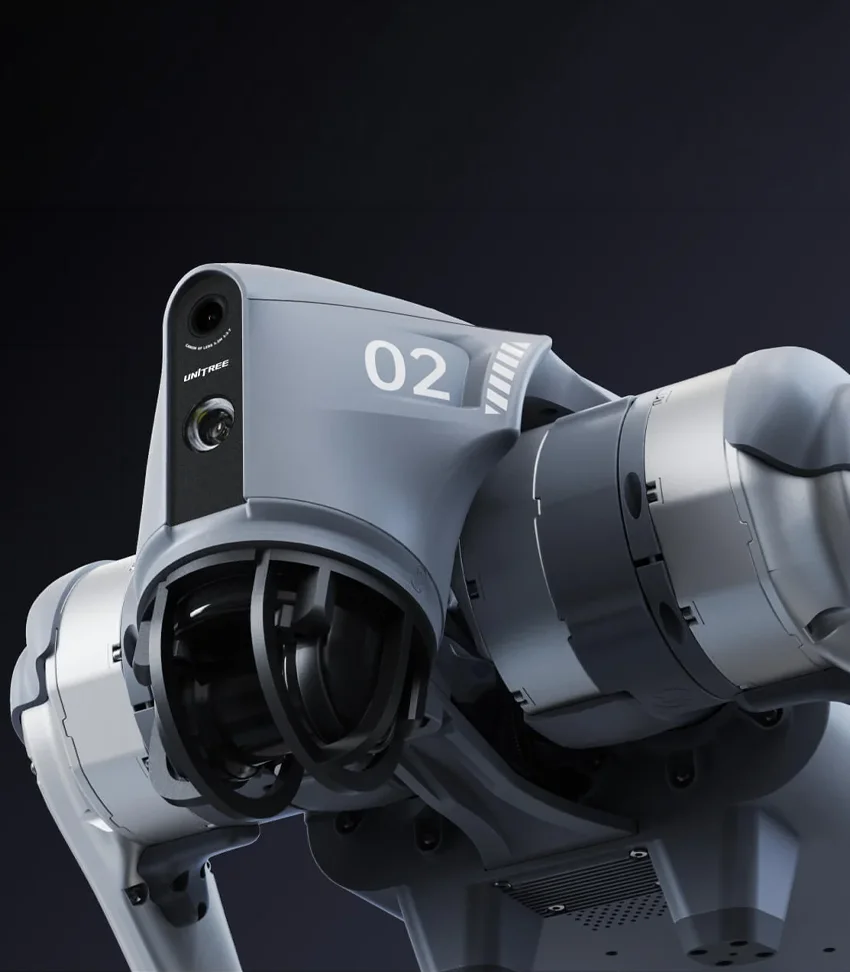
Unitree Go2 is a more accessible quadruped platform. It can be useful for education, research, demonstrations, robotics development and early-stage quadruped evaluation.
Unitree lists Go2 across Air, Pro, X and EDU configurations, with a standing size of 70cm x 31cm x 40cm, weight around 15kg with battery, payload figures around 7–8kg depending on version, and maximum speed up to around 5m/s on higher configurations.
For industrial inspection, Go2 should usually be treated as an entry, education or development platform rather than the same class of robot as B2 or B2-W.
Go2 may fit:
For demanding industrial inspection, TRG would normally help compare Go2 against B2 and B2-W before recommending a route.
For many inspection use cases, a quadruped robot may be more practical than a humanoid robot.
A robot dog may be the better route where the core requirement is:
A humanoid robot may become more relevant where the task requires:
For most UK businesses, the right starting question is not “humanoid or robot dog?” It is: what task needs to be performed, where will the robot operate, and what mobility, payload, sensing or manipulation capability is actually required?
Before requesting a quotation or piloting a Unitree quadruped for inspection, UK organisations should review:
The inspection route
Where will the robot go, how often, and what does it need to capture?
The operating environment
Is the route indoors, outdoors, wet, dusty, uneven, crowded, remote, hazardous or mixed?
The payload requirement
Will the robot carry cameras, thermal sensors, gas sensors, LiDAR, acoustic sensors or other equipment?
The supervision model
Will the robot be manually controlled, remotely operated, semi-autonomous or used in a restricted area?
The safety case
How will people, vehicles, equipment and the robot interact safely?
The data workflow
Where will inspection data go, who reviews it, and how will it support decisions?
The support model
What training, spares, maintenance, documentation and response expectations are required?
The commercial route
Is this a purchase, research project, demonstration, pilot or staged business evaluation?
A robot dog is not just a hardware purchase. For business use, it becomes part of a site workflow, safety process, data process and support model.
In the UK, businesses need to think carefully about how any robot or work equipment will be used on site.
HSE explains that PUWER places duties on people and companies that own, operate or control work equipment, and also places responsibilities on businesses whose employees use work equipment. HSE also states that equipment provided for use at work should be suitable, safe and maintained.
For robot dog deployments, buyers should consider:
TRG does not replace the legal responsibilities of the site operator, manufacturer or dutyholder. TRG’s role is to help structure the buying and assessment process so the right questions are asked before purchase, pilot or deployment.
The strongest first use cases are usually simple, repeatable and measurable.
Defined inspection route
A robot follows a known route and captures visual or sensor data for review.
Remote site check
A robot is used to inspect an area before sending a person in.
Facilities patrol evaluation
A robot supports routine monitoring in a large facility, warehouse or campus.
Payload trial
A business tests whether a robot can carry and stabilise a specific sensor.
Research project
A university, lab or innovation team uses the platform to test mobility, perception, autonomy or human-robot interaction.
Emergency-response evaluation
A controlled trial assesses whether a robot can provide situational awareness in areas that may be unsafe or difficult for people.
The best first step is not to over-automate. It is to define a realistic route, task and success measure.
A simple way to think about the range:
Unitree Go2
Best for education, research, demonstrations and early-stage quadruped evaluation.
Unitree B2
Best for more demanding industrial mobility, payload and site-inspection evaluation.
Unitree B2-W
Best where faster movement, longer route coverage or wheeled-leg mobility may be useful.
For serious inspection buyers, B2 and B2-W are likely to be the main platforms to assess. Go2 can still be useful, but usually as an entry, demonstration or development platform.
The Robot Group provides access to an official Unitree dealer route for UK business and institutional enquiries.
TRG can help organisations:
For UK businesses, the goal should not be to buy a robot dog because it looks impressive. The goal should be to identify whether a quadruped robot can create practical value in a defined inspection, mobility or research use case.
Unitree robot dogs can be highly relevant for industrial inspection, but only when the use case is properly defined.
For education, demonstrations and early development, Go2 may be enough. For more serious inspection, site mobility, payload and operational evaluation, B2 or B2-W are more likely to be the right platforms to assess.
The best next step is to define the route, environment, payload, operator model and business objective before choosing the robot.
Exploring Unitree quadruped robots for inspection, research or site mobility?
TRG can help compare Unitree Go2, B2 and B2-W, assess your intended use case and structure the right commercial route before you commit.
Request Unitree Robot Dog Details
They can be, depending on the model, site and use case. B2 and B2-W are more relevant for industrial inspection and site mobility, while Go2 is better suited to education, demonstrations and early evaluation.
For serious inspection use cases, B2 and B2-W are usually the stronger options to assess. B2 is more focused on industrial quadruped mobility, while B2-W adds wheeled-leg movement for faster site coverage.
Go2 can be useful for research, education, demonstrations and controlled testing, but it should not normally be treated as equivalent to B2 or B2-W for demanding industrial inspection.
In most early business use cases, no. A robot dog is better viewed as an inspection-support tool that can help capture data, access certain areas and support human decision-making.
UK buyers should review the site, inspection route, operating area, supervision model, training, risk assessment, emergency procedures, maintenance, support route and manufacturer guidance before operational use.
Yes. The Robot Group provides access to an official Unitree dealer route for UK business and institutional enquiries, including Unitree quadruped robots such as Go2, B2 and B2-W.