PAL Robotics
PAL Robotics KANGAROO
PAL Robotics

PAL Robotics KANGAROO

Development-ready biped humanoid for dynamic locomotion, embodied AI and advanced robotics research.
Key industrial use cases
Humanoid locomotion R&D; embodied AI development; reinforcement learning; manipulation research; balance and mobility control; corporate and university robotics programmes
Request Assessment
PAL Robotics KANGAROO

Robot overview

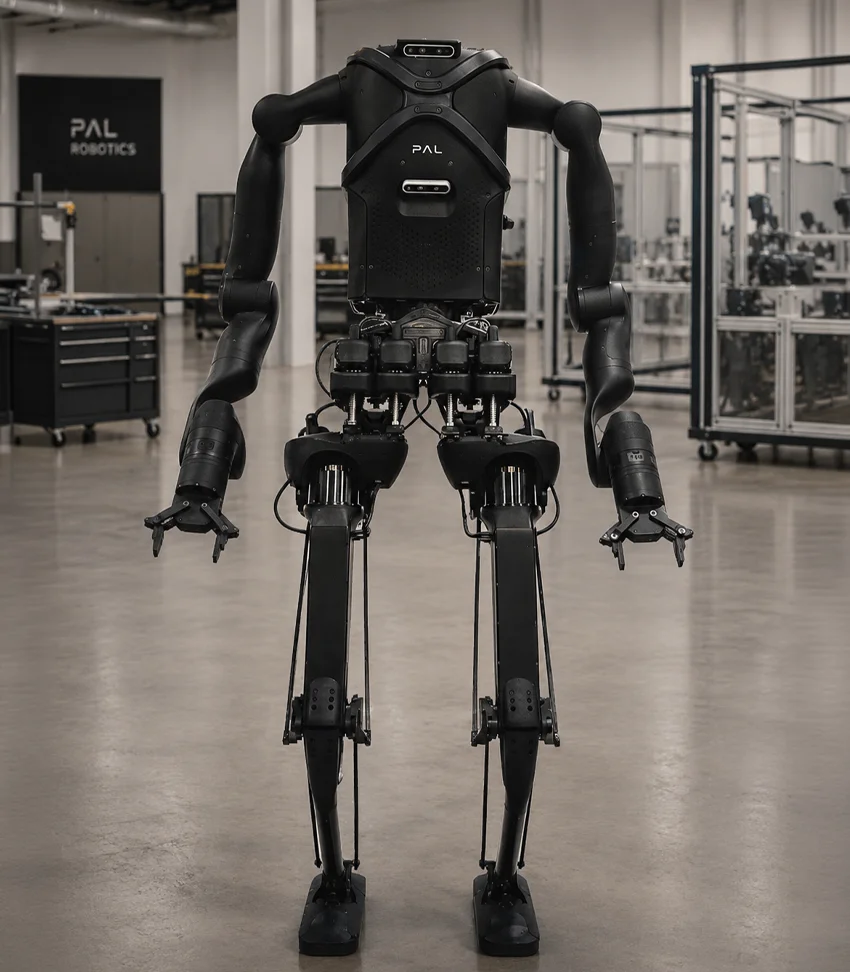
The PAL Robotics KANGAROO is a highly configurable biped humanoid platform designed for advanced research into dynamic locomotion, robot learning, embodied AI and whole-body control.

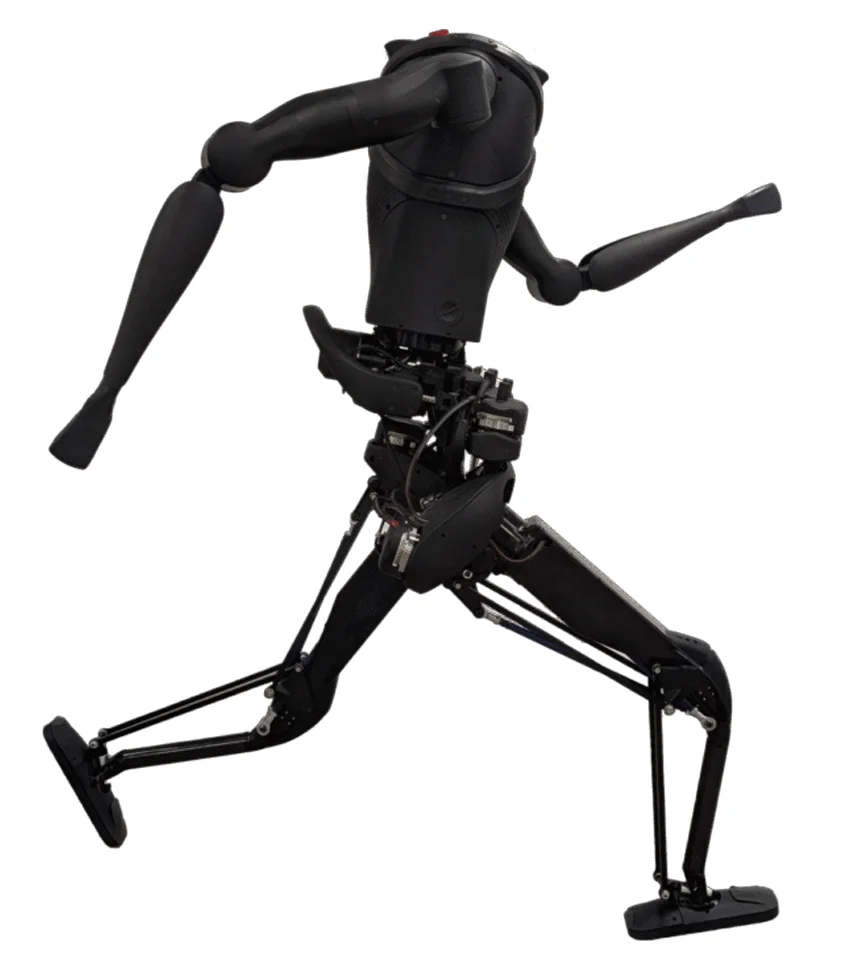
Built around a lightweight leg architecture with low moving inertia, KANGAROO is designed to support highly dynamic movements while giving research teams extensive access to the robot's hardware, control systems and development environment. PAL Robotics specifically positions the platform for research into walking, running, jumping, push recovery, stair climbing, manipulation and reinforcement learning.

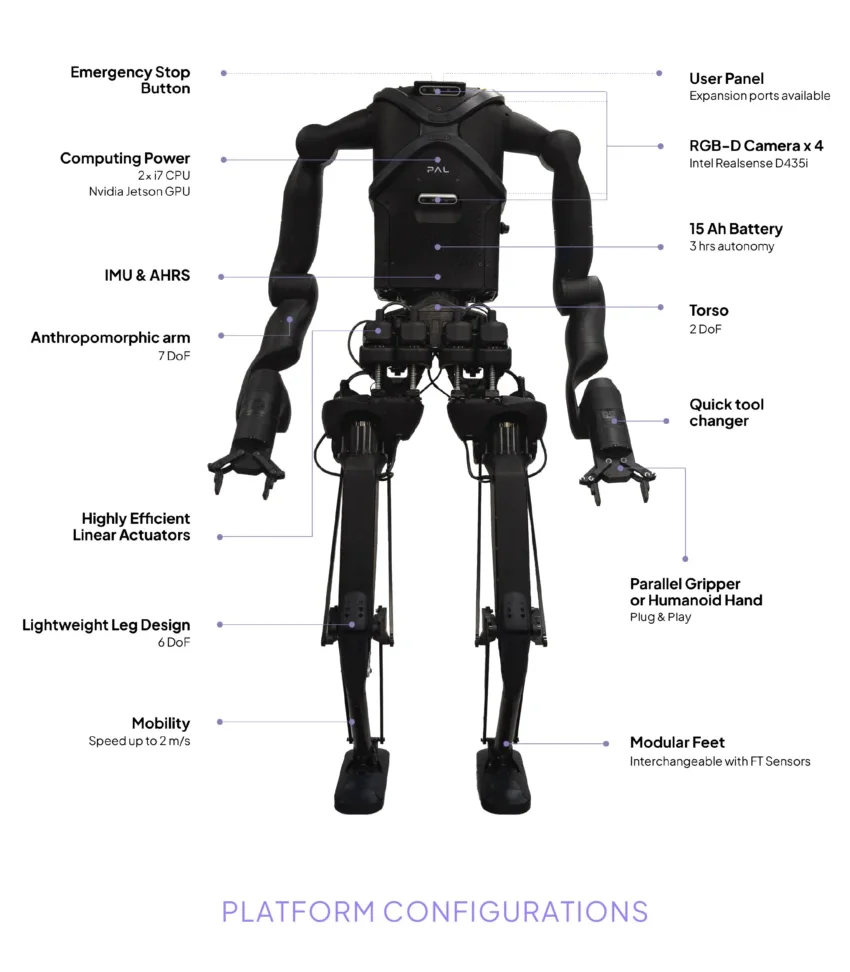
The current platform stands approximately 1.6 metres tall, weighs between 50 and 65 kg depending on configuration, and can provide between 14 and 40 degrees of freedom. Each leg provides six degrees of freedom, while optional upper-body configurations can incorporate 4, 5 or 7 DoF arms alongside a two-degree-of-freedom torso.

KANGAROO is particularly relevant for organisations that want to develop and validate the technologies that will underpin future humanoid deployments rather than simply operate a closed, pre-configured robot.

With ROS 2, ros2_control, MuJoCo and reinforcement-learning development tools, access to the real-time control loop and support for custom software deployment, the platform gives research teams substantial freedom to develop their own locomotion, manipulation and AI capabilities.

For UK organisations, TRG can help assess the required humanoid configuration, research objectives and supporting hardware before coordinating the commercial route with the OEM.
PAL Robotics KANGAROO
Key
Technical Breakthroughs

Dynamic bipedal architecture

KANGAROO is built for dynamic legged locomotion, using custom linear actuators with integrated force sensing and a low-inertia leg design to support faster, more efficient and impact-resilient movement.

2 kHz real-time control

An EtherCAT control loop operating at 2 kHz, combined with IMU and AHRS updates at 1 kHz, provides the high-frequency feedback needed for advanced balance, force-control and locomotion research.

Whole-body control and force feedback

A Whole Body Inverse Dynamics Controller coordinates balance and movement across the robot, supported by closed-loop force and torque control and optional six-axis force/torque sensing at the wrists and feet.

Built for reinforcement learning

KANGAROO supports reinforcement learning, imitation learning and motion retargeting, with URDF and MJCF models and compatibility with MuJoCo and mjlab. Available policy libraries include walking, running, jumping, stair climbing, push recovery and box picking.

Highly configurable platform

KANGAROO can be configured with 4, 5 or 7 DoF arms, a two-DoF torso and multiple end effectors, including parallel grippers and multi-finger humanoid hands. Published arm payloads range from 3–7 kg, depending on configuration.

Multi-camera perception and onboard compute

The platform includes four RGB-D cameras, dual Intel i7 computing systems and optional NVIDIA Jetson GPU acceleration for perception, locomotion and embodied-AI workloads.

Open development environment

Built around Ubuntu LTS, ROS 2 LTS and PAL OS, KANGAROO supports C++, Python, custom software deployment and access to real-time control and actuator modes—making it a genuine development platform rather than a closed robotic system.

PAL Robotics KANGAROO
Deployment
+ Scalability

KANGAROO should primarily be approached as an advanced humanoid research and development platform.

The first question for a potential buyer is therefore not simply which manual task the robot can automate today, but what the organisation intends to research, develop, validate or transfer towards future real-world humanoid applications.

Potential programmes could include:

  • Dynamic walking and balance research
  • Reinforcement-learning development
  • Push recovery and disturbance handling
  • Running and highly dynamic locomotion
  • Stair and uneven-environment mobility research
  • Whole-body control
  • Dual-arm manipulation
  • Humanoid perception and embodied AI
  • Human-robot interaction
  • Teleoperation
  • Custom end-effector development
  • Simulation-to-real policy transfer
  • Development of proprietary humanoid control software

Before selecting a configuration, UK organisations should consider:

  • Primary research objectives
  • Required upper-body configuration
  • Arm degrees of freedom and payload
  • Required hands or end effectors
  • Force/torque sensing requirements
  • Perception and camera requirements
  • Onboard GPU requirements
  • Simulation and reinforcement-learning environment
  • Access required to low-level controls
  • Development and integration resources
  • Laboratory space and operating environment
  • Safety controls for dynamic testing
  • Training and technical support requirements
  • Future research roadmap

KANGAROO's modular architecture is particularly useful where the platform needs to evolve alongside the research programme.

An organisation could focus initially on biped locomotion and control, before expanding into manipulation, perception, embodied AI or whole-body task development using additional arms, sensors, end effectors and compute options.

This makes KANGAROO particularly relevant to universities, robotics research institutes, AI laboratories, humanoid developers and corporate R&D teams looking for a physical platform on which to develop the next generation of humanoid capabilities.

TRG can help UK organisations define the appropriate humanoid configuration, assess project requirements and coordinate quotation, supply and deployment.

Direct access to leading humanoid OEMs; at the industry’s best rates.
The Robot Group is an independent adviser. Brand names and products are referenced for comparison.

All trademarks are the property of their respective owners. Availability and UK compliance subject to OEM confirmation.
Humanoid performing parts kitting tasks
Ready to deploy humanoid robots in your business?