Mirsee Robotics: Why Eclipse’s Backing Matters


Mirsee Robotics has chosen a useful place to develop its humanoid: inside an industrial automation company.
The Cambridge, Ontario business is based within Eclipse Automation’s local facility. Eclipse has also invested in Mirsee. With 25 years in factory automation, it brings experience of getting equipment into production and supporting it once it is there.
For TRG, this is the most interesting part of the Mirsee story. Developing alongside an integrator should give the team a closer view of the conditions its robot will have to meet, from the way a work area is laid out to the support a customer expects after installation.
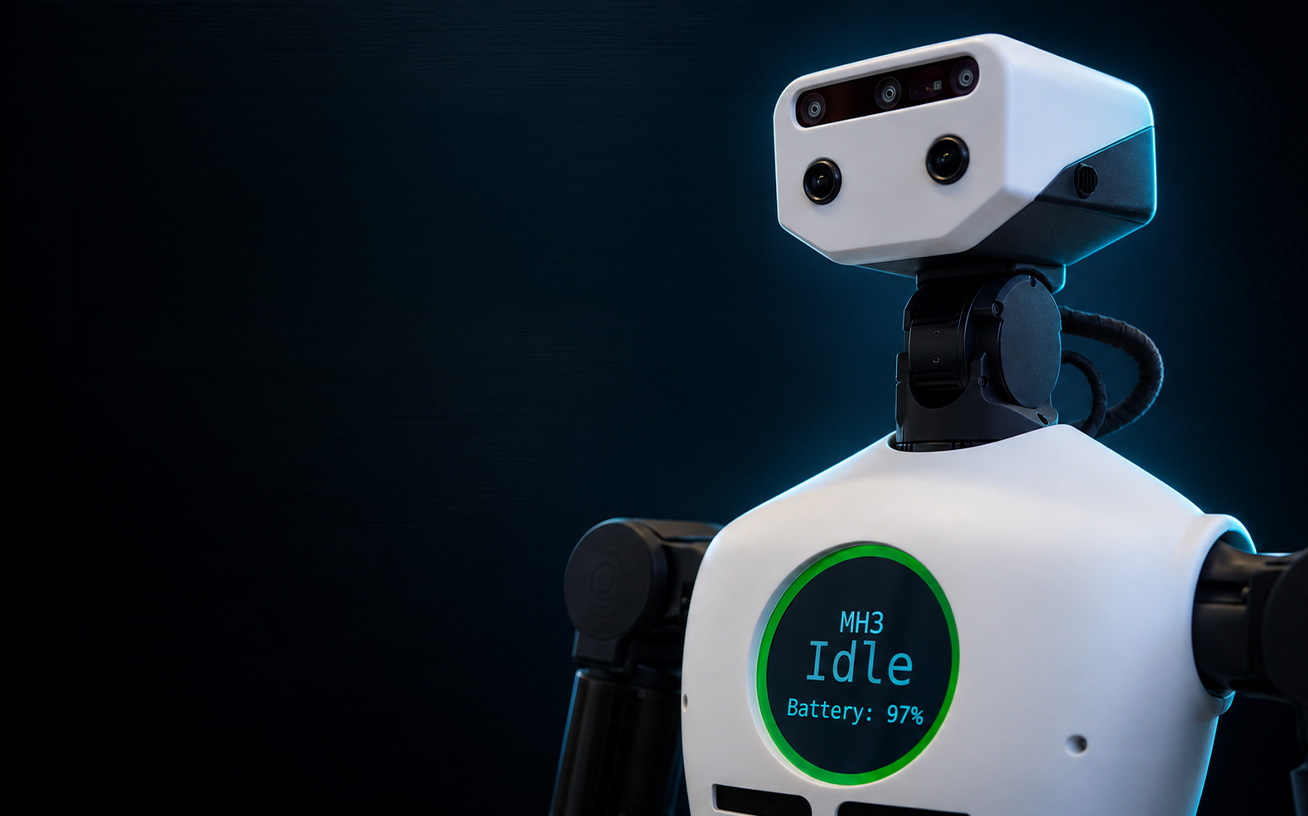
Mirsee is now on its third robot generation. Its latest platform, MH3, is a wheeled humanoid with remote teleoperation and AI control. Target jobs include tote handling, order fulfilment and machine tending. The company lists a 10-hour runtime and says it is progressing through phased deployments with manufacturing partners.
The choice of wheels is deliberate. Mirsee has described legged designs as adding complexity, instability and energy demands that did not suit its priorities. For work that can be reached on wheels, that gives the company a more defined problem to solve.
A manufacturer considering MH3 will need to know how often a person must intervene and what happens when a task goes wrong. A failed pick may require a quick correction, or it may hold up the next stage of production. The difference matters to the person responsible for keeping the line running.
This gives the Eclipse partnership a useful job to do. Alongside helping with integration, an experienced automation business could help identify where a humanoid is a sensible choice in the first place. Some jobs are already well served by conventional automation. Mirsee needs applications where MH3’s mobility and manipulation justify the cost of introducing it.
Mirsee has publicly discussed a 16–24 month payback timeframe for suitable applications. We would want to see that demonstrated by a named customer, with integration and ongoing operator support included in the calculation. Teleoperation is part of MH3’s offer, so the amount of human assistance a task requires belongs in the business case.
In a July 2026 Financial Post report, CEO and co-founder Tarek Rahim said eight MH3 units had been built. The report described plans to begin scaling production in 2027, following testing and validation.
Eclipse’s backing gives us a specific reason to follow Mirsee’s progress. The milestone we would watch for next is a customer ordering more robots after seeing what the first installation delivers.
TRG’s Humanoid Market Brief examines the commercial decisions shaping humanoid adoption.