Samsung Is Building an Industrial Robotics Ecosystem. RoboForce Has Earned a Place in It.
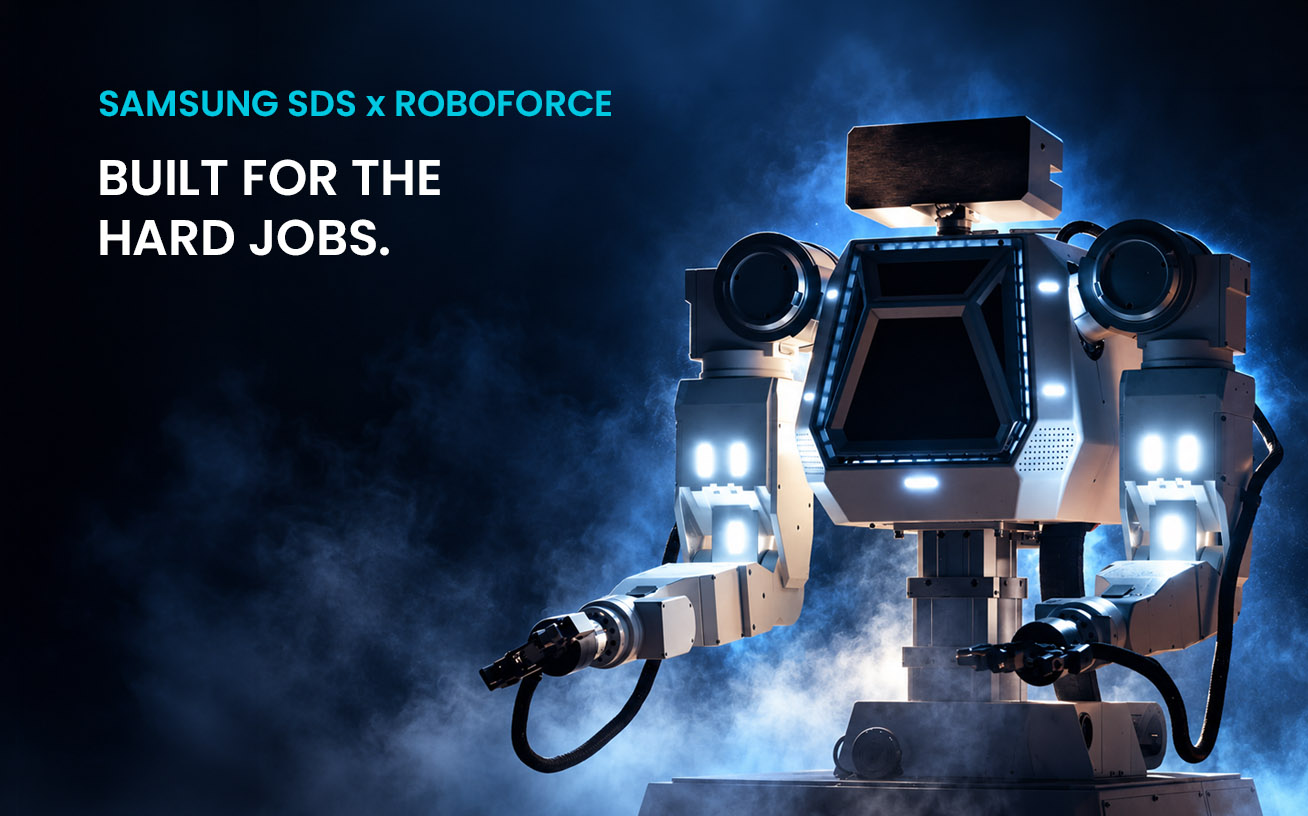


One of the next big opportunities in industrial robotics may not be on a perfectly organised factory floor.
It may be in the shipyards, heavy industrial plants and demanding outdoor environments where conventional automation has struggled to reach.
And one American robotics company is now attracting attention for precisely that reason.
RoboForce, the California company behind the TITAN industrial robot, has joined Samsung SDS's emerging robotics ecosystem as a founding member of Team REX.
But this is more than another partnership announcement.
At its recent RX ART programme in California, Samsung SDS brought together robotics specialists and executives from across Samsung affiliates to assess how emerging robotics technology could address real industrial work.
The division of responsibility is particularly interesting.
While Walden Robotics was involved in validating tasks such as parts handling and consumables replacement in manufacturing environments, RoboForce was brought into the assessment of more challenging, unstructured industrial environments, including applications associated with Samsung Heavy Industries and Samsung E&A.
Samsung SDS reported positive feasibility findings and plans to progress suitable applications towards further on-site testing and validation.
For RoboForce, that is meaningful recognition.
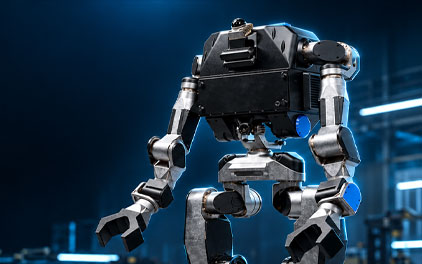
Founded in 2023, the company has deliberately built TITAN around industrial work rather than conventional humanoid design.
Its modular platform uses wheeled and tracked configurations, with manipulation capabilities intended for tasks involving handling, positioning, pressing, twisting and connecting.
The ambition is straightforward: build machines capable of useful work in environments that are physically demanding, repetitive or hazardous for people.
And the wider business is gaining momentum.
In March, RoboForce announced a further $52 million in funding, bringing its reported total to $67 million, to advance its robotics models, manufacturing readiness and commercial deployment.
Now it is working alongside Samsung SDS, an organisation with extensive industrial integration expertise and access to some of the world's most demanding manufacturing and engineering environments.
What makes this particularly interesting is Samsung's approach.
Rather than expecting one robot to solve every problem, Samsung SDS is assembling different capabilities around specific industrial requirements.
For emerging manufacturers such as RoboForce, that creates an opportunity to develop and validate technology against the realities of large industrial operations.
There is still important work ahead.
The Samsung collaboration is at the feasibility and validation stage, not evidence of a completed commercial rollout. The next measures will be task reliability, intervention requirements, integration complexity, productive operating hours and the economics of repeat deployment.
But the significance of this relationship should not be overlooked.
Samsung SDS is building an ecosystem around industrial robotics. RoboForce has secured a meaningful place within it - with a clear role in some of the environments where useful automation remains hardest to achieve.
That is an encouraging development for RoboForce and its founder, Leo Ma.
And potentially an important signal for the wider industry.
The future of industrial robotics will not be decided only by which machine looks most human.
It will be decided by which machines can do the work - wherever that work needs to happen.
TRG’s Humanoid Market Brief examines the commercial decisions shaping humanoid adoption.