Booster Robotics
Booster T2
Booster Robotics

Booster T2

A humanoid development platform for teams building advanced movement, perception and manipulation capabilities. Combine configurable hardware with free, open-source training tools through The Robot Group’s Official Booster Robotics Commercial Route.
Key industrial use cases
Embodied AI research; whole-body control; manipulation development; perception and navigation research; robot football; application prototyping.
Request Assessment
Booster T2

Robot overview

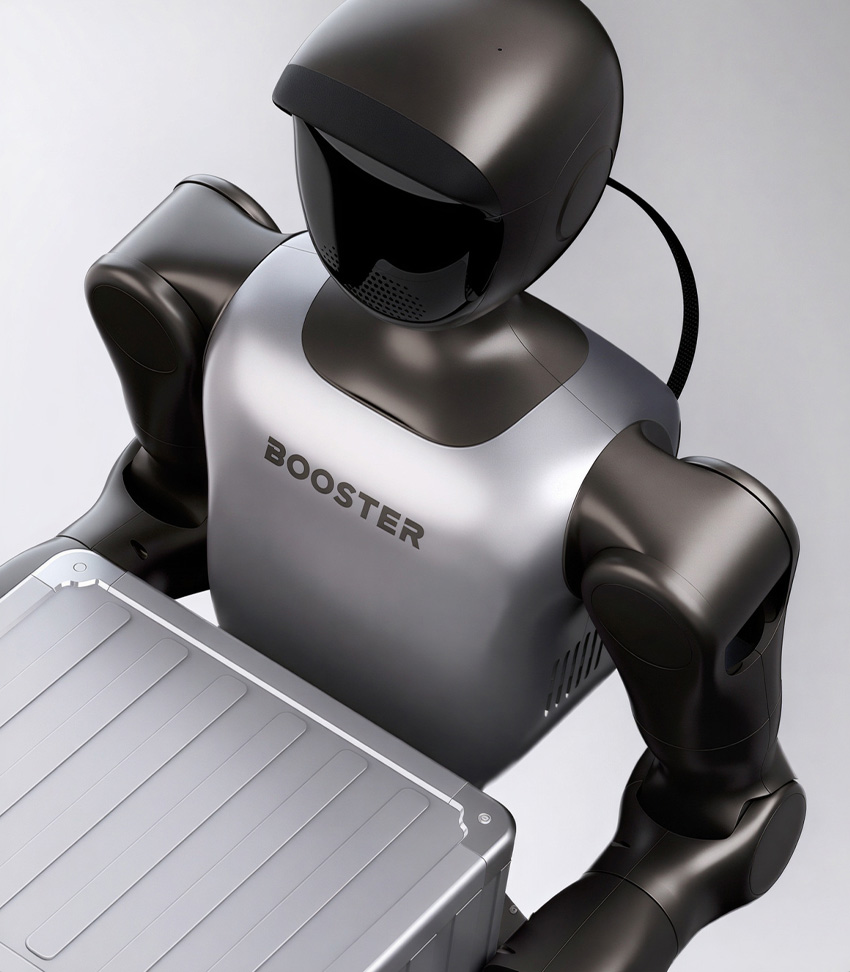
Booster T2 brings articulated movement, onboard computing and configurable end effectors into a platform for robotics research and application development. It gives teams the hardware to investigate tasks that combine movement, environmental perception and interaction with objects.

Its software ecosystem supports both application programming and deeper control research. Developers can build and debug in Booster Studio, access robot interfaces through SDKs and ROS 2, and use free, open-source projects to train and deploy custom movement policies.

The Robot Group helps UK organisations define the task, choose a suitable T2 configuration and plan an evaluation around measurable technical outcomes.

See Booster T2 in action

Request Assessment
Booster T2
Key

Technical Breakthroughs

1. A connected workspace for software development

Booster Studio brings application development, simulation and debugging into one desktop environment. Developers can inspect camera feeds, visualise robot data and review motion alongside their application code.

AI-assisted coding helps turn development instructions into code for review and testing. Support for Windows, macOS and Linux gives teams flexibility in their choice of development workstation.

Download Booster Studio

2. Free, open-source training and deployment tools

Booster’s open-source training framework includes support for T2, giving researchers a starting point for reinforcement learning and motion-tracking development in Isaac Lab.

The accompanying deployment framework supports testing trained policies in MuJoCo and running them on physical Booster robots. Both projects are available to download for free, with source code that teams can inspect and adapt under their published licences.

Explore Booster’s open-source software

3. Flexible access through Python, C++ and ROS 2

Booster provides Python and C++ development interfaces alongside ROS 2 integration resources.

Developers can read sensor and joint data, issue movement commands and build applications around the robot’s capabilities. This gives teams a choice between application-level programming and more detailed control work, depending on the project.

4. Whole-body movement and configurable hands

T2 stands approximately 140 cm tall, weighs around 42 kg and has 31 degrees of freedom across its body. Seven degrees of freedom in each arm support manipulation research, while an articulated waist adds flexibility to whole-body movement.

Optional grippers and dexterous hands allow the configuration to reflect the objects, reach and handling tasks being investigated.

5. Onboard AI and multiple camera viewpoints

Head and waist cameras provide visual inputs for perception development, with additional wrist or end-of-arm cameras supported on relevant handling configurations.

The Professional edition includes NVIDIA Jetson Thor computing for demanding onboard AI workloads. Teams can select hardware around their models, sensor requirements and intended applications.

Booster T2

Deployment

+ Scalability

Begin with a specific capability to develop and a clear method of measuring it. An initial evaluation might test a motion policy, an object-handling sequence or the accuracy of a perception system.

The Robot Group helps establish:

  • The task, required reach, handling configuration and computing needs.
  • The SDK, ROS 2 and simulation resources relevant to your software.
  • The training environment and process for moving from simulation to physical testing.
  • Workspace, supervision and operating requirements.
  • Acceptance measures, documentation and manufacturer support arrangements.

‍

Results from the first evaluation can inform further software development, hardware changes or expansion to additional robots.

UK enquiries and evaluation planning are open. Configuration, delivery and support arrangements are confirmed for each project.

Direct access to leading humanoid OEMs; at the industry’s best rates.

The Robot Group is an independent adviser. Brand names and products are referenced for comparison.
‍
All trademarks are the property of their respective owners. Availability and UK compliance subject to OEM confirmation.
Humanoid performing parts kitting tasks
Ready to deploy humanoid robots in your business?