Why 2026 is the year humanoid robots hit industry (and what UK leaders should do next)
If 2023–25 were pilots and press releases, 2026 is the year industrial humanoids get real. Three signals matter:
Credible OEM (Manufacturer) roadmaps
Enterprise-grade pilots in production environments
Clear UK pathways for safety and finance
The market signal: from demos to deployment
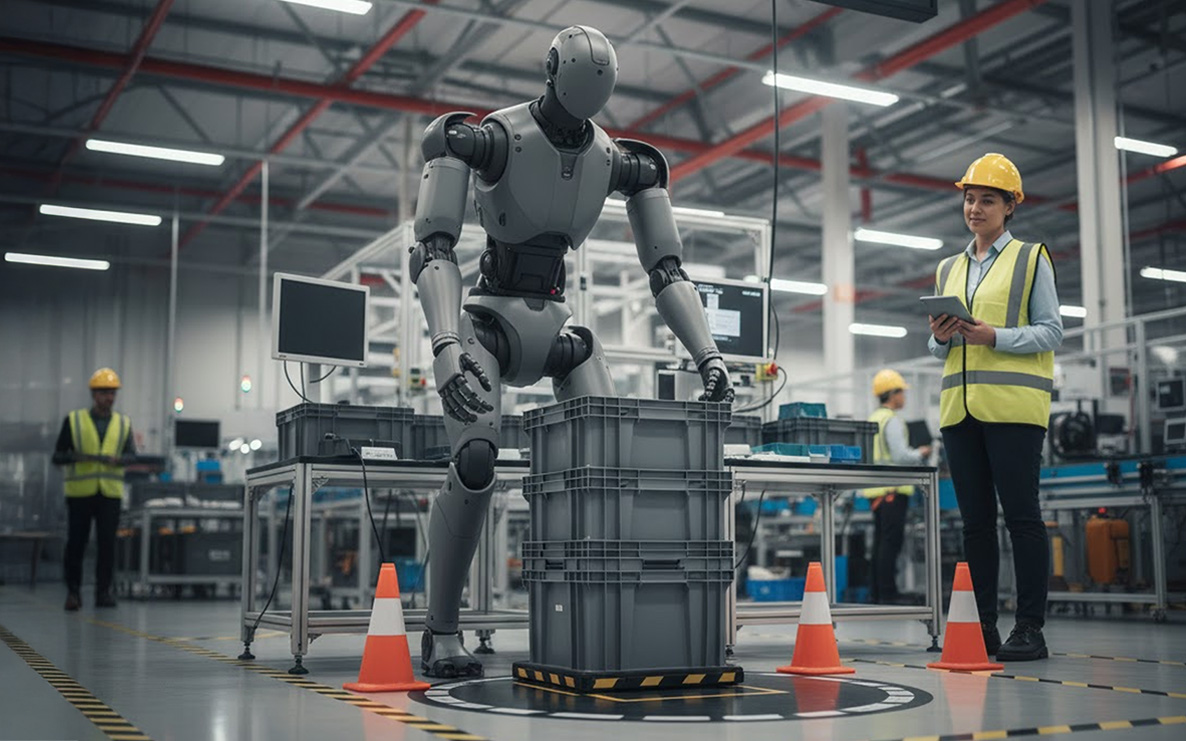
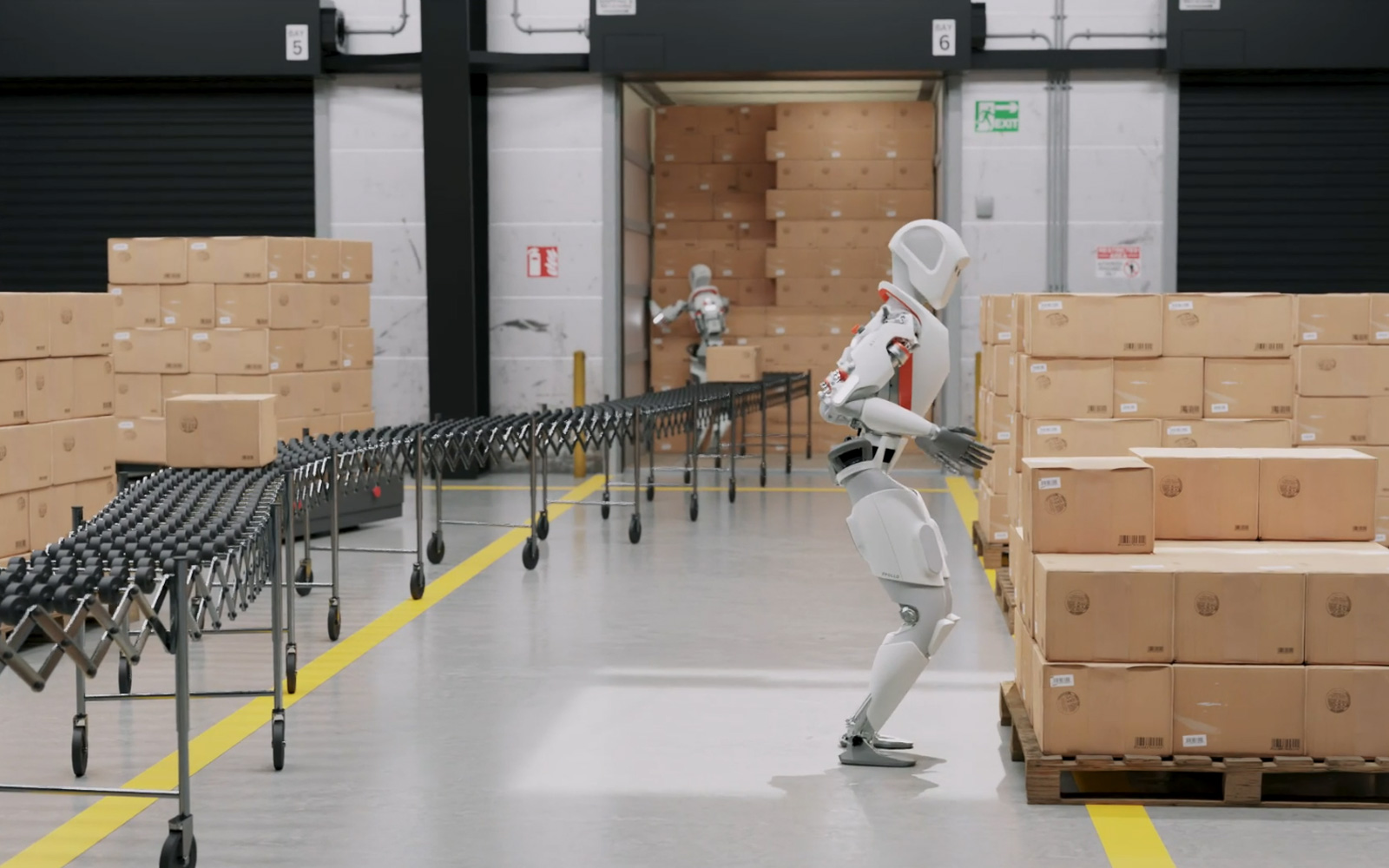
Automotive and logistics are leading. BMW confirmed trials of Figure’s humanoids on real production tasks in Spartanburg, shifting humanoids from lab curiosity to line support. Mercedes-Benz is piloting Apptronik’s Apollo on the factory floor, with Jabil collaborating to scale production. Amazon’s ongoing trials of Agility’s biped “Digit” continue to validate warehouse workflows like tote handling.
Incumbents are productising.Boston Dynamics retired hydraulic Atlas and unveiled the fully-electric Atlas aimed at real-world applications - followed by a 2026 manufacturing push under Hyundai and stated deployment plans. This is a strong indicator that a major player intends to ship at scale, not just showcase R&D.
Aerospace is moving too. Airbus signed with UBTECH to explore humanoids in aviation manufacturing, with UBTECH signalling five-figure annual capacity targets. Early days - but it widens use-case proof beyond automotive/logistics.
The capability curve: what’s actually ready
Today’s humanoids excel at repetitive ergonomically hard tasks in human-designed spaces: tote moves, parts kitting, lineside replenishment, basic inspection, and front-of-house. Expect steady gains in manipulation, cycle time consistency, and battery/serviceability as OEMs iterate on grippers, perception, and teleoperation assist. Boston Dynamics’ all-electric platform and the “robots building robots” manufacturing push at Apptronik/Jabil illustrate the direction of travel.
Robotics adoption is already mainstream. Factory robot stock hit a record, 4.3m units worldwide, with annual installations >500k for multiple years; the UK grew installations 51% in 2023 (from a low base), led by automotive. That tells boards the integration muscle (safety, service, IT) already exists - humanoids benefit from that ecosystem.
UK tax treatment helps. Full Expensing (100% first-year deduction for qualifying plant & machinery) has been made permanent, improving after-tax payback on capex when buying (and shaping OEM price/finance discussions).
The governance: how to do this safely in Britain
UK firms don’t need new laws to start. Two anchors apply now:
PUWER (Provision and Use of Work Equipment Regulations): competence, inspection, maintenance, safe use, and risk assessment on site.
Product conformity (CE/UKCA) for the robot as supplied, with HSE guidance for placing machinery on the GB market.
This is exactly the terrain we operate in - PUWER-led assessment and SAT-gated go-live with OEM documentation.
Why 2026, specifically
Supply is maturing: multiple OEMs have public pilot references and manufacturing partners; major incumbents have announced productized platforms.
Demand is structured: logistics and auto already run mixed-fleet automation; humanoids slot into human-designed spaces without costly line rebuilds. (That’s why pilots keep landing in warehouses and final-assembly zones.)
Finance ability improves: lenders can underwrite SAT-proven use cases; UK Full Expensing sharpens buy math while RaaS/leases smooth cash flow.
What the next 24 months looks like
2026: targeted pilots in logistics/auto/aero; KPI focus on uptime, cycle time, and safe envelopes. Expect 1–3 robots per site in constrained duties, with human supervision and OEM-aligned service kits.
2027–2028: multi-unit cells and light redeployment across similar tasks; battery swap/refuel workflows and spares SLAs standardise; major OEM production ramps begin (e.g., Hyundai/Boston Dynamics).
What UK leaders should do this quarter
Run a Humanoid Readiness assessment (PUWER-aligned): pick 2–3 candidate tasks; confirm power/network/floor; define a safe operating envelope.
Shortlist 2–3 OEMs per task (vendor-agnostic): request conformity packs, training, and data terms.
Pilot with SAT gates: 6–10 weeks, clear pass/fail KPIs, and a spares/train plan.
Pre-agree commercials: lease vs buy (using Full Expensing where appropriate), service tier, refresh/buy-back options, and data/telemetry for SLA proof.
About The Robot Group (UK)
We’re a vendor-agnostic partner for Humanoid Robots; readiness pilot → lease/buy → service. We verify compliance, secure finance, and help manage uptime so your teams get results without the risk.
Next step? Book a Humanoid Readiness & Adoption Plan session - get a scorecard, pilot charter, and an OEM-neutral shortlist tailored to your site.