Humanoid supply just crossed a line and businesses should act
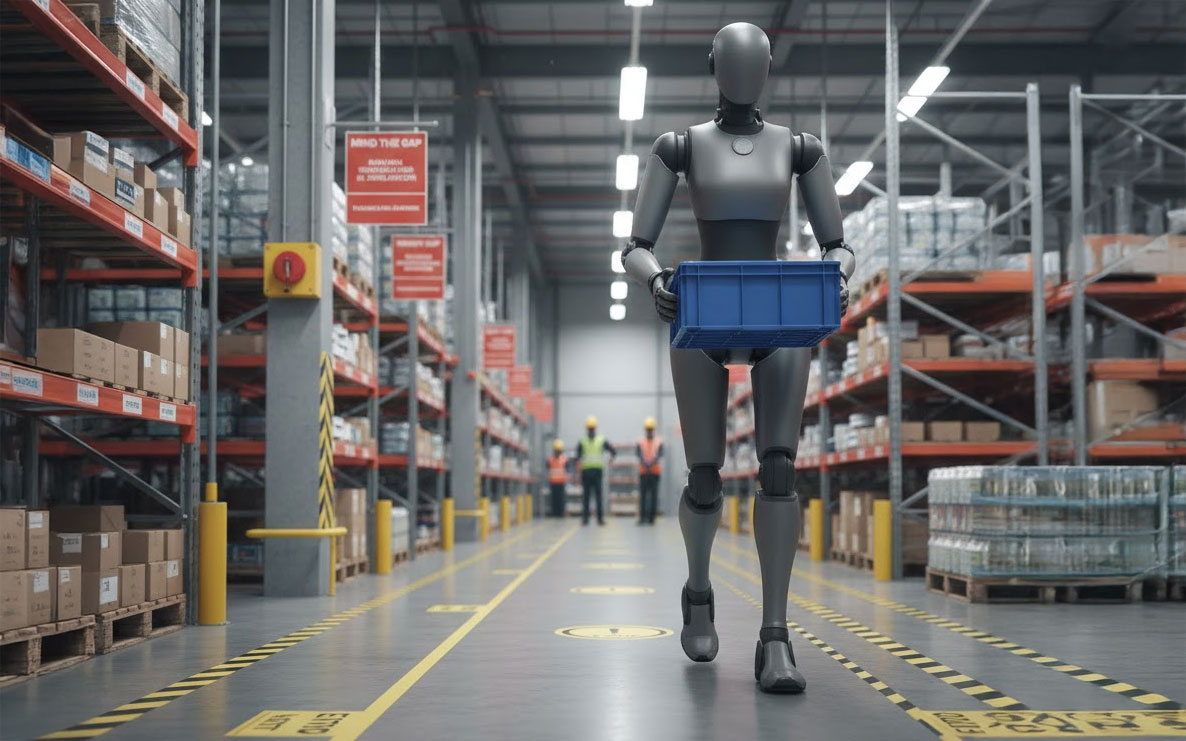
In late January, Eyou Robot Technology switched on what it calls the world’s first fully automated production line for humanoid robot joints in Shanghai’s Pudong district. The line starts at 100,000 joints/year with the ability to triple output - important because integrated joints are a major cost and reliability driver in humanoids. This is a component-level breakthrough, not a headline robot launch, and it matters because it tilts supply economics across multiple brands at once.
Not like cars: expect a tipping point, not a slow ramp
Automotive scaled through decades of steady iteration - tooling, platforms, volumes. Humanoids won’t: the constraint has been core subsystems (joints, transmissions, drive electronics, encoders) and consistent QA at scale. As those bottlenecks move to automated lines, downstream OEMs can surge together once their software and integration clear internal gates. In other words, a parts breakthrough can unlock many robots at once, creating a non-linear jump in availability and cost curves rather than a gentle, single-brand ramp.
Why UK business should care in 2026
Price and lead-time pressure will move quickly. If joint lines scale, expect shorter lead times and tighter price bands from multiple OEMs - use that in negotiations. (Component capacity gains typically drop through BOM costs first.)
Multi-brand sourcing gets easier. Shared tier-1 components reduce risk of vendor lock-in; you can dual-source robots for the same workflow with fewer integration penalties.
Pilot evidence will compound. With more units in the field, KPI baselines (uptime, MTBF/MTTR) will harden quickly - lenders will underwrite faster when pilots use proven parts stacks.
Automated humanoid joint line
The governance: how to do this safely in Britain
Run a humanoid readiness assessment now: Lock your PUWER-led site baseline, target tasks (tote moves, kitting, lineside), and define a SAT-gated pilot script. When supply loosens, you’ll be the first to place orders that pass internal H&S and insurer checks. (We structure this for UK duty-holders and lenders.)
Write an OEM-agnostic RFP: Specify outcomes and interfaces (cycle time, ergonomics, stop distances, data taps), not brand names. Add options for buy, operating lease, or short RaaS pilots so Finance can play the field.
Ask about the joint stack: Whether you’re looking at US, EU or China OEMs, request joint module specs, QA certificates, and serviceability (swap times, spares). Component transparency is now a price and uptime lever.
Negotiate refresh/buy-back early: If the part pipeline accelerates, model tech refresh at 24–36 months. Tie refresh to KPI triggers (e.g., cycle-time deltas) and residual support from OEMs or funders.
Plan for scale, not just the pilot: Standardise training, spares kits, incident workflows, and data streams during the first site - those artifacts let you copy-paste to the second and third site when supply pops.
Risk notes (and how to hedge)
Hype vs. reality: Some OEMs remain in early pilots; efficiency on complex tasks still trails humans in places (although evovling at real pace). Anchor decisions on SAT results and SLA-backed support, not demos.
Jurisdictional exposure: If your shortlist includes China-based suppliers, add export controls, data residency, and insurer comfort checks to your due diligence; diversify with at least one non-Chinese OEM in every program.
Service responsibility: Keep OEM-led maintenance in contract; ensure parts SLAs and training are in the SOW, with our team helping with coordinating execution on site.
How we help (UK, vendor-agnostic)
The Robot Group delivers Readiness → Pilot → Lease/Buy as a single motion:
Pilot & SAT: we execute a Site Acceptance Test with OEM-aligned parts and documentation; go-live only on SAT pass.
Commercials: multi-lender terms, buy-back/refresh options, and procurement language that keeps you OEM-agnostic.
Scale: we standardise spares, incident response and telemetry so you can roll out across sites with predictable uptime.
Bottom line: 2026 is when component industrialisation - like automated joint lines - begins to lift the whole humanoid market. Buyers who prepare now (safety, specs, sourcing, finance) will capture the first wave of availability and better terms when the curve bends. If you want a brand-neutral assessment and pilot plan tailored to your site, we’re ready to run it.
About The Robot Group (UK)
We’re a vendor-agnostic partner for Humanoid Robots; readiness pilot → lease/buy → service. We verify compliance, secure finance, and help manage uptime so your teams get results without the risk.
Next step? Book a Humanoid Readiness & Adoption Plan session - get a scorecard, pilot charter, and an OEM-neutral shortlist tailored to your site.