Xiaomi’s Factory Humanoid Reaches 98% - But the Factory Is the Real Advantage
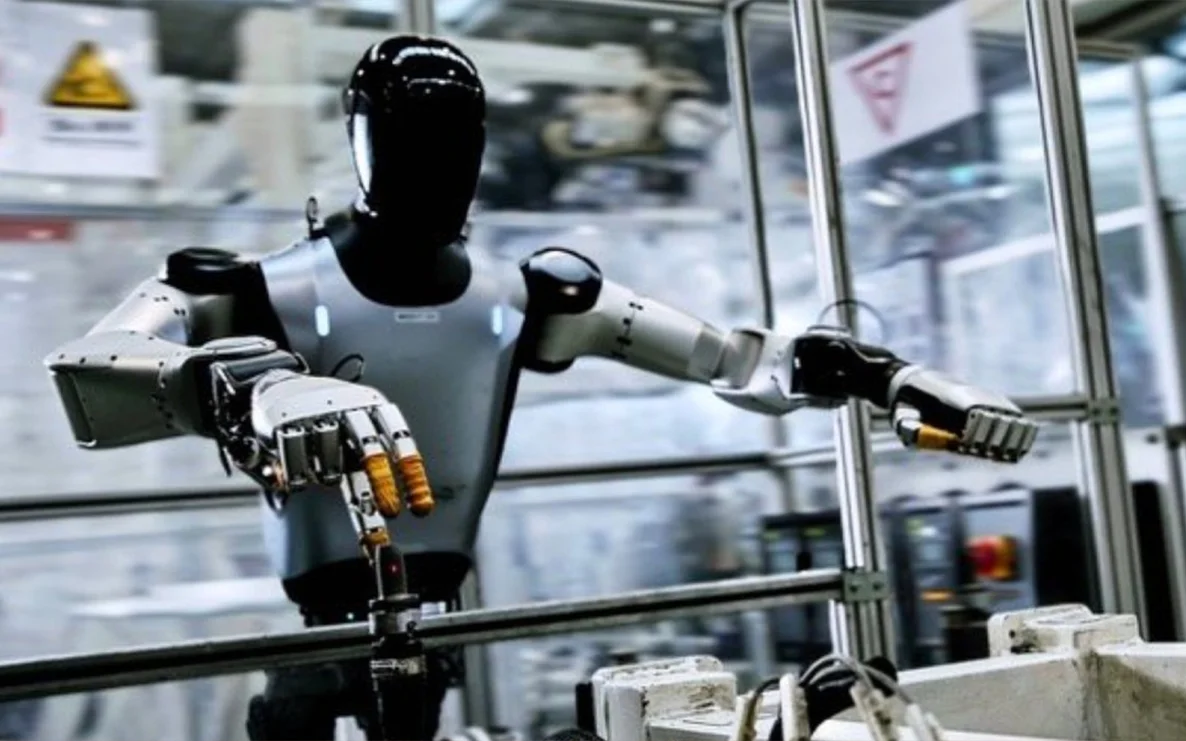


Xiaomi says its humanoid robot has achieved a 98% success rate at a self-tapping nut-loading station inside one of its automotive factories.
Four months earlier, the same task was reportedly operating at 90.2%. Xiaomi says the latest result places the robot within one percentage point of the qualification rate achieved by human workers. The company has also introduced the robot to two additional workflows: sorting centre-console side panels and folding and recycling parts bins, with both newer tasks currently reported at approximately 90% success.
The headline number is significant.
But Xiaomi’s most important advantage may not be the robot’s current success rate.
It may be the fact that Xiaomi owns the robot programme, develops the underlying AI, manufactures electric vehicles and controls the factory environment in which the system is being tested.
That gives the company something many robotics startups struggle to secure: repeated access to real production work, real failure data and engineers who can modify the robot, software, tooling and process together.
Xiaomi is not simply demonstrating a humanoid robot.
It is building a closed industrial learning loop.
The task has often been described online as screw or nut installation. In practice, the published description is more specific.
The robot picks self-tapping nuts from an automatic feeding system, handles variations in their orientation and places them accurately onto positioning fixtures. The surrounding automated equipment then supports the downstream tightening process on vehicle-floor components.
The manipulation challenge comes from several factors:
During Xiaomi’s earlier factory trial, the robot reportedly operated autonomously for three consecutive hours, achieved a 90.2% success rate and met the production line’s fastest 76-second cycle-time requirement. The 76-second figure refers to the factory takt the workstation had to support - not to the humanoid independently producing an entire vehicle every 76 seconds.
That distinction matters.
A humanoid should not be evaluated by how dramatic its movement appears. It should be assessed against the exact production requirement surrounding its assigned task.
An increase of almost eight percentage points over four months suggests that Xiaomi is doing more than staging a one-off demonstration.
The robot is apparently being left inside a production environment long enough for the company to identify failure modes, collect operational data and refine the system.
That is how industrial robotics normally improves.
Engineers observe where the process breaks down, then adjust some combination of:
The result is rarely produced by one breakthrough alone. It normally comes from repeated engineering work across the complete system.
For the wider market, Xiaomi’s progress is therefore relevant even if the latest 98% figure has not been independently audited.
It suggests that access to a real factory workflow can create a faster path towards useful performance than repeatedly training for broad demonstrations without a defined production requirement.
That supports the wider trend examined in TRG’s analysis of Chinese humanoid robot companies and China’s industrial robotics race: China is combining robot development with manufacturing capacity, AI research, data collection and large domestic deployment environments.

A 98% success rate sounds close to complete reliability.
Inside a high-volume factory, however, the remaining 2% can still be commercially important.
Across 100 attempts, a 98% rate implies two unsuccessful attempts. Across 1,000 cycles, it implies twenty. Across 10,000, it implies two hundred.
Whether that is acceptable depends on what happens when the robot does not succeed.
A failure could mean:
These scenarios have very different operational consequences.
The 98% figure therefore creates several questions that have not yet been answered publicly:
This is why TRG argues that humanoid robots should be assessed through uptime, intervention, recovery, safety, economics and supportability - not through a single performance percentage.
The 98% result is encouraging evidence. It is not yet a complete industrial acceptance case.
Many humanoid startups have a difficult relationship with industrial data.
They need customer sites to test their robots, but customers are often reluctant to provide unrestricted production access to immature systems. The startup may receive limited trial windows, operate in a staged area or have to wait weeks before modifying the process.
Xiaomi faces a different situation.
The company controls several parts of the development chain:
This means Xiaomi can potentially alter both sides of the deployment.
It can improve the robot - but it can also modify the feeder, fixture, process sequence or presentation of the component where that creates a better overall result.
That is a major industrial advantage.
The objective in a real factory is not to prove that a humanoid can overcome every badly designed workflow without support. It is to create the most reliable and economical complete production system.
Sometimes the right answer is a more intelligent robot.
Sometimes it is a £50 fixture, a better part feeder or a small adjustment to the workstation.
Usually, it is a combination.
This is also why businesses should compare a proposed humanoid against the actual alternatives. For a fixed, highly repetitive process, a conventional industrial arm or cobot may remain faster, less expensive and easier to validate. For simple transport, an AMR may be more appropriate.
TRG’s guide to humanoids versus AMRs and cobots explains why the task and environment should determine the platform - not the level of attention the technology is receiving.
Xiaomi’s factory access may also allow the company to build a richer learning cycle.
Every unsuccessful attempt can provide information:
Those examples can be used to improve task-specific control and, potentially, the wider AI models that support future workflows.
This creates a feedback loop:
Deploy → observe → identify failure → collect data → retrain or redesign → redeploy
The speed and quality of that loop may become one of the most important competitive advantages in embodied AI.
Hardware matters. Model size matters. Manufacturing scale matters.
But the companies that gain repeated access to useful physical-world failures may improve fastest.
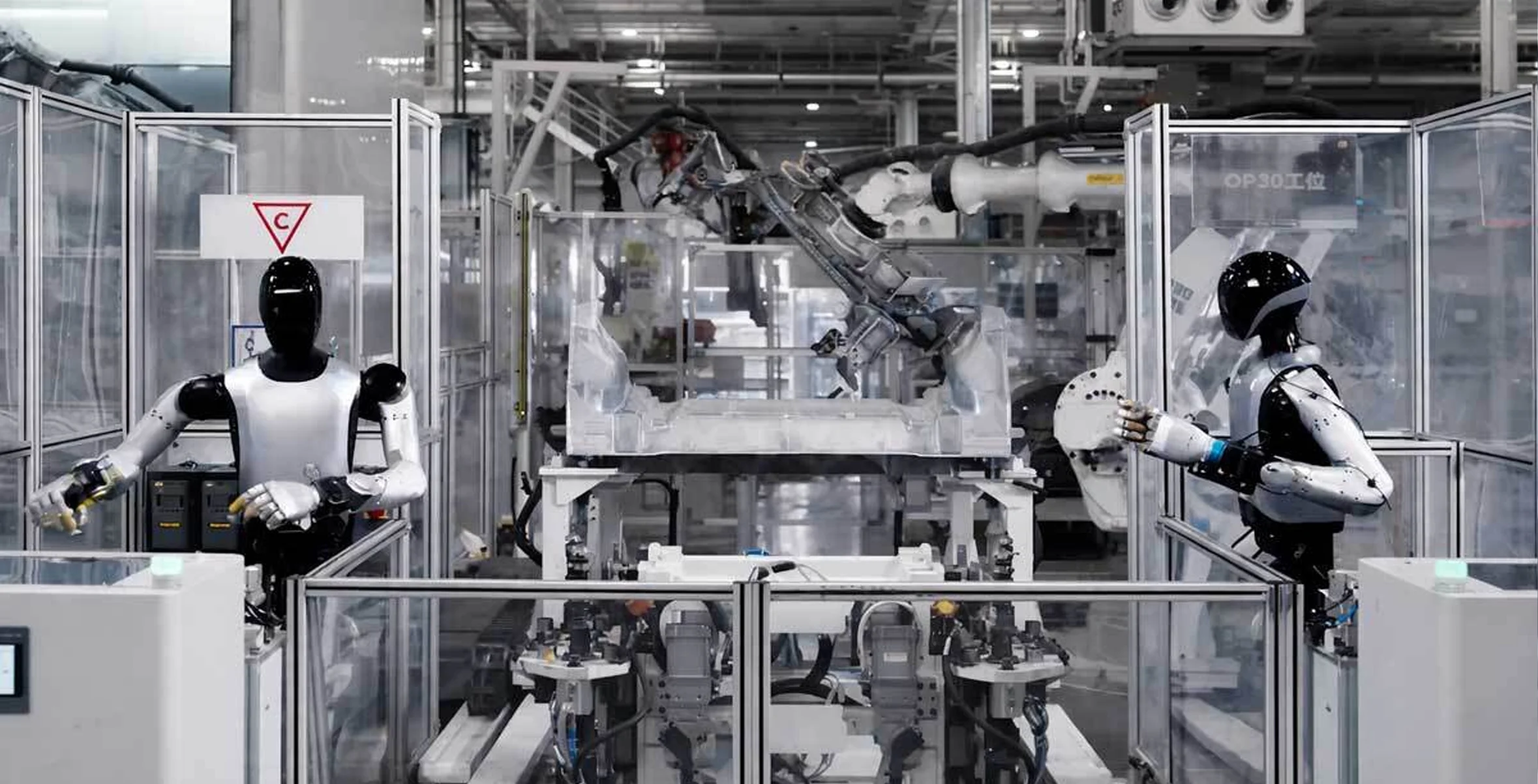
Xiaomi has connected its factory trials to its wider vision-language-action research.
Xiaomi-Robotics-0 is a 4.7-billion-parameter VLA model developed to convert visual observations, language instructions and robot-state information into physical actions.
The research focuses particularly on reducing the delay and discontinuity that can occur when a large model generates successive segments of robot movement. Xiaomi’s team describes methods for asynchronous execution that allow the robot to continue moving while its next action sequence is being calculated.
That is important because industrial tasks require continuous motion.
A robot that pauses visibly between every AI inference may look intelligent in a research demonstration but struggle to meet a factory cycle time.
Xiaomi-Robotics-0 was evaluated publicly on simulation benchmarks and two real-world bimanual tasks: Lego disassembly and towel folding. The research paper reports that the system can run using a consumer-grade GPU and that its asynchronous approach reduces pauses between action sequences.
The exact relationship between the public research model and every part of the factory control system has not been fully disclosed.
Xiaomi has, however, said that its factory work draws on its VLA research, multimodal perception, reinforcement learning and inputs including vision, touch and joint-state information.
Xiaomi-Robotics-0 no longer appears to be an isolated research release.
In July 2026, the Xiaomi Robotics team introduced Xiaomi-Robotics-1, a foundation VLA model trained using more than 100,000 hours of real-world manipulation trajectories.
The team says Robotics-1 is intended to follow diverse instructions, operate across mobile-manipulation tasks and adapt to new downstream work with comparatively limited fine-tuning data. The reported benchmark results are research results rather than evidence of automotive production readiness, but they show the scale of Xiaomi’s investment in robot learning.
Xiaomi has also published Xiaomi-Robotics-U0, a 38-billion-parameter model intended to generate consistent embodied scenes, robot interactions and synthetic training data across different robot forms.
U0 is designed partly as a data engine: generating and modifying scenes that can be used to train or test robot policies before every scenario is encountered physically.
Together, the programmes suggest Xiaomi is working across three connected layers:
The potential advantage comes from connecting those research capabilities to an operating factory.
Synthetic and research data can broaden what the robot has seen. Factory data can expose where the system still fails in production.
The self-tapping nut station is the most mature public task, but Xiaomi’s two newer workflows may be equally informative.
The robot is now reportedly being tested on:
Both are reported at approximately 90% success. Xiaomi has described the side-panel operation as a long-duration humanoid application involving flexible workpieces in automotive manufacturing.
Flexible items are difficult for robots because their shape can change during handling.
A rigid component has relatively predictable geometry. A flexible panel, fabric item, cable or bag can bend, sag or fold in ways that affect perception and grasping.
If Xiaomi can demonstrate stable, sustained handling of variable flexible components, that could eventually be more significant than perfecting one tightly controlled placement station.
The important test will be whether performance improves through the same repeated factory-learning process.
The progression is commercially relevant:
A scalable humanoid platform should not need to begin from zero every time it encounters a new workstation.
It should not currently be described as CyberOne without qualification.
CyberOne was the bipedal humanoid Xiaomi unveiled publicly in 2022. Some recent articles and social-media posts have assumed that the factory platform is CyberOne.
However, the latest public reporting on the 98% result does not identify the model. Xiaomi has also not released a complete current buyer-facing specification for the factory robot.
The accurate description is therefore:
Xiaomi’s humanoid robot, or Xiaomi-developed factory humanoid
This matters because the hardware may have evolved substantially since the original CyberOne presentation.
The appearance, locomotion type and underlying software should not be inferred solely from an earlier product name or selected video footage.
Lei Jun has said Xiaomi plans to deploy large numbers of humanoid robots across its production facilities within the next five years.
Xiaomi has also said it is continuing deployment and validation work across additional factory stations.
The company is well positioned to attempt this because it has:
But “large numbers” remains an ambition rather than a defined deployment commitment.
Important information is still missing:
The next meaningful milestone will not be another percentage improvement by itself.
It will be evidence that Xiaomi can reproduce the result across multiple robots, workstations and operating periods.
One successful station shows progress.
A supported fleet operating across several factory processes would show industrialisation.
The immediate lesson is not that UK companies should attempt to buy a Xiaomi humanoid.
There is currently no established UK procurement, support or deployment route for this factory platform.
The lesson is about how humanoid pilots should be structured.
Xiaomi appears to have started with:
That is a much stronger starting point than asking a humanoid to “help around the factory”.
For UK manufacturers exploring humanoid robots for warehouses and manufacturing, the first use case should have similarly clear boundaries.
A useful pilot should define:
A structured humanoid robot readiness assessment can help establish those requirements before a manufacturer or robot is selected.
The objective is not to prove that a humanoid is exciting.
It is to determine whether it can create measurable value on a defined workflow.
Xiaomi’s reported move from 90.2% to 98% is one of the more useful industrial humanoid signals of 2026.
It does not prove that general-purpose humanoids are ready to operate automotive factories without supervision.
It does show why embedding robots inside real production environments matters.
Xiaomi can expose its robots to genuine component variation, cycle-time pressure, equipment interfaces and repeated failures. It can then connect those lessons to an expanding embodied-AI research programme and adjust both the robot and the surrounding process.
That may be its real competitive advantage.
The leading humanoid company may not be the one that produces the most sophisticated public demonstration.
It may be the company that creates the fastest and most disciplined loop between physical deployment, failure data, engineering improvement and redeployment.
Xiaomi owns much of that loop.
The next test is whether it can turn one improving workstation into multiple accepted tasks - and then turn those tasks into a maintainable factory fleet.
For ongoing analysis of Chinese humanoid manufacturers, industrial deployments and commercial readiness, explore The Humanoid Market Brief.
The Robot Group helps UK businesses identify suitable workflows, compare relevant humanoid manufacturers and structure controlled pilots around clear operational and commercial evidence.