DOBOT LUMO: Why Understanding People Could Be the Next Humanoid Advantage


Much of the humanoid race has focused on what robots can physically do.
How much can they lift? How fast can they walk? Can they manipulate objects reliably enough for a factory?
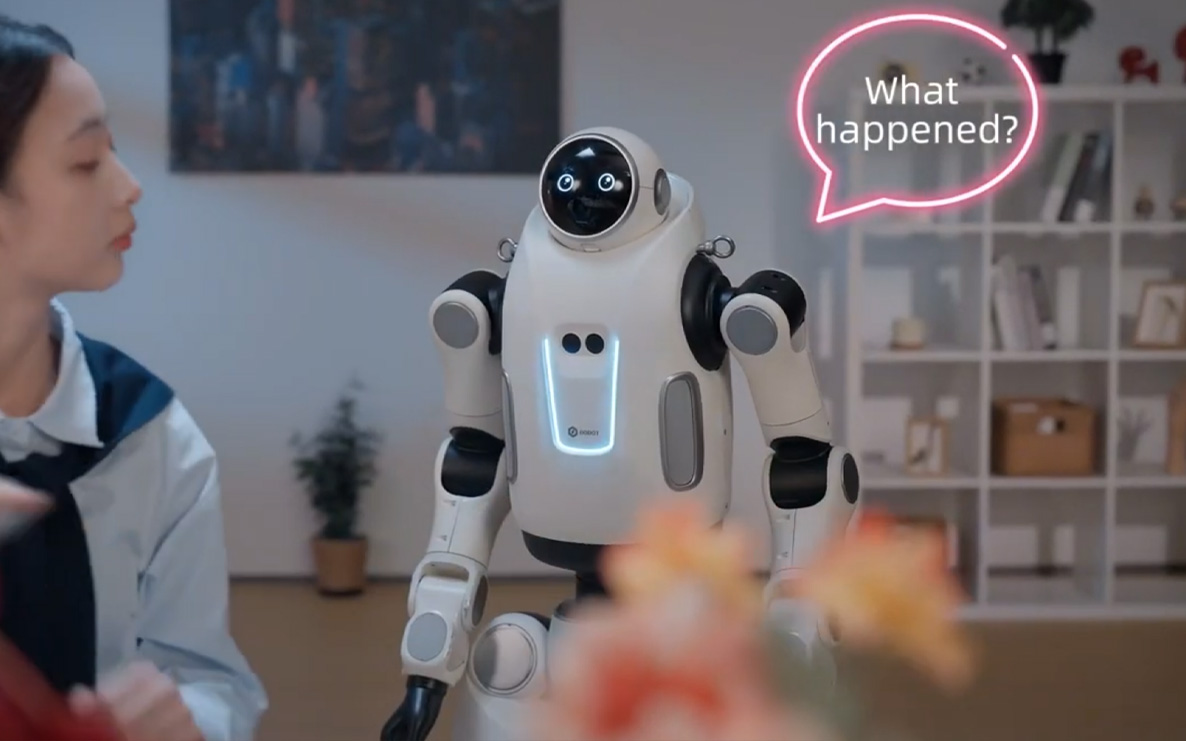
DOBOT's newly unveiled LUMO approaches the question from a different direction.
It asks what happens when a humanoid needs not only to act in the physical world, but to understand the people sharing it.
DOBOT describes LUMO as a new-generation “All-Terrain Embodied Humanoid Robot”, built around multimodal emotional perception, 3D spatial understanding, proactive action and autonomous learning.
Importantly, “all-terrain” here appears to mean more than physical terrain.
DOBOT describes the idea as adapting across spaces, roles, capabilities and long-term interactions - with homes, schools and public spaces among the environments it is targeting.
That makes LUMO an interesting addition to a humanoid market still dominated by manufacturing and logistics.
For an industrial robot, success can often be defined relatively clearly.
Pick this component. Move this box. Inspect this location. Complete the task within an acceptable cycle time.
Robots operating directly around people face a different challenge.
They need to understand not only the task, but increasingly the context surrounding it.
DOBOT says LUMO combines visual and voice information to recognise human emotional cues and respond more naturally. It also uses 3D spatial understanding to navigate, avoid obstacles and proactively approach people rather than waiting for every interaction to be explicitly initiated.
That shift from instruction to interaction could become important.
In a school, public venue or other shared environment, a robot that understands where somebody is, whether they are addressing it and how best to respond could ultimately be more useful than one requiring rigid commands for every action.
The commercial opportunity is therefore not emotional intelligence for its own sake.
It is reducing the friction between people and embodied machines.
One of the more interesting ideas in the LUMO announcement is proactive action.
Most robots remain fundamentally reactive: somebody provides an instruction and the machine attempts to execute it.
A robot with sufficiently strong perception and contextual understanding could take a different approach.
It might recognise that somebody is looking for assistance, navigate towards them, understand the situation and determine an appropriate response.
That could eventually become relevant across education, visitor environments and other people-facing settings where the interaction cannot always be programmed as a fixed sequence.
The more robots move into environments designed around people rather than machines, the less practical it becomes to define every interaction in advance.
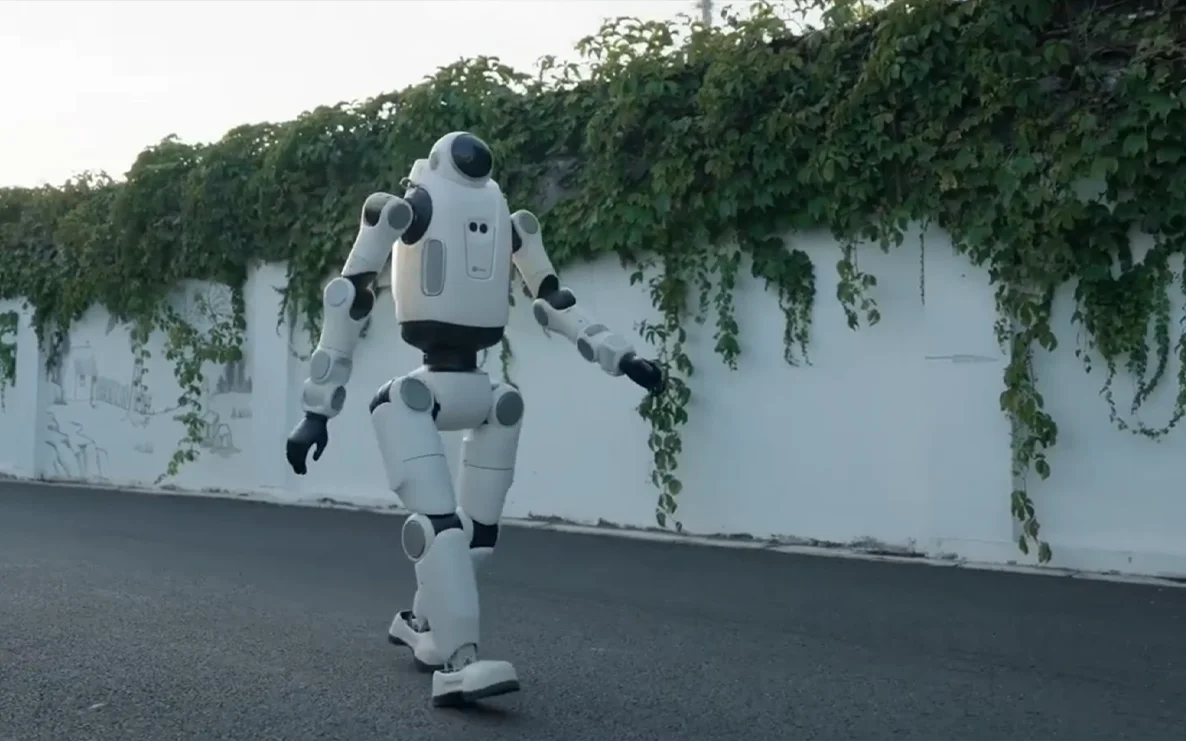
DOBOT's third theme for LUMO is autonomous learning and what it describes as long-term evolution.
The company says LUMO uses its own embodied-intelligence model alongside feedback from real-world interaction to continue learning over time.
This is potentially significant because useful general-purpose robots will encounter enormous variation.
People communicate differently. Environments change. Objects move. The same request can require a different response depending on where the robot is and who is asking.
A robot capable of retaining useful context and improving through experience could require less explicit reprogramming as those conditions change.
For businesses, the important outcome would eventually be practical: a platform that becomes easier to use and more capable as it builds experience within an environment.
LUMO is also interesting in the context of DOBOT's wider robotics portfolio.
The company already has significant experience in collaborative robots, with more than 100,000 cobots deployed globally according to DOBOT, alongside its growing embodied-intelligence portfolio.
Its ATOM humanoid range has a much clearer industrial and research focus.
ATOM Max combines a 41-degree-of-freedom body with dexterous hands, vision and substantial onboard AI computing. DOBOT has demonstrated the wider ATOM family in applications including manufacturing, component handling and research, and began global deliveries of the original ATOM platform in 2025.
Earlier this year, DOBOT described its embodied-AI strategy as “One Brain, Multiple Bodies”, applying a common intelligence foundation across humanoids, quadrupeds and industrial robot arms.
LUMO appears to extend that philosophy in another direction.
Rather than concentrating primarily on industrial manipulation, it puts interaction, spatial awareness and longer-term relationships with people much closer to the centre of the product proposition.
That breadth could prove important.
There is unlikely to be one humanoid architecture - or one interaction model - that wins every market.
The initial LUMO announcement specifically points towards homes, schools and public spaces rather than presenting the robot as another factory worker.
For commercial adoption, that opens a different set of possibilities.
Education and research are obvious early environments, where interaction itself can be part of the value and where organisations can explore embodied AI without demanding production-line economics from day one.
Beyond that, people-facing robots could eventually have roles in controlled public environments where navigation, communication and assistance need to happen naturally around people.
The more interesting question is whether technologies developed for LUMO subsequently transfer across DOBOT's wider portfolio.
Better contextual understanding, proactive behaviour and continual learning are not exclusively consumer or service capabilities.
Industrial robots operating alongside people will increasingly need many of the same qualities.
LUMO is interesting because it expands the humanoid conversation beyond strength, dexterity and locomotion.
Those capabilities remain fundamental.
But as robots move into environments where people are part of the workflow rather than separated from it, understanding context may become just as important as executing the physical task.
DOBOT already has one side of that equation through its industrial robotics heritage and ATOM humanoid programme.
LUMO explores another: a robot designed around perception, interaction and adaptation over time.
The result is a broader view of embodied intelligence - one where the same manufacturer is exploring factory automation, humanoid manipulation, data collection and now more natural human-robot interaction.
Commercial details around LUMO's availability and market rollout were not included in the initial launch announcement. Those will be worth watching as the platform develops.
But the direction itself is notable.
The next step for humanoid robotics may not simply be teaching robots to do more.
It may be teaching them to better understand when, where and how to act.
Explore further analysis of emerging humanoid platforms and embodied-AI developments in The Humanoid Market Brief.