Could ANYmal Be the Missing Data Layer in Brownfield Industry?


A factory with 1,000 machines does not necessarily need 1,000 new fixed sensors.
It may need sensors that can move.
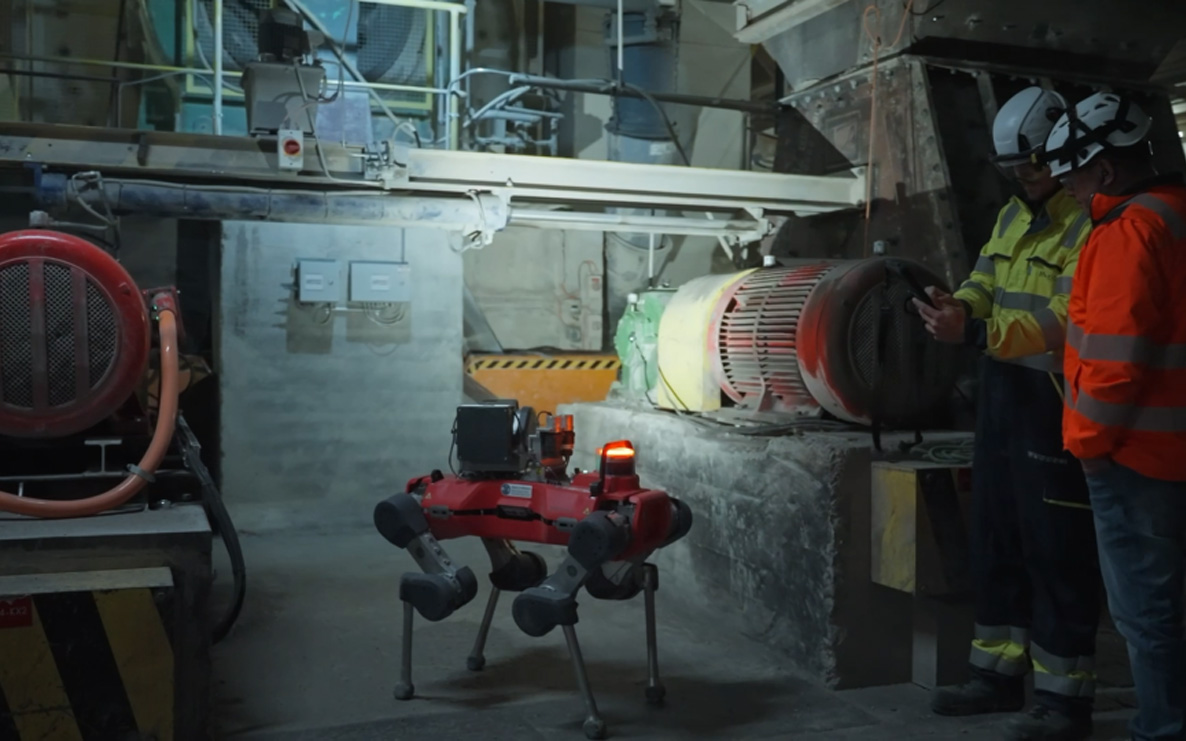
That is one of the more interesting lessons emerging from ANYbotics’ deployment of ANYmal at Vigier Ciment’s 150-year-old plant in Switzerland.
The site has around 1,000 rotating machines, but approximately 200 fixed sensors monitoring its most critical assets. The remaining equipment has traditionally depended heavily on manual inspection.
ANYmal is now helping fill that gap.
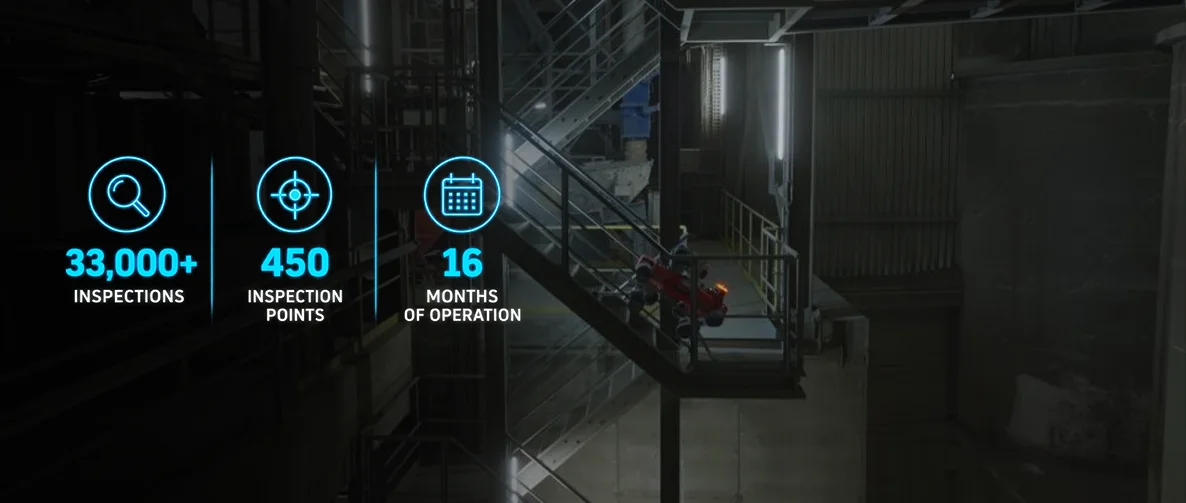
Over 16 months, the autonomous quadruped has completed more than 33,000 inspections across 450 inspection points, covering three mills over six floors during regular overnight missions.
That raises a bigger question for industrial operators:
Do plants need to instrument every asset individually - or could autonomous robots become a mobile layer of the sensor network?
The answer is likely to be a combination of both.
Fixed sensors are extremely good at what they do.
Where a business needs continuous vibration, temperature, pressure or process measurements from a critical asset, permanent instrumentation is difficult to replace.
But industrial facilities contain far more equipment than their most critical machines.
Retrofitting every motor, bearing, pump, gauge or remote asset with permanent instrumentation can quickly become expensive and difficult - particularly in older facilities that were never designed around dense digital monitoring.
This is where autonomous mobile inspection becomes interesting.
ANYmal combines a mobile robotic platform with visual and thermal cameras, an ultrasonic microphone and LiDAR. The robot can also carry additional payloads for gas sensing and acoustic imaging.
Instead of installing that sensing capability permanently at every inspection point, the robot can take it to the asset.
One sensing platform can therefore collect multiple types of data from hundreds of locations.
That is a fundamentally different way of thinking about industrial instrumentation.
The argument becomes particularly interesting in brownfield industry.
Many factories, power facilities, mines, chemical plants and infrastructure sites have evolved over decades.
Equipment has been added. Production lines have changed. New digital systems sit alongside machines installed long before industrial IoT existed.
The result is often an uneven data landscape.
Some assets are heavily instrumented.
Others still rely on somebody walking over, looking at a gauge, listening to a bearing or checking whether something feels hotter than normal.
Vigier is a useful example.
Its plant has operated for around 150 years, includes difficult stairs and areas exceeding 50°C, and has around 1,000 rotating machines spread throughout the facility. ANYbotics says the plant previously relied on its roughly 200 fixed sensors together with manual inspection rounds to cover the wider asset base.
Rather than attempting to install hundreds of additional permanent sensing systems immediately, Vigier introduced a robot capable of moving the sensing capability between assets.
Bring the instrumentation to the machine, rather than instrumenting every machine.
That could become an important model for industrial digitalisation.
Autonomous inspection robots are unlikely to replace permanent sensing where continuous monitoring is required.
A critical turbine, compressor or production process may justify dedicated instrumentation collecting data every second.
But many industrial assets do not require that level of monitoring.
They may need a reliable visual inspection every shift, a thermal reading each night, periodic acoustic measurements or regular gas checks.
For those tasks, a mobile sensor platform can potentially provide broader coverage without replicating the same hardware hundreds of times.
The emerging model could therefore look less like:
Fixed sensing versus robotic inspection
and more like:
Critical fixed sensing + autonomous mobile inspection + human expertise
That combination could give maintenance teams a much more complete view of the plant.
This is where ANYmal becomes more interesting than the familiar description of a “robot dog doing inspections”.
At Vigier, the robot does not simply walk around taking photographs.
Its overnight missions feed measurements into ANYbotics’ Data Navigator platform, creating a morning report that the maintenance team uses to plan repairs, order parts and prioritise site visits.
The value therefore comes from the combination of:
Mobility → sensing → repeatable data → analysis → maintenance action
The robot is the mechanism that allows that data layer to move through the physical plant.
Vigier has already reported several examples of that data changing maintenance decisions.
During one inspection, a camera view helped the team identify severe damage to the foundation supporting the plant’s main crusher. Vigier estimated that a collapse could have resulted in around 120 hours of lost production and approximately $630,000 in shutdown costs.
Thermal inspection also identified a bearing running above 100°C and trending towards 140°C, allowing the team to investigate the underlying cooling issue and schedule the repair rather than waiting for a failure.
In another area, gas sensing turned what had previously been an anecdotal concern about ammonia around unloading bays into repeatable measurement data.
Different sensors. Different problems.
One mobile platform.
There is another advantage to putting sensors on a robot: the sensing capability can evolve.
ANYmal’s standard inspection payload already combines visual, thermal, acoustic and spatial sensing, while additional payload capacity allows other instruments to be added for particular inspection requirements.
That creates flexibility.
A company may initially deploy a robot for thermal and visual inspection before adding gas detection, acoustic imaging or another specialist sensor as additional use cases emerge.
The route itself can also expand.
At Vigier, ANYmal currently covers three mills across six floors, while the plant has identified further areas including the kiln, clinker cooler and quarries for future autonomous inspection.
That is different from installing another isolated piece of instrumentation each time the monitoring requirement changes.
The platform moves.
The missions change.
The sensor package can change.
And the same robot can potentially serve a growing part of the site.
The important story around ANYbotics may ultimately be bigger than autonomous inspection.
ANYmal can be viewed as a mobile extension of the industrial sensor network.
That is particularly relevant to brownfield facilities where installing permanent digital instrumentation across every asset would be difficult, expensive or unnecessary.
Fixed sensors will remain essential for critical continuous measurements.
Human expertise will remain essential for diagnosis, maintenance and decision-making.
But there is a large space between the two - and autonomous mobile inspection could increasingly occupy it.
The Vigier deployment provides a useful early example of what that operating model can look like: fixed instrumentation covering critical assets, an autonomous robot extending inspection across the wider plant, and maintenance teams receiving more consistent data before deciding where human attention is required.
For ANYbotics, that positioning is significant.
The company is not simply automating the inspection round.
It is potentially changing where industrial data can come from.
And as Physical AI moves further into existing factories and infrastructure, the ability to add intelligence without rebuilding the site around the robot could become one of the most commercially important advantages of all.
The same question will increasingly apply across humanoids and other embodied systems: not simply what the robot can do, but how easily it can become part of the operating infrastructure already around it.
This is the kind of commercial deployment signal we track in The Humanoid Market Brief - looking beyond demonstrations to understand how embodied robotics is actually moving into industry.