Galbot
Galbot ET1
Galbot

Galbot ET1

Compact bipedal humanoid for customer engagement, entertainment and interactive commercial experiences.
Key industrial use cases
Visitor engagement; retail and storefront interaction; tourism and attractions; exhibitions and brand activations; live entertainment; product promotion; interactive demonstrations
Request Assessment
Galbot ET1

Robot overview

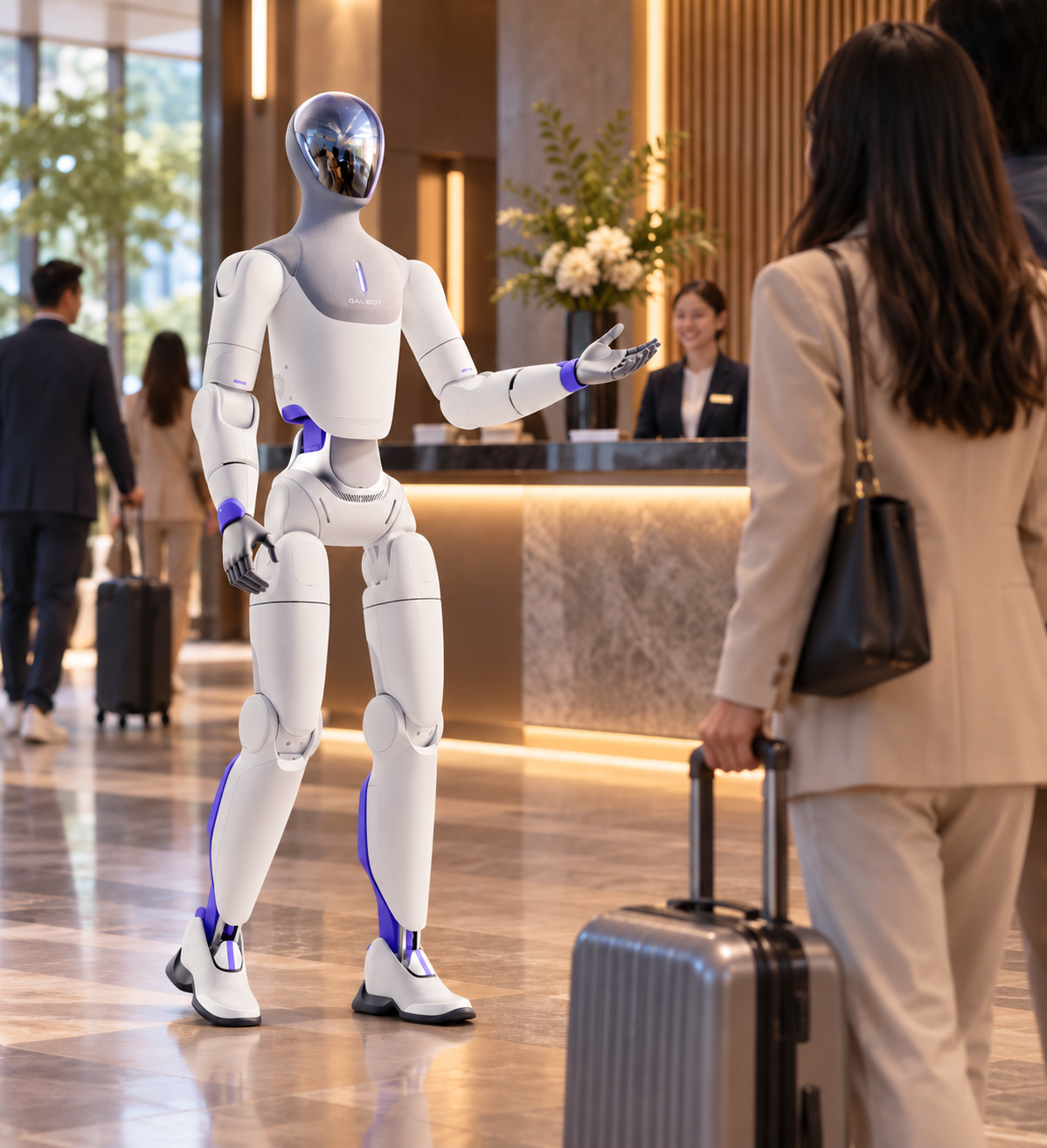
The Galbot ET1 is a compact bipedal humanoid designed around real-time interaction, expressive whole-body movement and autonomous behaviour in people-facing environments.

Standing 1.25 metres tall and weighing 32 kg with battery, ET1 represents a different proposition from Galbot's wheeled G1 and heavy-duty S1 platforms. Rather than prioritising payload and industrial material handling, ET1 is designed to interact naturally with people through movement, perception, conversation and dynamic behaviour.

Galbot positions the platform for environments including theme parks, storefronts and live performance, where the robot can perceive people around it, respond to interaction and adjust its speech and movement in real time.

At the centre of ET1 is Galbot's 100-million-parameter Transformer motion foundation model. Galbot says this enables the robot to generate stable, human-like movements, reason about what is happening around it and plan actions dynamically rather than relying entirely on fixed pre-programmed sequences.

For businesses, this makes ET1 particularly interesting where the objective is not simply automation, but creating a physical AI presence capable of attracting attention, interacting with visitors and adapting its behaviour in real time.

The Robot Group can help UK organisations assess the intended application, required configuration and commercial value before progressing to demonstration, evaluation or supply.
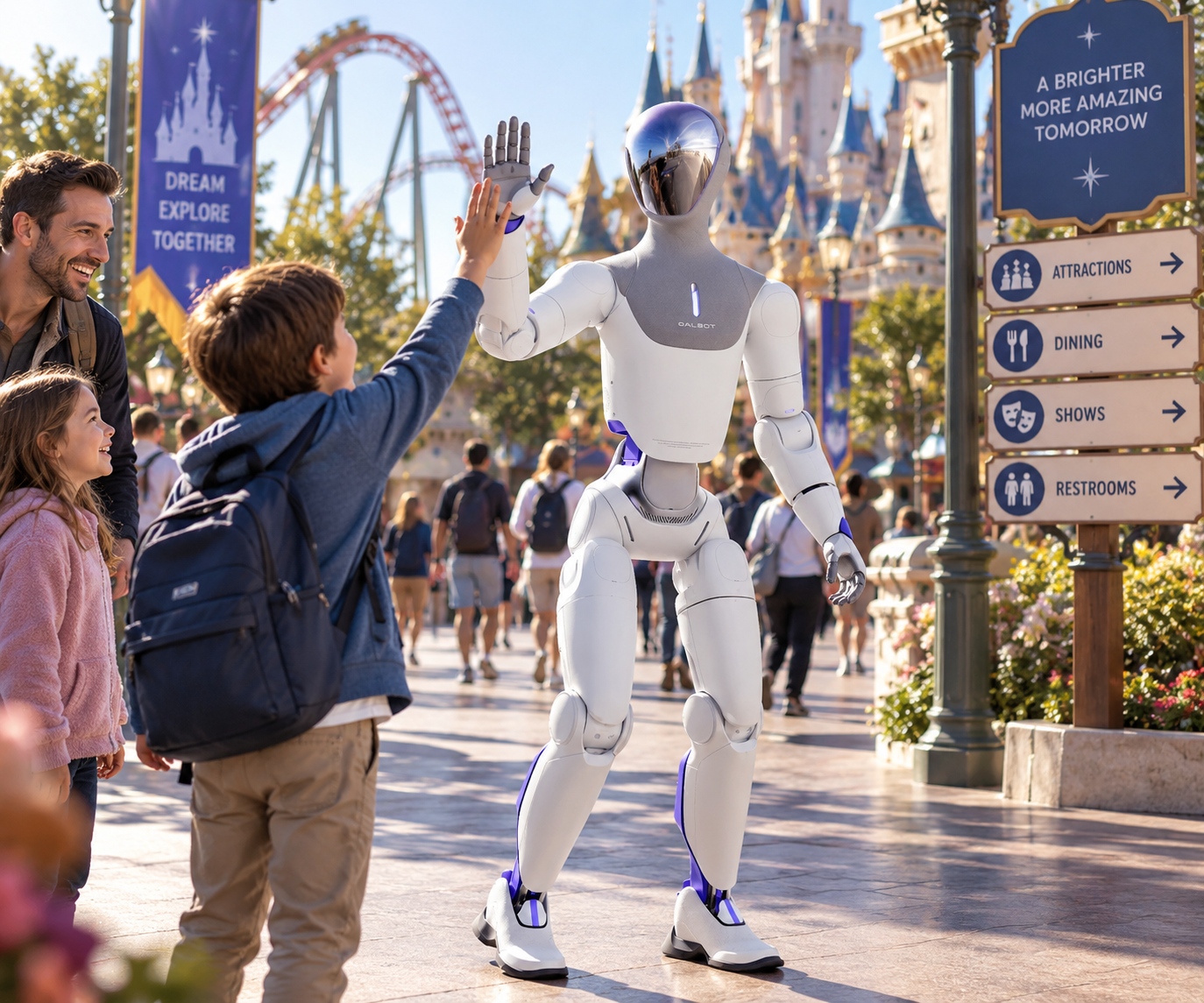
Galbot ET1
Key
Technical Breakthroughs

Real-time multimodal interaction

ET1 is designed to see, interpret and act in real time, combining perception, interaction and physical movement within the same humanoid platform. Galbot positions this as a core capability for responsive human-facing environments.

100M-scale motion foundation model

A 100-million-parameter Transformer motion model underpins ET1's movement architecture, with Galbot aiming to generate natural, expressive whole-body behaviour across different actions rather than relying solely on individually scripted motions.

Dynamic reasoning and action planning

Galbot says ET1 can continuously observe its surroundings, reason about what is happening and plan its next action, supporting more adaptive interactions with people and changing environments.

Learning through interaction

A particularly notable capability is Galbot's claim that ET1 can learn new movement skills through direct human interaction without requiring motion-capture recordings or prerecorded movement videos. For businesses, the potential value is faster adaptation of behaviour and performances around new applications.

Expressive bipedal movement

ET1 provides 26 degrees of freedom as standard, with Pro and Flagship configurations adding a further 12 DoF through dexterous hands. This supports expressive whole-body movement and more sophisticated physical interaction depending on configuration.

Scalable onboard AI compute

ET1 uses RK3588 + RDK X5 processing as part of its core architecture, with higher configurations offering NVIDIA compute of up to 100 TOPS. Galbot lists Orin Nano 40 TOPS for the Pro version and NX 100 TOPS for the Flagship configuration.

Galbot ET1
Deployment
+ Scalability

ET1 is best approached around a defined customer experience or engagement objective, rather than deploying a humanoid simply for novelty.

Potential starting applications include:

  • Theme parks and visitor attractions
  • Retail entrances and product promotion
  • Hotels, venues and visitor-facing environments
  • Exhibitions and trade shows
  • Brand activations and experiential marketing
  • Tourism and cultural venues
  • Live entertainment and stage performance
  • Interactive demonstrations
  • Promotional campaigns
  • AI and human-robot interaction programmes


Before deployment, businesses should assess the interaction they want ET1 to deliver and how success will be measured.

Important considerations include visitor volumes, operating environment, required dialogue and content, languages, expected movement, degree of autonomy, staff supervision, network and data requirements, operating hours, safeguarding around public interaction and the ongoing process for updating behaviours and experiences.

The strongest commercial case is likely to be where ET1 provides something a conventional digital display or kiosk cannot: physical presence, movement, responsiveness and the ability to create a memorable two-way interaction with people.

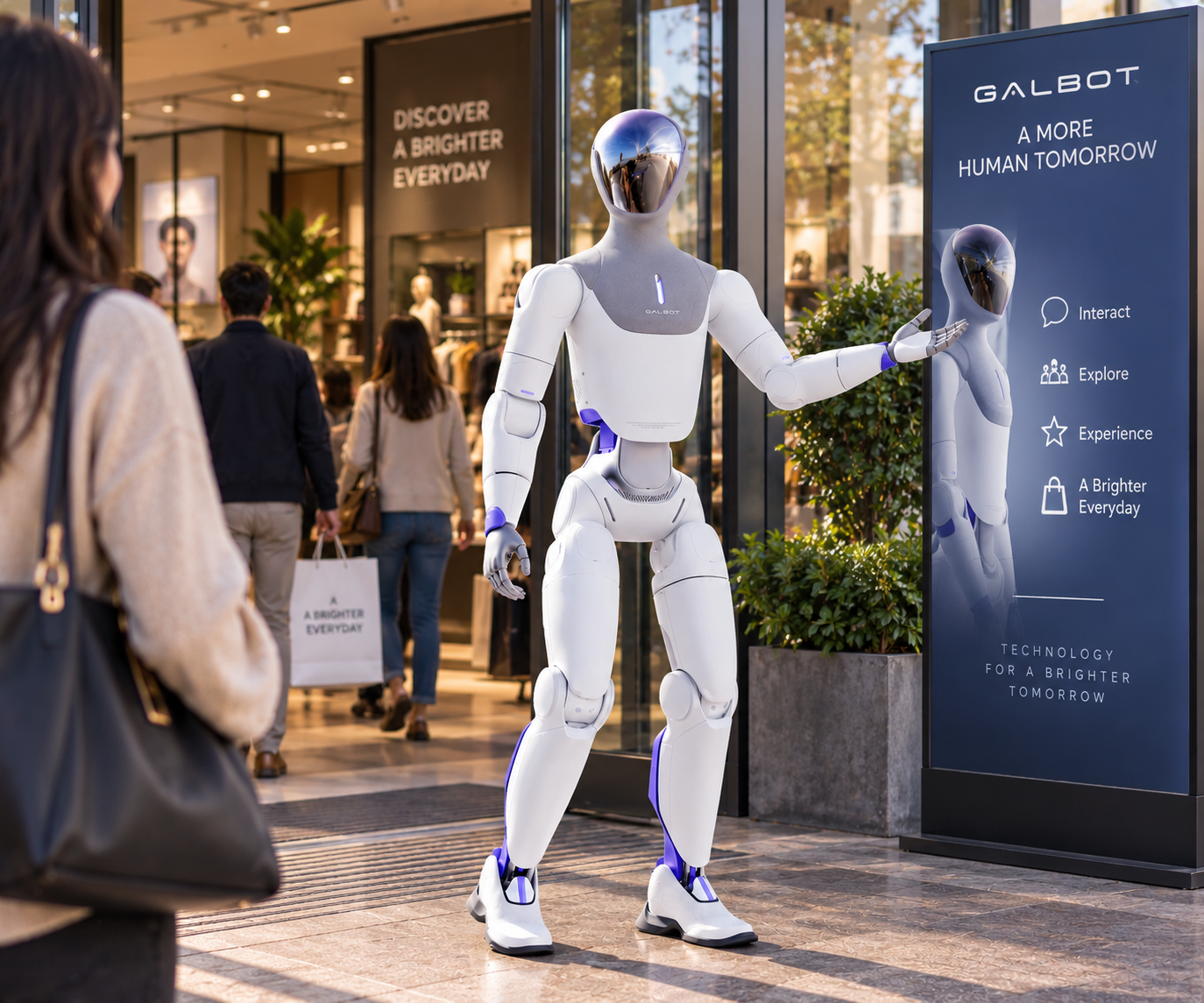
Galbot demonstrates ET1 greeting customers and introducing products at storefronts, adapting its communication to customer responses, interacting with visitors in theme-park environments and performing coordinated live entertainment.

Because ET1 is a newly commercialised platform - Galbot opened pre-orders in September 2026 - UK buyers should validate the required configuration, international availability, support arrangements and application performance before planning wider deployment.

For suitable applications, an initial single-site deployment could establish engagement levels, interaction success, operational reliability and content requirements before extending the same experience across additional robots or locations.

The Robot Group can help organisations define the use case, assess whether ET1 is the right platform and coordinate configuration, commercial discussions and deployment requirements directly with Galbot.

Direct access to leading humanoid OEMs; at the industry’s best rates.
The Robot Group is an independent adviser. Brand names and products are referenced for comparison.

All trademarks are the property of their respective owners. Availability and UK compliance subject to OEM confirmation.
Humanoid performing parts kitting tasks
Ready to deploy humanoid robots in your business?