Galbot
Galbot G1
Galbot

Galbot G1

Versatile wheeled humanoid for picking, replenishment, material movement and flexible commercial operations.
Key industrial use cases
Warehouse picking; parts and component handling; line-side support; internal material movement; shelf replenishment; order fulfilment; repetitive pick-and-place workflows
Request Assessment
Galbot G1

Robot overview

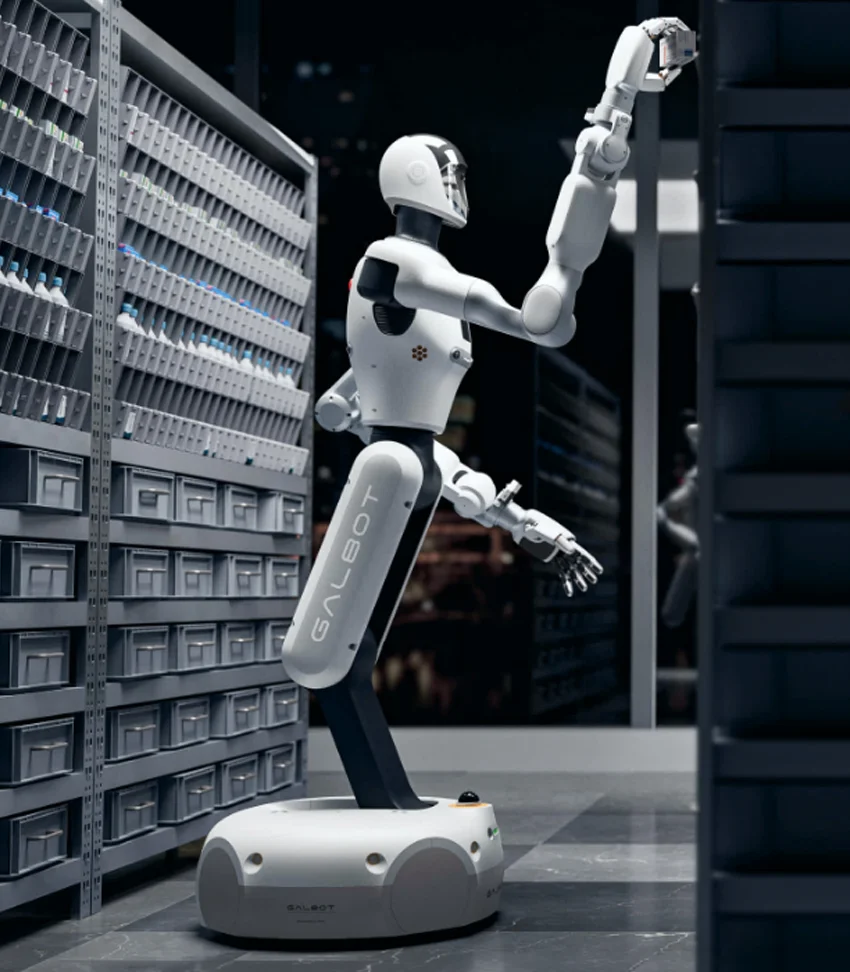
The Galbot G1 is a general-purpose wheeled humanoid designed to combine autonomous mobility, dual-arm manipulation and embodied AI within real-world industrial and commercial environments.

Its wheeled architecture prioritises stability, operating time and efficient movement across flat indoor environments, while an adjustable torso and two seven-degree-of-freedom arms give the robot a large working envelope for interacting with shelves, workstations, containers and equipment.

Galbot specifies a 10 kg total dual-arm payload, with up to 5 kg per arm, alongside a vertical working range from approximately floor level to 2.1 metres and a horizontal workspace of up to 1.9 metres.

This combination makes G1 particularly relevant to workflows where the robot needs to move between locations, identify and manipulate different objects, and complete repeated physical tasks across an existing facility rather than remain fixed at a single workstation.

G1 incorporates cameras, depth sensing, 3D LiDAR, force sensing and onboard NVIDIA AGX Orin computing to support perception, navigation and manipulation. Galbot positions the platform across manufacturing, warehouse, retail and healthcare applications, including picking, transport and replenishment.

For UK businesses, the opportunity is therefore broader than replacing one fixed automation process. G1 can be evaluated for workflows where mobility and manipulation need to happen together, particularly where tasks vary by location, object or operating sequence.

TRG helps organisations assess the task, environment, payload, autonomy requirements and integration needs before progressing to demonstration, pilot or deployment.
Galbot G1
Key
Technical Breakthroughs

Mobile dual-arm manipulation


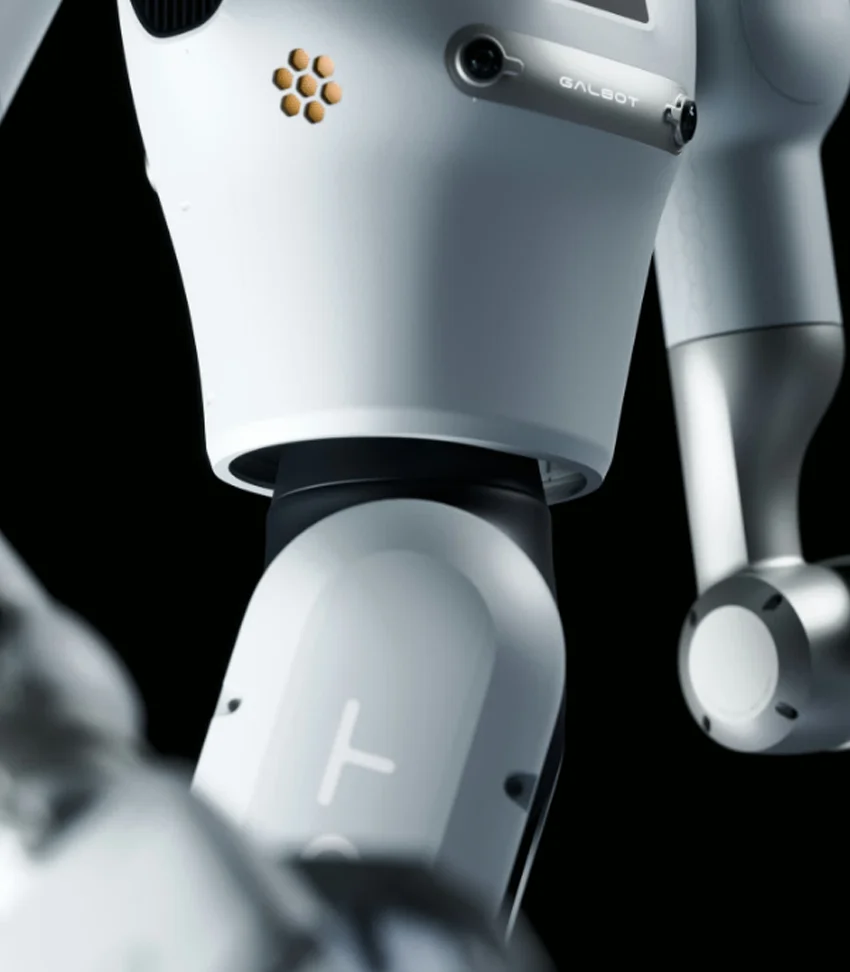
G1 combines autonomous wheeled mobility with two seven-degree-of-freedom robotic arms.

Galbot specifies a payload of up to 5 kg per arm and 10 kg across both arms, making the platform suitable for lighter material-handling, picking and manipulation workflows rather than the heavier industrial loads targeted by the Galbot S1.

Multiple end effectors are supported, including parallel grippers and electric suction systems, allowing the manipulation setup to be configured around different objects and tasks.

Large working envelope


A 650 mm torso lift extends G1's ability to interact with objects positioned at significantly different heights.

Galbot specifies a vertical wrist-centre workspace of approximately 0–2.1 metres and horizontal coverage of up to 1.9 metres.

For businesses, this creates the potential for one mobile platform to interact with low containers, work surfaces and shelving without requiring each task location to be engineered to one fixed automation height.

Embodied AI system architecture


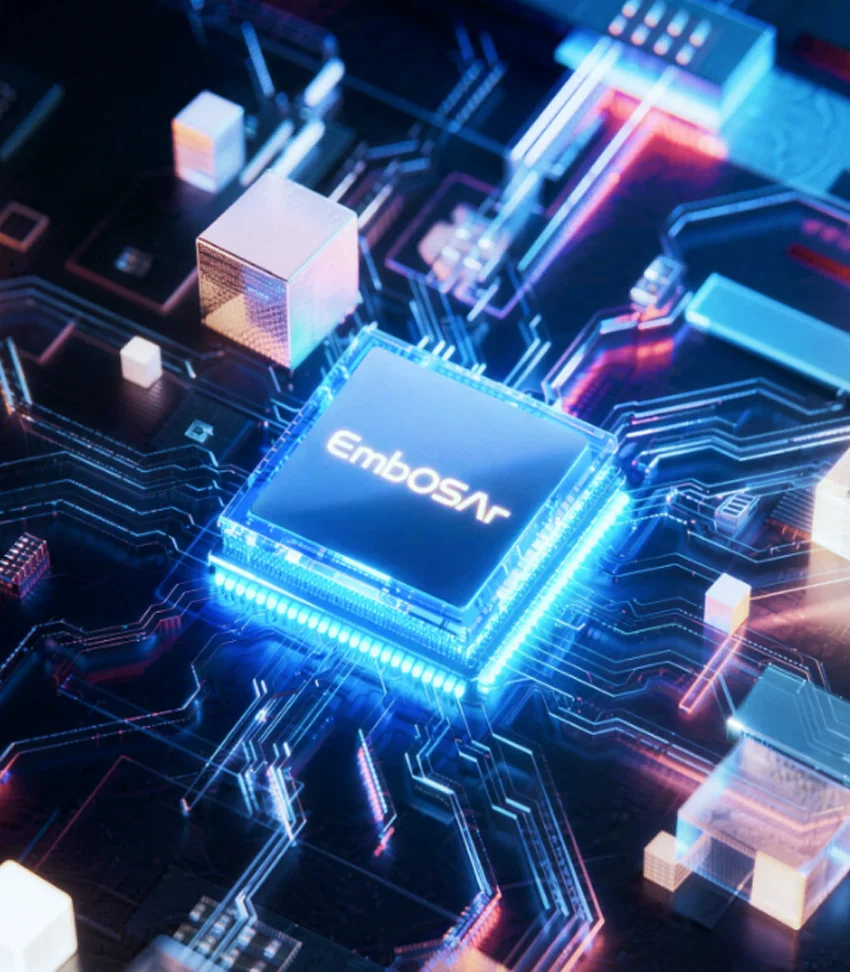
G1 is built around Galbot's Embosar embodied-intelligence system architecture.

Galbot describes this as an automotive-grade dual architecture combining XCU and NPU systems, designed to support secure, real-time communication across the robot and stable long-duration operation in real-world environments.

The commercial significance is the move away from simply programming a robot through fixed sequences towards a platform intended to perceive its environment, make task-level decisions and respond to variation.

Multi-modal perception


G1 combines several perception technologies across the robot.

Its published sensor architecture includes a binocular head camera, four torso RGB cameras, wrist-mounted depth cameras, six-axis force sensors, chassis-mounted 3D LiDAR, ultrasonic sensors and inertial measurement units.

These systems provide the sensory inputs required for navigation, object identification, manipulation and interaction with the surrounding environment.

Onboard AI computing


G1 uses an NVIDIA AGX Orin 64 GB computing platform, with Galbot listing 275 TOPS of computing performance.

This provides substantial onboard processing capability for perception, navigation and embodied-AI workloads without making every robot function dependent on remote cloud processing.

The exact network, data and cybersecurity architecture should nevertheless be reviewed as part of any UK business deployment.

Broad manipulation capability


Rather than being designed around one dedicated production operation, G1 is intended to interact with different objects and environments.

Galbot demonstrates and positions the platform around activities including autonomous picking and placement, goods transport and shelf replenishment, alongside broader manufacturing and commercial workflows.

This flexibility is potentially valuable where task variation or changing product mixes make dedicated fixed automation less attractive.

Up to eight hours operating time


Galbot specifies up to eight hours of runtime on a full charge from G1's 48V 30Ah battery.

Actual operating time will depend on task intensity, movement, payload, end effector, environmental conditions and operating mode, so utilisation should be measured during a real-world pilot rather than assumed from the headline specification alone.

Galbot G1
Deployment
+ Scalability

G1 should initially be evaluated around a specific, repeatable workflow with measurable operational value rather than treated as an immediate general-purpose replacement for human labour.

Strong starting points could include repetitive picking, item retrieval, parts movement, workstation replenishment, internal transport and other tasks where a robot needs both autonomous mobility and physical manipulation.

Before committing to a G1 evaluation, UK buyers should review:

  • The exact task and required cycle time
  • Object weights, dimensions and variability
  • Required grasping or end-effector capability
  • Pickup and placement positions
  • Shelf, rack and workstation heights
  • Travel distances and operating routes
  • Floor conditions, doorways and available clearance
  • Interaction with carts, shelving, conveyors or production equipment
  • Autonomy versus operator-supervision requirements
  • Human interaction and site-safety controls
  • Shift pattern, required operating time and charging strategy
  • Network, cybersecurity and data requirements
  • Required integrations with existing systems or equipment
  • Manufacturer documentation, onboarding and training
  • Maintenance, spare-parts and technical-support arrangements
  • Task-success, intervention and uptime thresholds for acceptance

The objective is to establish whether G1 provides a genuine operational advantage over fixed automation, AMRs, cobots or alternative humanoid platforms.

Its compact 600 × 600 mm mobile base, broad manipulation envelope and general-purpose architecture could make G1 particularly interesting where a business wants the same robotic platform to perform tasks across multiple locations rather than automating each workstation independently.

Where a first workflow proves successful, the deployment model could then expand through additional tasks, additional operating zones or multiple G1 units, subject to validated task performance, site readiness and the appropriate OEM support model.

A structured humanoid robot readiness assessment should come before pilot, lease or purchase. TRG can help define the use case, assess G1 against alternative platforms and coordinate the commercial and deployment route directly with Galbot.

Direct access to leading humanoid OEMs; at the industry’s best rates.
The Robot Group is an independent adviser. Brand names and products are referenced for comparison.

All trademarks are the property of their respective owners. Availability and UK compliance subject to OEM confirmation.
Humanoid performing parts kitting tasks
Ready to deploy humanoid robots in your business?