PAL Robotics
PAL Robotics ARI
PAL Robotics

PAL Robotics ARI

Expressive social humanoid for customer engagement, reception, information delivery and human-robot interaction.
Key industrial use cases
Reception and visitor assistance; customer engagement; information and wayfinding; retail experiences; healthcare interaction; education; events and presentations; HRI and AI research
Request Assessment
PAL Robotics ARI

Robot overview

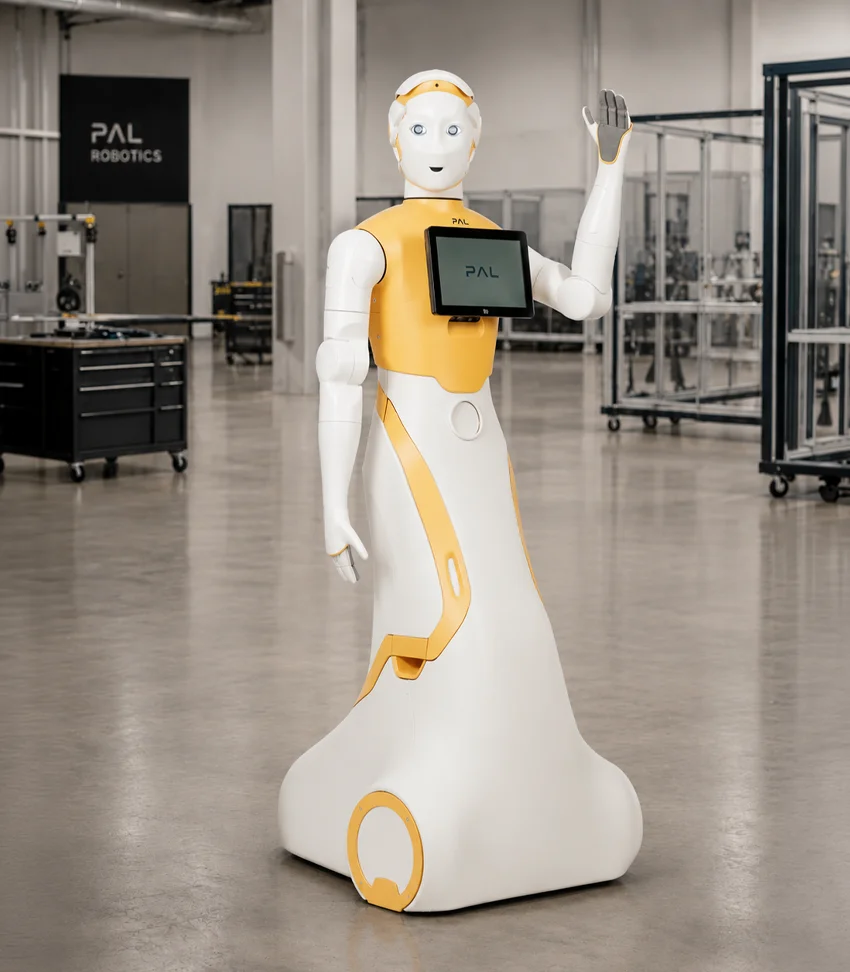
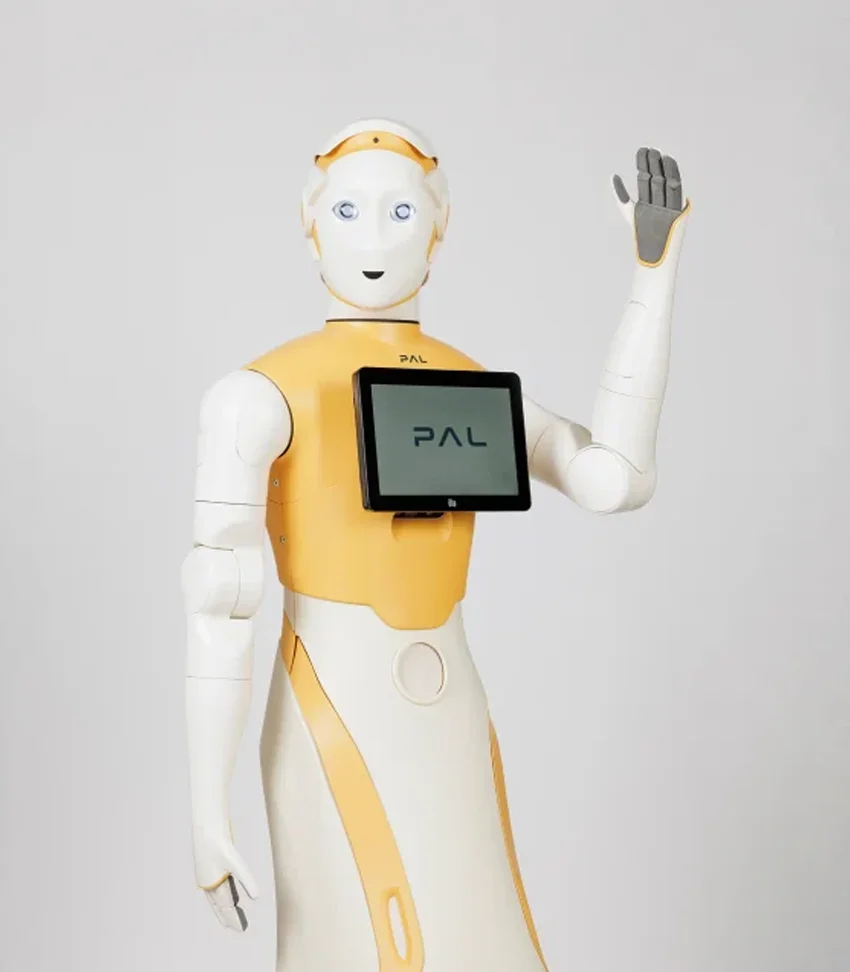
The PAL Robotics ARI is an expressive social humanoid designed to create natural, interactive experiences between people, robots and digital services.

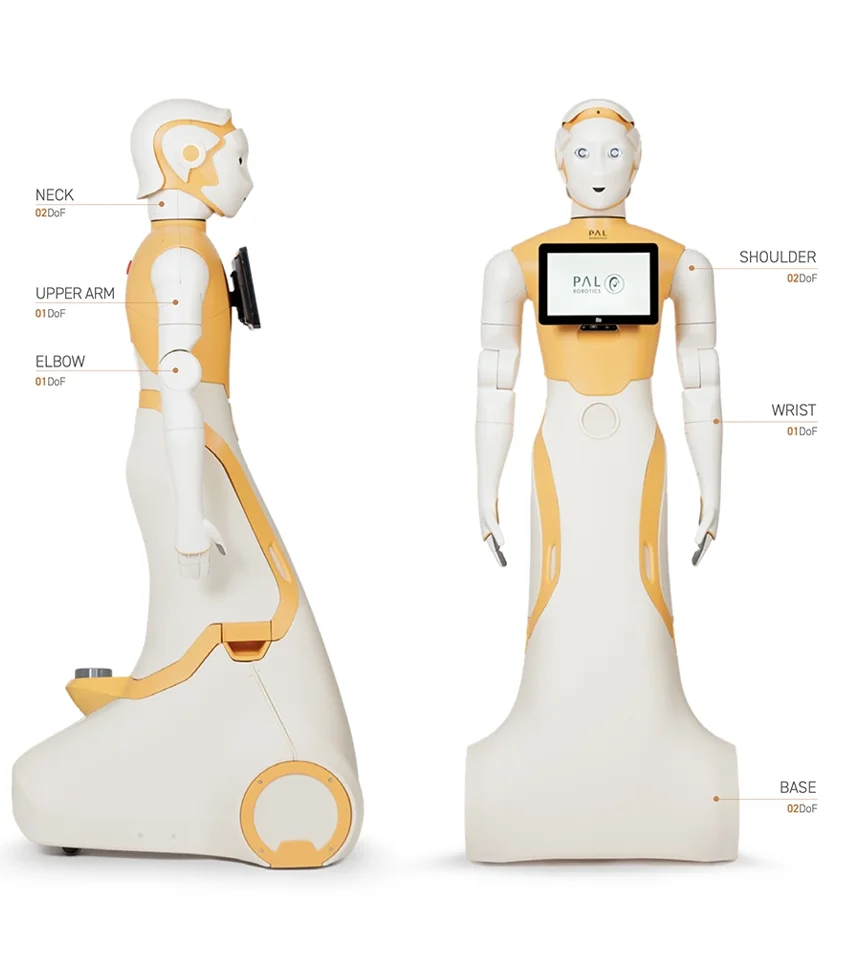
Standing approximately 1.65 metres tall, ARI combines speech, gestures, expressive eyes, autonomous mobility and an integrated touchscreen to engage directly with customers, visitors, patients, students and research participants. PAL positions the platform for customer assistance, promotional campaigns and human-robot interaction research.

ARI can detect and identify people, recognise speech and user intent, conduct dialogue and respond through synthesised speech, gestures and visual content. Its 10.1-inch touchscreen can also display multimedia, surveys, applications and other interactive experiences.

Unlike humanoids designed primarily around physical handling, ARI's value comes from combining a recognisably human-facing form with communication, perception, mobility and digital interaction.

This makes it particularly relevant where organisations want robotics to improve how people access information, navigate an environment, interact with services or engage with a brand.

PAL states that ARI can communicate in more than 30 languages, while its software and API allow organisations and researchers to customise speech, behaviour, gestures and integrations around their particular application.

TRG can help UK organisations assess where ARI fits within the intended customer journey, visitor experience or research programme before progressing to configuration, demonstration or deployment.
PAL Robotics ARI
Key
Technical Breakthroughs

Expressive human-robot interaction

ARI uses expressive eyes, gaze behaviour, lighting and coordinated gestures to make interaction more intuitive and engaging.

These behaviours can be customised around different applications, helping the robot act as a receptionist, guide, presenter or interactive information point.

Speech and multilingual interaction

ARI supports speech recognition, dialogue handling and voice synthesis, allowing users to communicate directly with the robot.

PAL states that the platform supports more than 30 languages, opening up applications in multilingual visitor, education and customer-facing environments.

Multi-modal social perception

ARI combines visual and audio perception to detect people, recognise speech and interpret user intent.

This multi-modal approach allows the robot to respond to people and create richer human-robot interactions than a conventional touchscreen or digital kiosk alone.

Interactive touchscreen

An integrated 10.1-inch touchscreen provides a second channel for interaction.

Businesses can use it to display multimedia content, information, surveys, games or bespoke applications alongside ARI's conversational interface.

Customisable AI platform

ARI is designed to allow external AI and software to be integrated into the robot.

Its API and development environment give organisations the ability to connect ARI with external services, customise behaviours and develop new AI-driven interactions. An optional NVIDIA Jetson can also provide additional processing capability for AI and machine-learning workloads.

Easy-to-manage interface

PAL provides a web-based interface that allows users to modify touchscreen content, speech and gestures without rebuilding the robot's software from scratch.

This helps organisations adapt ARI to different campaigns, environments or visitor experiences over time.

Extended operating time

ARI has a manufacturer-stated operating autonomy of approximately 8–12 hours, supporting prolonged use across customer-facing and research environments.

PAL Robotics ARI
Deployment
+ Scalability

ARI is best deployed around a clearly defined interaction or visitor journey rather than simply placing a social robot within an environment and expecting engagement to happen automatically.

Strong starting applications can include:

  • Reception and visitor welcome
  • Information and wayfinding
  • Customer assistance
  • Product or service presentation
  • Retail engagement
  • Event and exhibition interaction
  • Patient or healthcare interaction
  • Education and learning
  • Surveys and feedback collection
  • Human-robot interaction research
  • AI and conversational-interface research


Before deployment, organisations should consider:

  • What ARI should help users accomplish
  • Target users and expected interaction volumes
  • Languages required
  • Conversational content and knowledge sources
  • Touchscreen content and applications
  • Connection to existing systems or cloud services
  • Operating location and navigation requirements
  • Wi-Fi and network availability
  • Data handling and privacy requirements
  • Accessibility requirements
  • Human supervision and escalation routes
  • Charging and operating schedule
  • Content ownership and ongoing updates
  • Metrics used to assess engagement and value


PAL states that ARI can connect to external systems through Wi-Fi and its API, allowing the platform to integrate with wider digital services and facility infrastructure.

This creates opportunities to move beyond a standalone demonstration robot and build ARI into a wider customer experience, information or research ecosystem.

For larger deployments, common behaviours and content can potentially be developed once and adapted across multiple locations or robots, while individual sites retain application-specific information and integrations.

The strongest deployment cases will therefore be those where ARI provides a measurable improvement over a conventional kiosk, screen or static information point through its combination of presence, conversation, expression and physical interaction.

TRG can help UK organisations define the use case, assess configuration and integration requirements, and coordinate demonstration, quotation and deployment.

Direct access to leading humanoid OEMs; at the industry’s best rates.
The Robot Group is an independent adviser. Brand names and products are referenced for comparison.

All trademarks are the property of their respective owners. Availability and UK compliance subject to OEM confirmation.
Humanoid performing parts kitting tasks
Ready to deploy humanoid robots in your business?