Ready to deploy humanoid robots in your business?
Thank you for reaching out. A member of our team will be in touch shortly.
Oops! Something went wrong while submitting the form. Please try again.




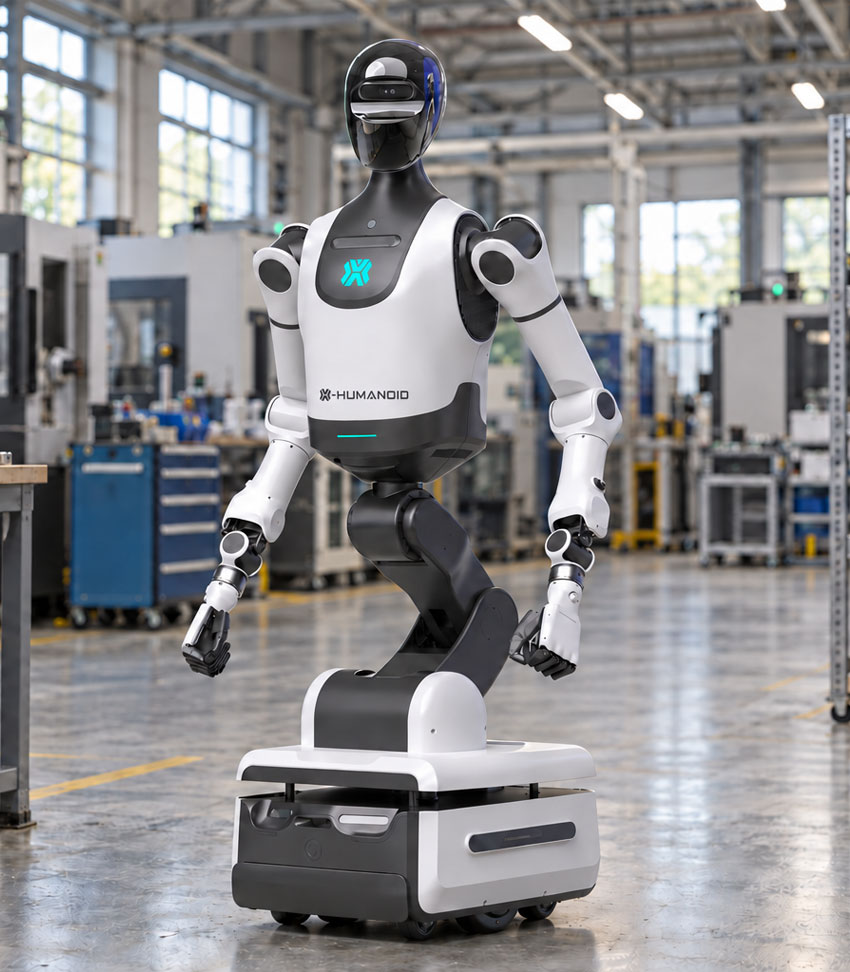
Tianyi 2.0 combines a wheeled mobile base with two robotic arms, allowing movement and physical interaction within the same platform.
Designed for industrial and commercial environments, it supports applications such as transporting items, inspecting equipment and interacting with buttons or cabinet doors. Its adjustable body height helps position the upper body for different tasks, while onboard cameras and LiDAR provide information about the surroundings.
X-HUMANOID also offers software capabilities for reception, guided tours and remote operation, allowing the platform’s role to be configured around the site.
The Robot Group helps UK organisations identify suitable workflows, establish the necessary hardware and software configuration, and coordinate evaluation discussions with X-HUMANOID.